REVIEW · YOGYAKARTA
Yogyakarta: 3-hour Cooking Class with Market Tour
Book on GetYourGuide →Operated by Jogja Borobudur Tour & Travel · Bookable on GetYourGuide
Morning in Jogja smells like spices. This 3-hour cooking class pairs a small-group lesson with a morning market run (if you book the morning slot), so you’re not just eating Indonesian food—you’re learning where the flavor starts.
Two things I’d happily build a day around: the instructors (often highlighted by names like Desy/Desi and Herni) are patient, warm, and organized, and the class runs like real-life cooking, not a rushed demo. You also get the recipes to take home, plus more food than you’ll probably expect (including extras in some cases).
One catch to plan around: the market tour only happens during the morning session, and you really do need to come hungry because the meal is a full feast. If you’re sensitive to walking, bring comfortable shoes for the market part and any short transfers.
In This Review
- Key things you should know before you go
- A 3-hour cooking class that starts with shopping
- What the timing feels like (and why “3 hours” can mean more)
- The market tour in Yogyakarta: pick ingredients like a local
- In the kitchen: hands-on cooking techniques, not a lecture
- Dishes you’ll likely cook (and why they’re a great choice)
- The shared feast: how the class ends (and what to do with leftovers)
- Instructor impact: why Desy/Desi and Herni get praised
- English instruction and small-group logistics that actually help
- Price and value: why $35 can be a fair deal in Jogja
- Who should book this class (and who might not)
- Practical tips so you get the most from your cooking class
- Should you book this cooking class?
- FAQ
- How long is the cooking class?
- Is the market tour included?
- What language is the instructor?
- Do I need cooking experience?
- What should I bring?
- Is hotel pickup available?
- Can I take recipes home?
- Is there free cancellation?
- What if I have dietary needs?
Key things you should know before you go
- Market tour in the morning only if you choose the morning course
- Small group (up to 8 participants) for more attention and hands-on time
- English-speaking instructor and no prior cooking experience needed
- All ingredients and water included, so you’re not adding extra costs
- Recipes provided to take home, so you can cook again later
- Plentiful dishes with a final shared meal, often with take-away extras
A 3-hour cooking class that starts with shopping
This isn’t the kind of class where you sit back and watch someone else do the work. You start by learning how ingredients are chosen, then you move into a kitchen setting where you actually prep, cook, and taste what you make. That flow matters: it helps the recipes make sense, because you’ve already handled the key vegetables, herbs, spices, and staples before the cooking begins.
The experience is built around a small group (limited to 8). That size is a big deal in a hands-on class. You’ll get clearer guidance, and the instructor can check how you’re doing without the whole group getting stuck in a single line of instructions.
Also, you’re in Yogyakarta, not a generic “Indonesian cooking studio.” You’ll be working with ingredients and methods tied to local cuisine. In the write-ups, hosts like Desy/Desi and Herni come up again and again for making the process feel personal, like you’re joining a family kitchen for a shared meal.
You can also read our reviews of more shopping tours in Yogyakarta
What the timing feels like (and why “3 hours” can mean more)
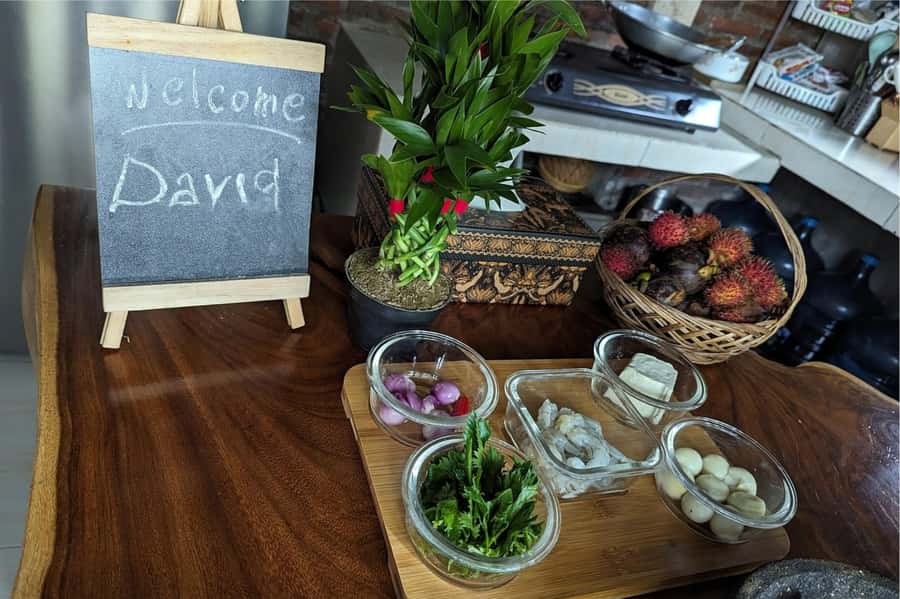
The booking is listed as 3 hours, and the experience description says 3–4 hours. In practice, cooking classes like this can stretch a bit because cooking takes time, and tasting is part of the learning. You’re also likely to see multiple dishes prepared and plated, and the end of the class is a shared feast where everyone dines together.
The market tour exists only for morning classes. If you pick afternoon, you’re skipping the ingredient-shopping part and jumping into the kitchen experience instead. That’s important for your schedule—morning slots are better if you want the full flavor journey, and afternoon slots are better if you want a lighter start day.
One more time-smart tip: because there’s a lot of food, I strongly suggest you plan this for when you’re otherwise free. Don’t stack a long dinner reservation right after. Your stomach will need time.
The market tour in Yogyakarta: pick ingredients like a local
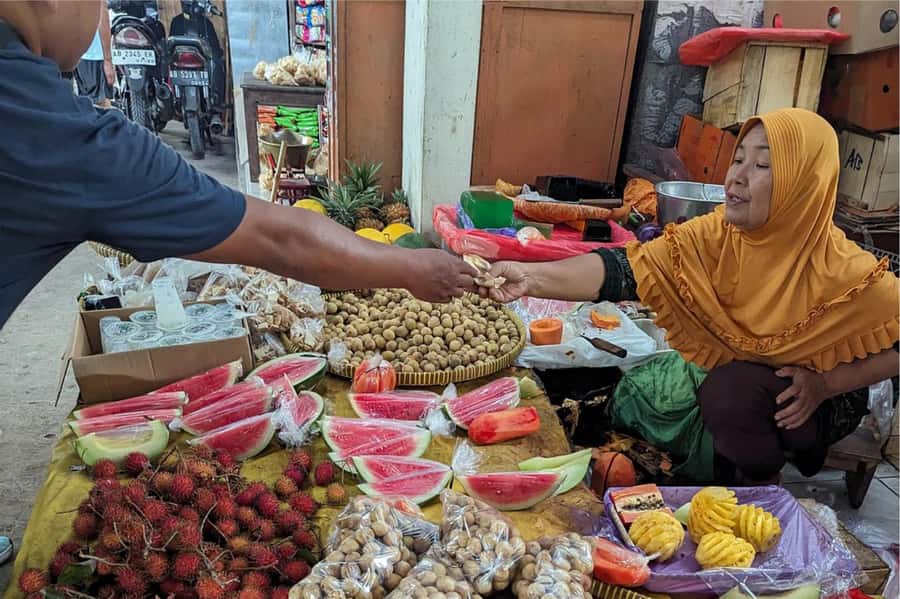
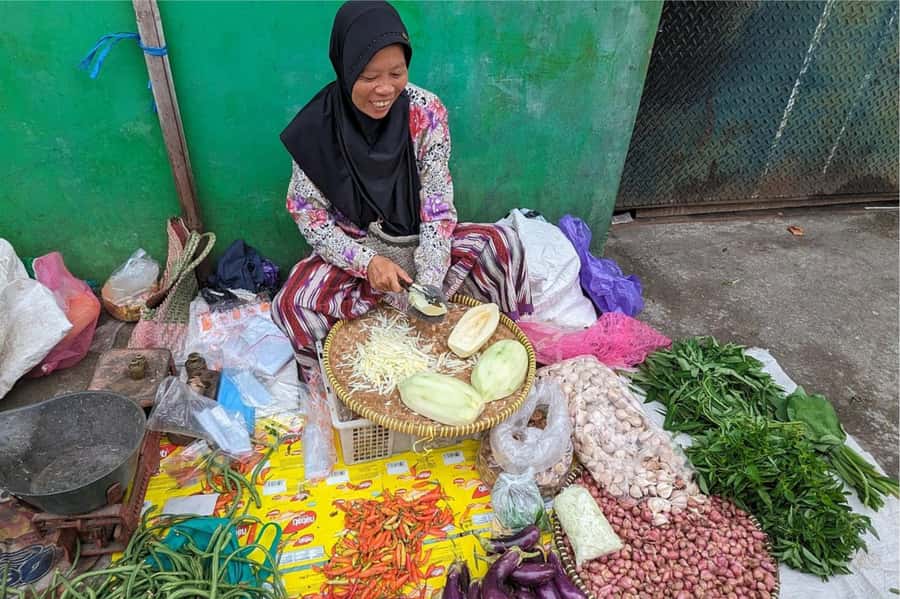
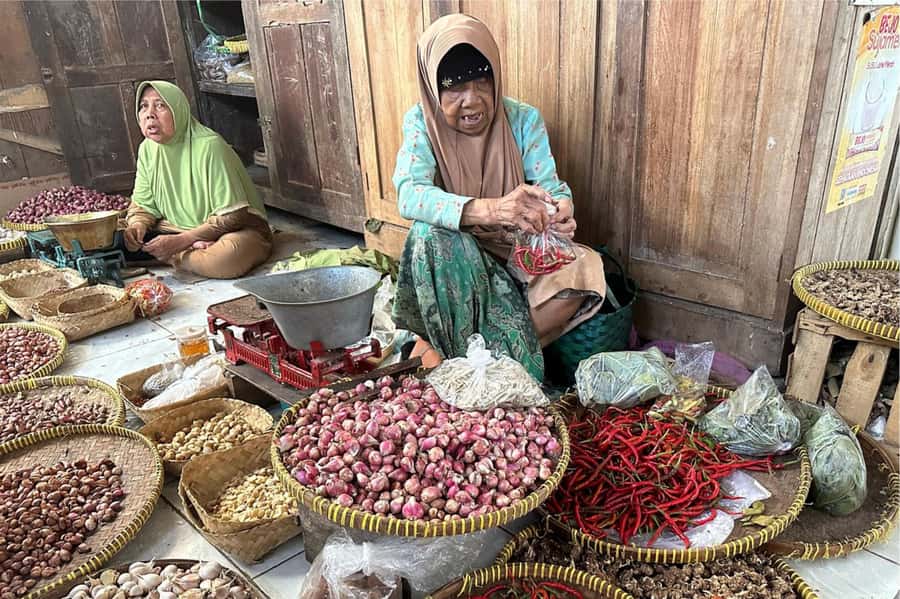
If you book the morning course, the market visit is part of the program. It’s not a quick photo stop. You go with the instructor, learn what to look for, and buy ingredients like a local.
From the experiences shared, this is where the best “wow” moments often happen. People describe walking through vendor stalls with an instructor who actually knows the rhythm of the market—talking to sellers, explaining produce and fruit, and helping you understand what makes one ingredient better than another. That relationship with vendors comes up as a standout detail, especially with instructors like Desay/Desi.
You’ll focus on fresh ingredients such as vegetables, rice, herbs, and spices. You’ll also likely see some of the fruit and vegetable variety that’s easy to miss if you only shop at supermarkets. The value here is simple: once you know how to choose ingredients, you can cook the dishes later without guessing.
Practical note: expect walking. You’re not trekking for hours, but comfortable shoes make the market part much more enjoyable.
In the kitchen: hands-on cooking techniques, not a lecture
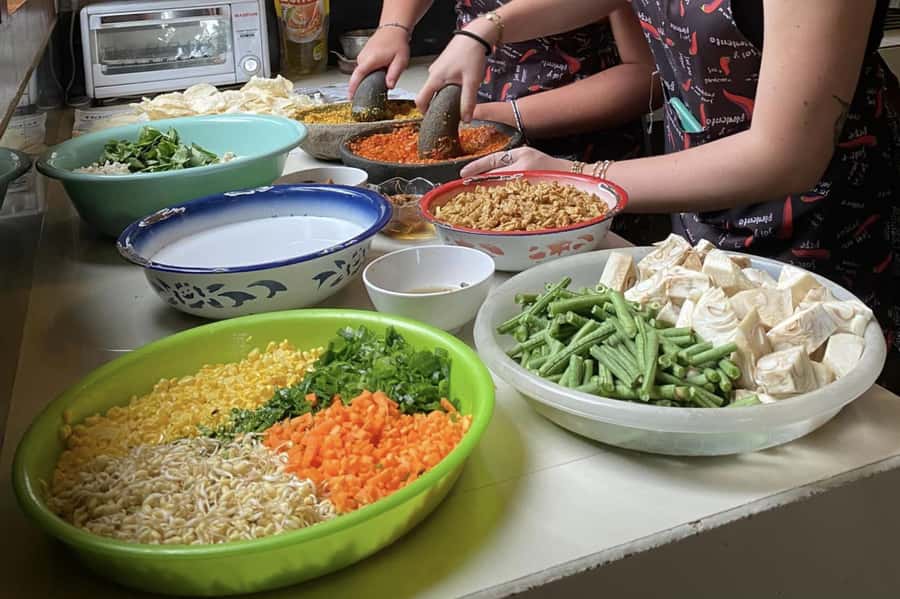
After shopping, you head to the kitchen for a demonstration and then the real work: cooking. The class is designed to be interactive, and the instructor guides you through the process step by step.
What stands out in the shared experiences is how practical the teaching feels. People talk about being helped whether they’re moving fast or learning more slowly. That matters because a recipe is one thing; having someone correct your chopping speed, spice handling, or timing is another.
Also, many cooking steps in Indonesian and Javanese cooking are about texture and balance—how things smell, how spices dissolve, how sauces thicken, and when to adjust. In write-ups, guests mention grinding herbs and working with coconut milk from scratch. Those kinds of tasks are where the class becomes more than food—it becomes skill-building.
And yes, you taste as you go. That’s not just for fun. Tasting while cooking helps you connect the final dish to the ingredients you bought. When the flavors finally hit, you understand why they taste the way they do.
Dishes you’ll likely cook (and why they’re a great choice)
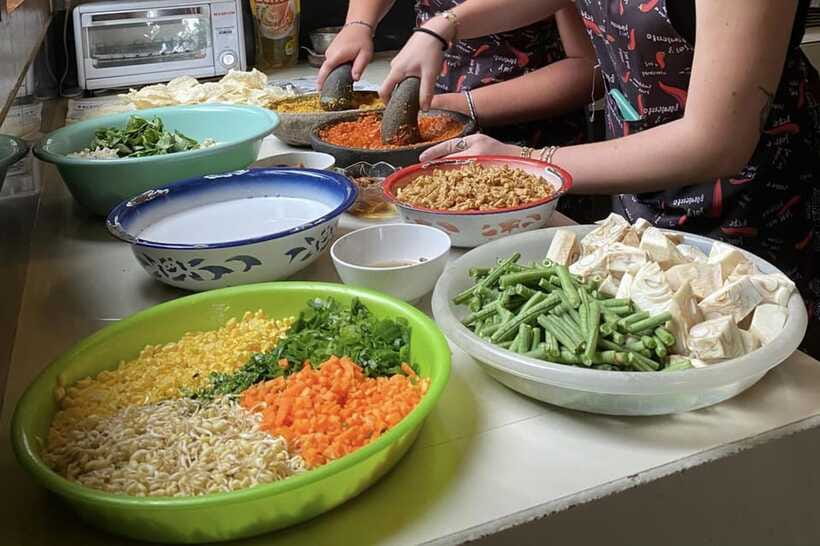
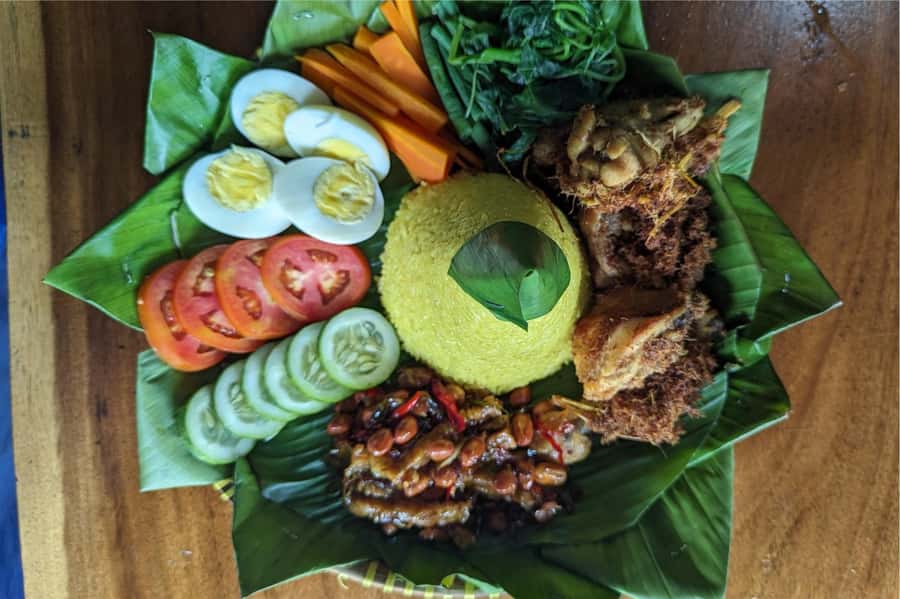
Menus can vary by class and season, but the dishes mentioned in the experiences are classic Yogyakarta-style comfort foods. Here are some examples that have been cooked in past sessions:
- Tofu fritters (worked through texture and frying technique)
- Yellow rice (rice with a specific flavor profile you can recreate later)
- Galangal fried chicken (a fragrant spice-forward dish)
- Tempeh with a tamarind sauce (sweet-sour balance and sauce handling)
- Dessert (so you leave with a full meal arc)
You’ll also hear about multiple dishes made within the time window, which is a big part of why people call this a highlight. The class isn’t stingy with variety, and it’s not stuck on one simple dish.
One smart part of this setup: recipes are provided to take home. That means you’re not just relying on memory. You can recreate the dishes where you live—using the same ingredient logic you practiced at the market.






The shared feast: how the class ends (and what to do with leftovers)
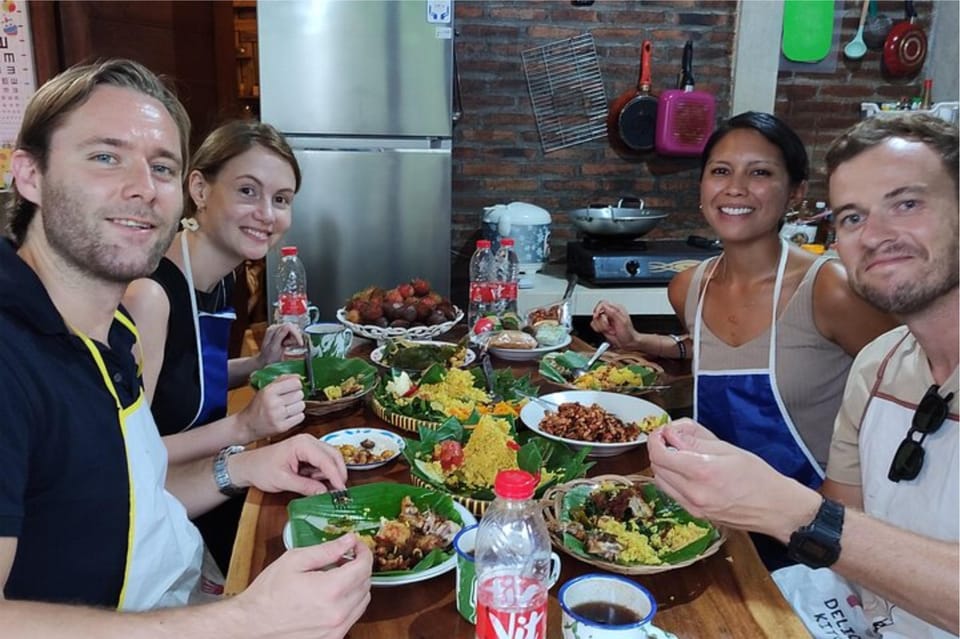
The class finishes with you dining together like a lovely family. That shared meal is more than a nice ending—it’s part of how you learn. You see how the dishes are plated, and you experience the food as a complete spread rather than separate recipes.
Also, there are strong signs that extras can be packed up. Multiple experiences mention taking leftovers home for another meal later, and some specifically call out take-away containers. If you’re the type who hates wasting food, this is a great bonus.
Even if you don’t count on leftovers, treat this class as lunch plus. Bring an empty stomach and prepare to feel happily overfed by the end.
Instructor impact: why Desy/Desi and Herni get praised
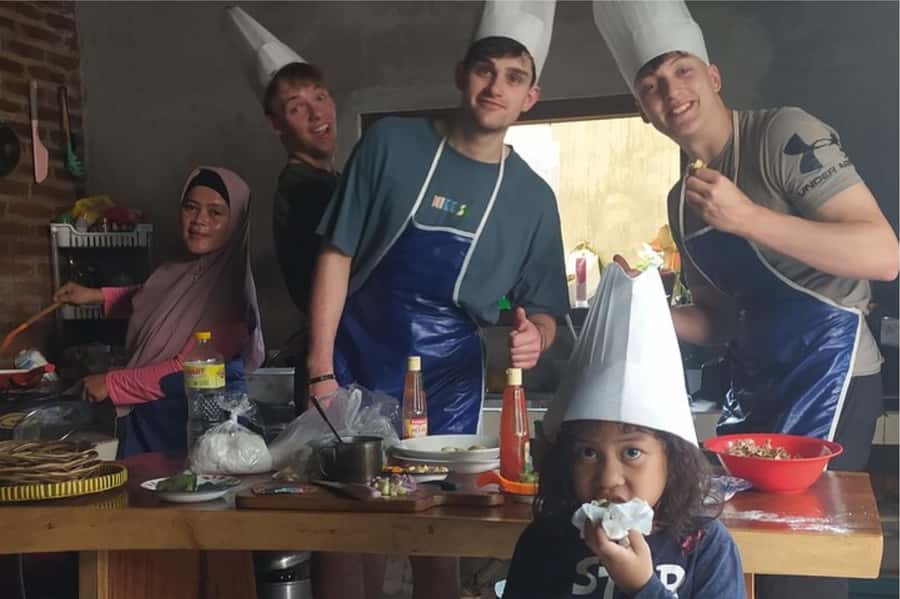
When one instructor is praised again and again, it’s usually for concrete reasons, not vague friendliness. In these experiences, the standout names include Desy/Desi and Herni, and they get credit for a mix of warmth and structure.
Here’s what that looks like in a practical way:
- The market tour is guided with real pacing, so you don’t feel herded.
- The kitchen portion is organized, with a clear flow from prep to cooking to tasting.
- People describe being able to ask questions and chat, without the class turning chaotic.
- Dietary needs can be handled, with options available for different requirements.
That last point is important. Many cooking classes claim to handle dietary restrictions; here, the experiences mention a good range of options for all dietary needs. If you have restrictions, you’ll still want to communicate clearly during booking, but the odds are good that you won’t be left out of the meal.
English instruction and small-group logistics that actually help
The instructor is English-speaking, and the class is a small group limited to 8. That combination makes a huge difference in how comfortable you feel while cooking. When people are learning by doing, language clarity matters—especially for steps like seasoning adjustments, sauce consistency, and timing.
Pickup is optional. If you’re coming from the airport area, pickup from there costs IDR300,000. Hotel pickup & drop-off is included only if you select the pickup option.
Meeting point details are handled by WhatsApp: you’ll receive the exact location through the app after booking, and you’re asked to provide your WhatsApp number. In other words, don’t assume you’ll just find the spot without checking your messages.
Also, you don’t need cooking experience. That’s one of the biggest reasons this class works for a wide range of travelers. You can show up curious, not skilled.
Price and value: why $35 can be a fair deal in Jogja
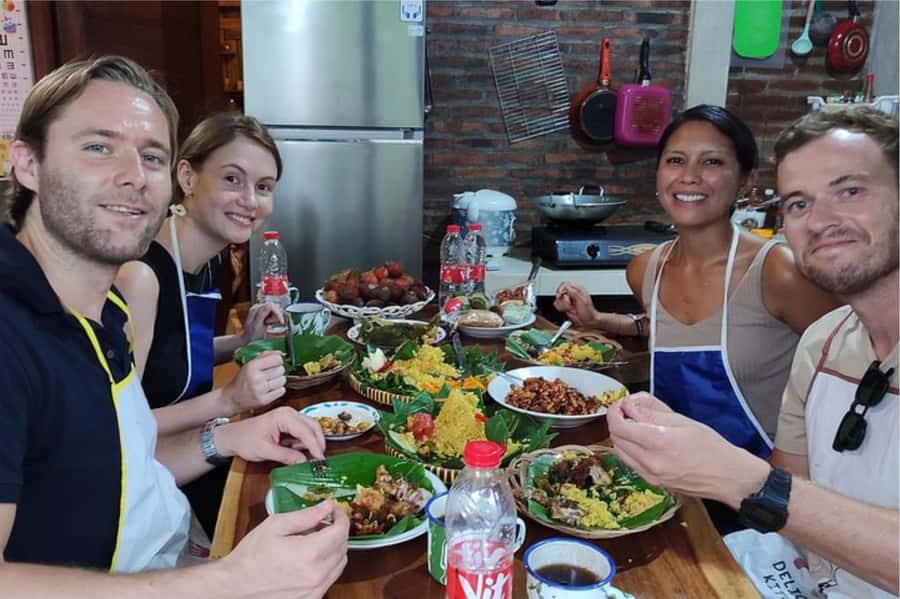
At $35 per person for a 3-hour class, you’re paying for more than a recipe worksheet. You’re getting:
- A market visit (for morning bookings)
- An English-speaking instructor
- All ingredients
- Water
- A full meal experience
- Recipes to take home
Value-wise, the money is mostly “time + guidance + ingredients.” Many cooking classes charge similar amounts but don’t include the market selection step or provide enough food to make it feel like a real meal. Here, the repeated theme is that it’s plentiful—people describe enough to fill multiple meals, and sometimes to pack extras.
If your goal is simply trying one dish, you could eat cheaper. But if your goal is learning how the ingredients become a meal you can recreate, this is the kind of price that often feels fair.
Who should book this class (and who might not)
You’ll probably love this class if:
- You want a hands-on Yogyakarta experience beyond temples and shopping streets
- You enjoy learning why ingredients matter
- You want a friendly group size where you can ask questions
- You like the idea of taking recipes home (and sometimes leftovers)
You might skip or choose the afternoon slot if:
- Your schedule can’t handle a morning commitment (since the market tour only runs in the morning)
- You’re not comfortable with walking around a market
- You prefer very light food experiences rather than a full feast
This is also a great choice for couples and small family groups, since multiple experiences mention adult family members joining and the mood staying relaxed and personal.
Practical tips so you get the most from your cooking class
A few habits will make your session smoother:
- Bring a real appetite. You’ll get plenty to eat, so don’t eat a big meal beforehand.
- Wear comfortable walking shoes, especially if you’re doing the morning market tour.
- Plan to use your senses. Smell herbs, watch how sauces change, taste while cooking. That’s where the lesson sticks.
- If you have dietary needs, mention them during booking so the instructor can plan options.
- If you choose pickup, double-check what “airport area” means for your location so you don’t end up confused at the curb.
And keep your phone handy. WhatsApp is how you’ll get the exact meeting point.
Should you book this cooking class?
Yes, if you want a real Yogyakarta food experience that teaches you how to shop ingredients and cook Javanese dishes with confidence. The best reason to book is that this isn’t a passive activity: you’re in the kitchen doing the steps, and the market start helps everything click.
I’d book the morning session if you care about the full ingredient story. Go afternoon only if timing is tight, since the market tour is a highlight.
If you hate walking or you need a very light meal day, adjust your expectations and consider the afternoon slot. Otherwise, this $35, small-group format is exactly the kind of hands-on cultural experience that pays you back later when you actually cook the dishes at home.
FAQ
How long is the cooking class?
The duration is listed as 3 hours, and the experience description notes it can run about 3–4 hours.
Is the market tour included?
The market tour is included for the morning class only. Afternoon courses focus on the kitchen cooking experience.
What language is the instructor?
The instructor speaks English.
Do I need cooking experience?
No experience is needed to take part.
What should I bring?
Comfortable walking shoes are recommended, and you should bring an empty stomach because there will be plenty of food.
Is hotel pickup available?
Hotel pickup and drop-off is available if you select the pickup option. Pickup from the airport area costs IDR300,000.
Can I take recipes home?
Yes. You’ll take home the recipes so you can recreate the dishes later.
Is there free cancellation?
Yes, you can cancel up to 24 hours in advance for a full refund.
What if I have dietary needs?
The experiences indicate the class can offer options for different dietary needs, but you should confirm your specific requirements during booking.