REVIEW · YOGYAKARTA
Yogyakarta: Javanese Cooking Class & Market Tour
Book on GetYourGuide →Operated by Truly Borobudur Tours · Bookable on GetYourGuide
Market first. Then you cook like locals.
In Yogyakarta, this Javanese cooking class pairs a guided market tour with an actual cooking session in a village-style Javanese house, taught in English by the mentoring chef team (including Dewi, with support from people like Edra). It’s a simple flow: you start by learning ingredients, then you turn them into dishes you can taste right away.
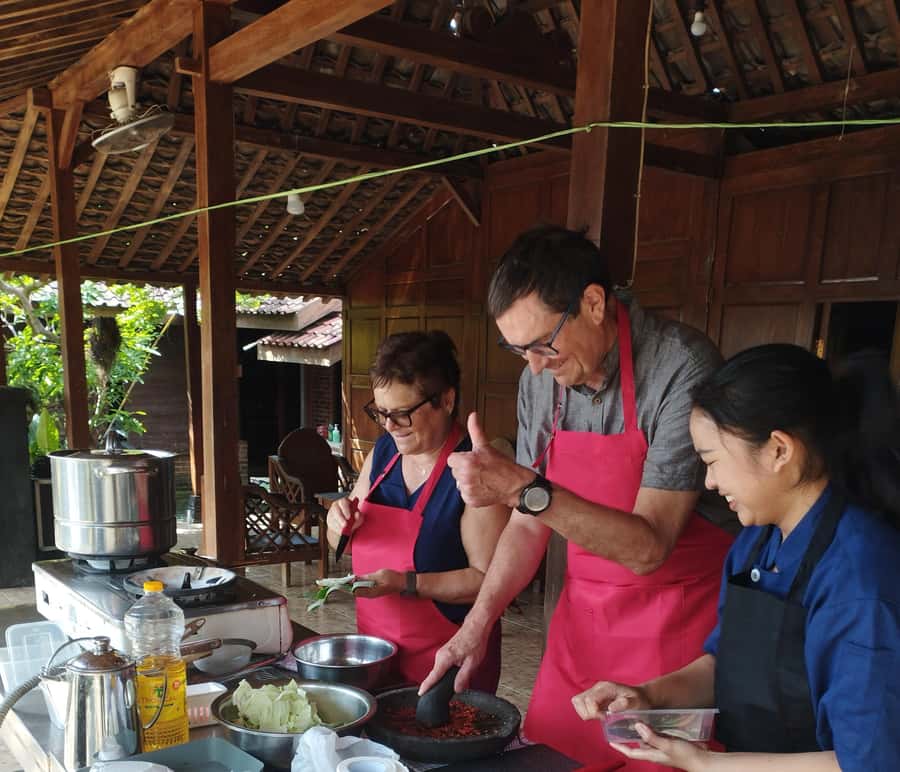
I love the ingredient shopping part. You’ll walk stall to stall with the chef, learn what Javanese cooking really relies on—herbs, spices, fish, meats, vegetables, and fruits—and also get a sense of what you can find later abroad in Asian grocery stores. I also love the local house setting, where the class feels intimate and friendly, and you get to cook and eat in the same place, with guidance and plenty of time to talk through what you’re doing.
One consideration: if you already cook a lot at home and expect full control of every step, you might find the helpers do more than you want. A couple of guests noted that some prep tasks and cooking steps weren’t as hands-on as they hoped, even though the food tastes great and you still learn the overall process.
In This Review
- Quick hits before you go
- The 270-minute flow: pickup to market to home-cooked lunch
- Dewi’s market tour: learning Javanese ingredients in real time
- What you’re really learning when you choose spices, fish, and fruits
- Inside the Javanese house: how the cooking setup affects your experience
- Your dishes and your meal: tasting what you made
- Hands-on level: where you may shine, and where you might want more control
- Price and value: why $53 can make sense for this kind of day
- Who this cooking class is best for (and who should think twice)
- Practical tips so you feel comfortable from the first pickup
- Should you book the Yogyakarta Javanese Cooking Class & Market Tour?
- FAQ
- Where does pickup for the cooking class happen?
- How long is the experience?
- Is the cooking class taught in English?
- What’s included in the price?
- What should I bring?
- Are luggage or large bags allowed?
- Is this experience suitable for people with mobility impairments?
- Can I cancel and get a full refund?
Quick hits before you go
- Dewi-led market tour: you’ll move from stall to stall choosing herbs, spices, seafood, meats, and produce with an English-speaking mentor chef.
- Learn what’s exportable: you’ll hear which ingredients are easy to find abroad, especially in Asian grocery stores.
- Village house kitchen: cooking happens in a Javanese home setting with neighborhood vibes, not a polished showroom.
- You eat what you cook: sit down after cooking and taste the dishes you helped make.
- Good value for 4.5 hours: pickup/drop-off, all ingredients, morning tea, and instruction are part of the price.
The 270-minute flow: pickup to market to home-cooked lunch
This is a tight, about-4.5-hour experience built around one idea: learn the food story at the source, then cook with confidence. Your day starts with a driver picking you up from your Yogyakarta-area accommodation. From there, you head to a local neighborhood market where you’ll shop together with the chef.
After the market, you return to the class venue—a Javanese house in a village neighborhood setting. Then the cooking part starts: you prepare your dishes, work with the team and fellow cooks, and finally sit down to enjoy the meal. When it’s done, the same driver brings you back to your hotel.
That pacing matters. If you only take a cooking class, you can leave with recipes but still feel stuck when you face unfamiliar ingredients. This format makes ingredient selection part of the lesson, so when you cook later at home, you know what to buy and why.
You can also read our reviews of more shopping tours in Yogyakarta
Dewi’s market tour: learning Javanese ingredients in real time
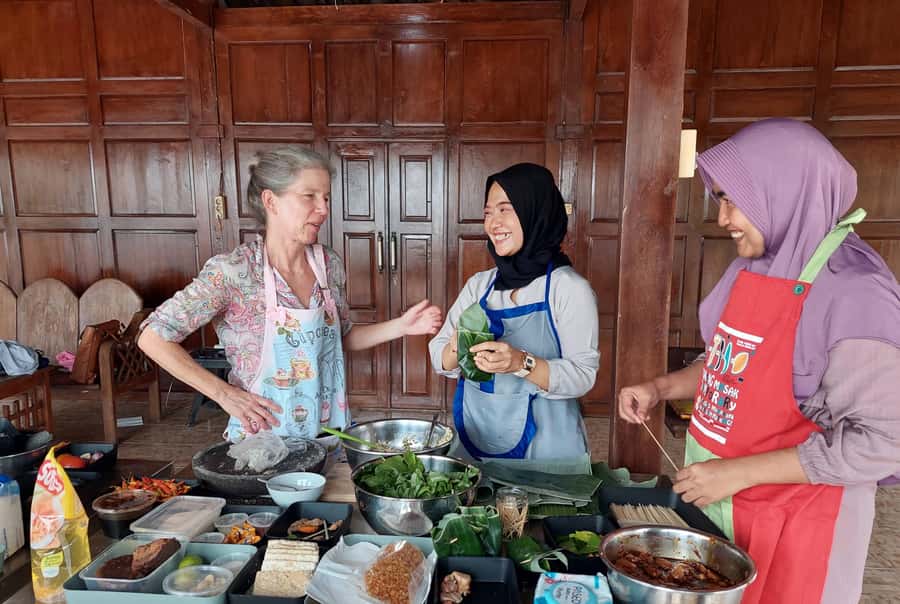
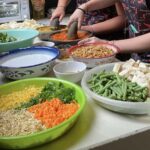
The market portion is usually the star. You’ll go from stall to stall with your mentoring chef, who helps you identify and pick the right ingredients for Javanese cooking. This isn’t just a photo-and-wander stop. The guidance is practical: you’ll learn what herbs and spices look like locally, which produce is at its best, and how chefs think about building flavor.
You can also expect lots of small, human moments—sampling and questions as you go. In the market, you’ll find foods that may be new to you (or new in the way they’re used), and the chef will help you connect those ingredients to the dishes you’ll cook later.
One extra perk: you may notice you’re not just buying what’s required for the class. Some guests mentioned buying market snacks and sweets to take home, depending on what’s available and what you feel like sampling on the spot. Even if you don’t plan to shop beyond the class ingredients, you’ll still come away with a clearer sense of what everyday food looks like in Yogyakarta.
What you’re really learning when you choose spices, fish, and fruits
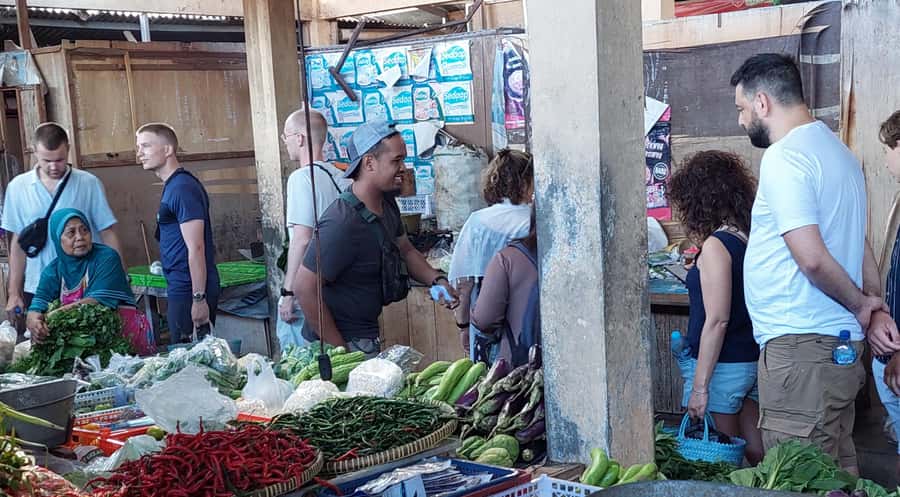
The ingredient guidance is more than a checklist. The chef’s job is to show you the difference between ingredients that look similar but behave differently in Javanese cooking—things like which herbs are stronger, what kinds of spices give warmth versus fragrance, and how freshness affects the final dish.
You’ll also learn the “abroad reality” angle. Since part of the class involves choosing fresh items locally, the chef will point out which ingredients are commonly available outside Indonesia. That’s useful for you if you want to cook again later and not just rely on memory. If you cook at home, you’ll appreciate the honesty: some ingredients are easy to replace, others aren’t, and the chef can steer you on what substitutions work best based on what you see in the market.
And yes, there’s a cultural layer here. The market isn’t treated like a generic ingredient warehouse. You’ll get context for why certain foods show up often in Javanese and Indonesian cooking—through the chef’s food explanations and everyday perspective while you walk.
Inside the Javanese house: how the cooking setup affects your experience
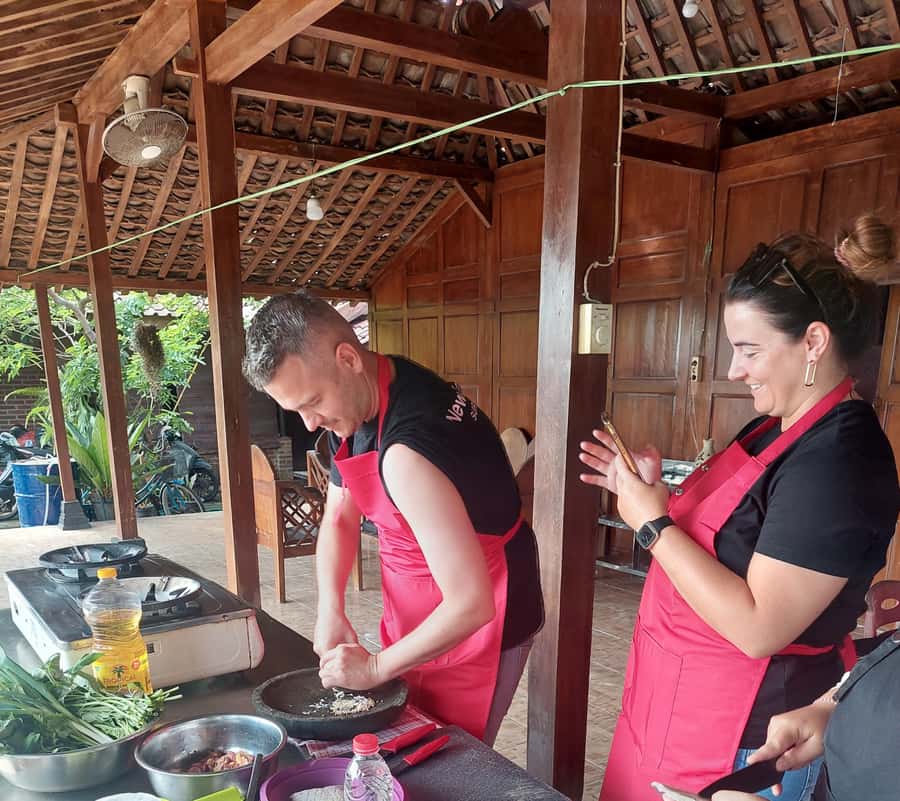
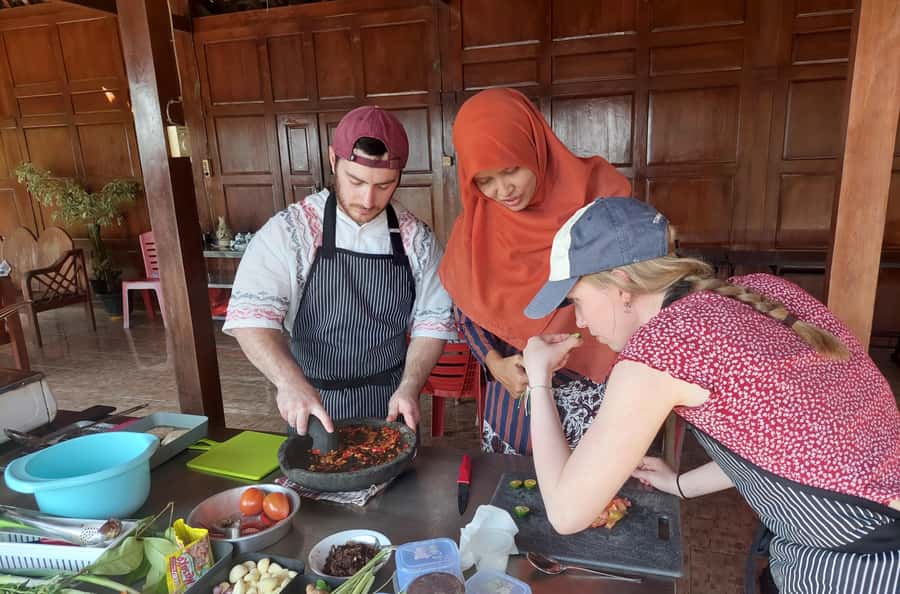
After the market, you head back to the cooking venue in a Javanese house with village neighborhood vibes. This is one of the reasons the experience feels more “real” than a kitchen studio. The setting is cleaner and organized, but it still has that lived-in home feel.
Cooking in a home setting changes the energy. It’s less formal, more conversational. You’re encouraged to interact with other people in your group and ask questions while you work. That matters when you’re learning a cuisine where technique and timing are a big part of the flavor, even if the recipe sounds straightforward on paper.
There’s also a practical side. Home-style spaces usually mean you’re not stuck watching someone cook while you sit behind a counter. You’ll be part of the process—hands-on to a degree—and you’ll also see how the team handles prep, seasoning, and cooking flow so you understand the order things happen in.
Your dishes and your meal: tasting what you made
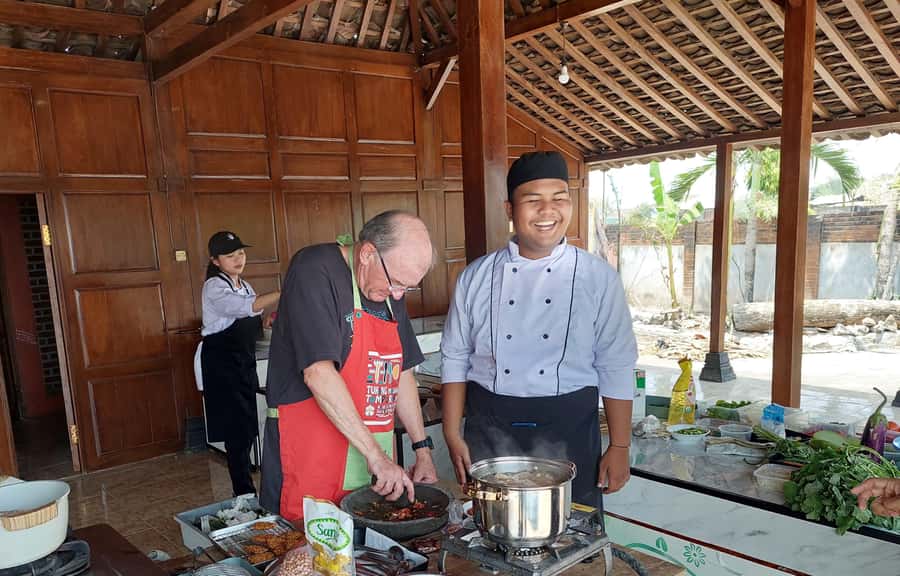
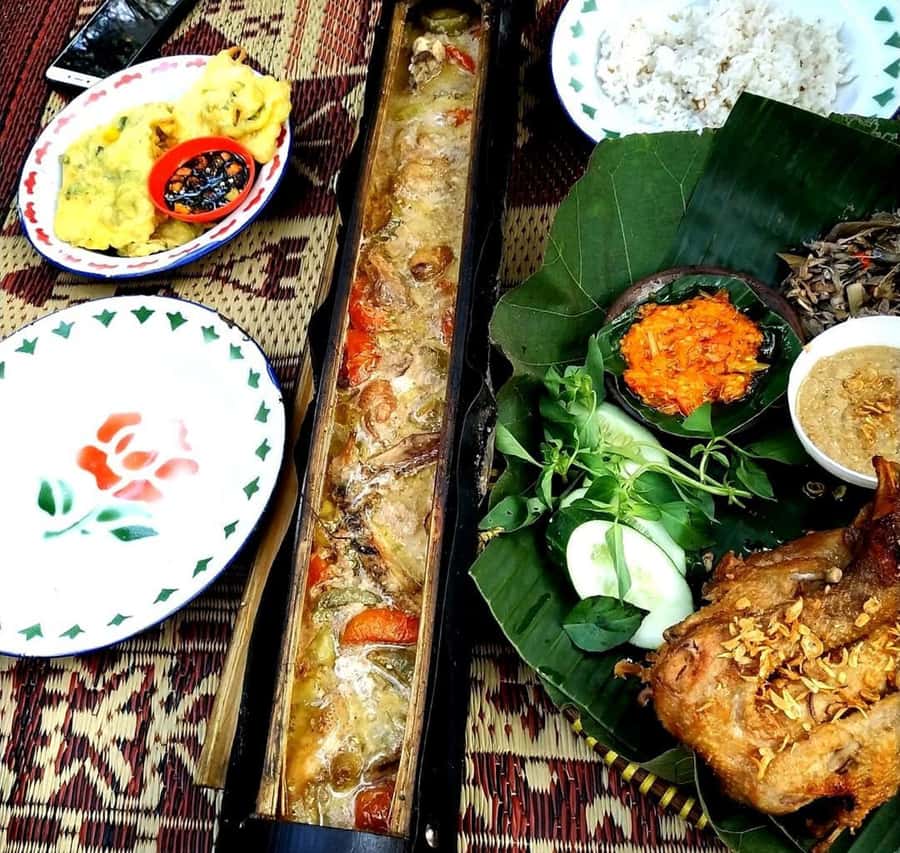
You’ll cook authentic Javanese dishes along with some popular Indonesian dishes. The class isn’t framed as one single dish tutorial. It’s built around preparing and tasting multiple items so you get a feel for how flavors repeat across the cuisine—spice mixes, aromatics, and balancing elements that show up in different forms.
When you finish, you sit down and relax for a meal to taste your creations. This is the moment that makes the whole market-to-kitchen loop worthwhile. Instead of guessing whether you chose the right ingredients, you can taste the results and connect your choices to the outcome.
Based on guest feedback, one dish highlighted by a guest was koolkles—a comfort-food style item that stood out enough to be thanked by name. You might not cook the same dishes as every other group, but the key point is clear: your meal isn’t an afterthought. It’s part of the learning.






Hands-on level: where you may shine, and where you might want more control
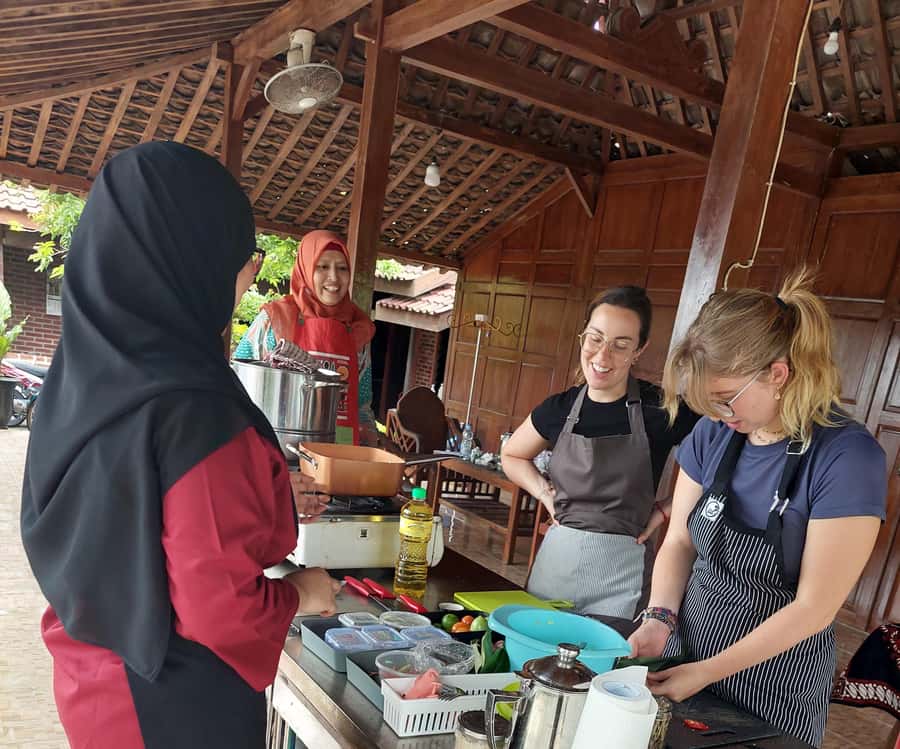
Here’s the balanced truth: the experience is friendly and guided, and the food is delicious, but the hands-on balance can vary.
Some guests were very happy with how much they could do themselves, describing the cooking process as something they could handle with guidance. Others felt the helpers took more tasks out of their hands than they wanted, especially if the group expected to chop, clean, and cook everything personally.
So what should you do? If hands-on is your priority, be clear in the moment. Ask where you can do prep steps, and don’t wait for someone else to take over. If you’re a slower-cooking type, you’ll likely appreciate the mentoring chef’s pace and the chance to learn the sequence, even if you’re not doing every action.
Price and value: why $53 can make sense for this kind of day
At about $53 per person, you’re paying for more than a recipe lesson. This price covers:
- hotel pickup and drop-off
- the market tour
- the cooking class
- all ingredients
- morning tea
If you’ve done cooking classes that only cover instruction, you know how quickly the “hidden” costs add up: ingredient shopping, transport, and the time of an English-speaking guide. Here, the value comes from the full package and the fact that the learning starts before the kitchen—when you choose the ingredients. That’s the part many people skip.
There’s also staffing value. One guest noted a team of about five people working with them, including the chauffeur. When you have multiple staff supporting a small cooking group, it usually means smoother timing and more opportunities to ask questions without the whole class grinding to a stop.
Who this cooking class is best for (and who should think twice)
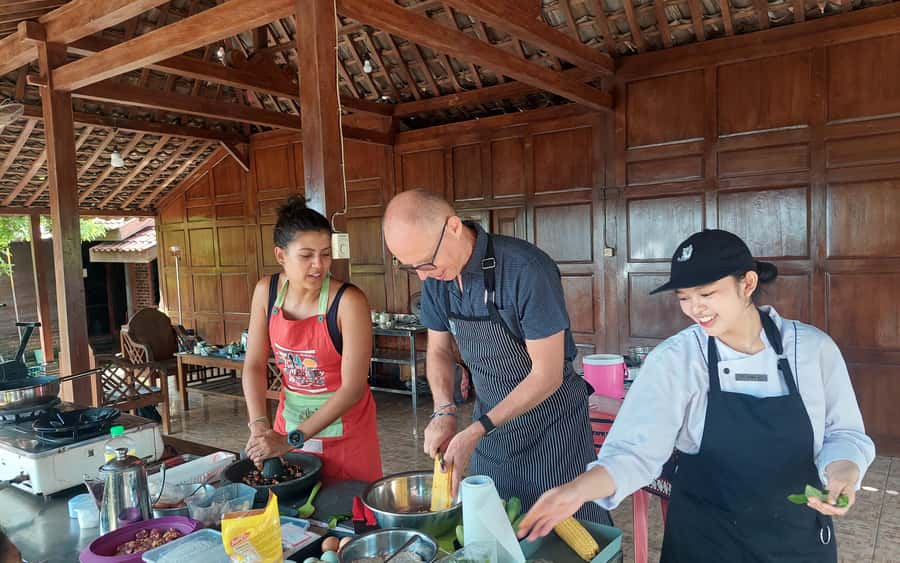
This experience fits you if you want:
- a straightforward way to learn Javanese cooking culture, not just eat Indonesian food
- ingredient education you can use later when shopping
- an English-speaking guide for questions (the instructor is listed as English)
- a warm, social setting where you can talk with the chef team and other cooks
It’s also a great match for food travelers who like to understand the why behind flavors. If you love market wandering but want it to be meaningful, this turns market time into a lesson.
Consider something else if:
- you need a fully hands-on role for every prep and cooking step
- you have mobility impairments (this activity is noted as not suitable)
Practical tips so you feel comfortable from the first pickup
A few details make a difference in how enjoyable the day feels. Wear comfortable shoes and comfortable clothes; you’ll be walking in the market area and moving through the day’s steps. Keep luggage or large bags out of the picture—this activity notes that luggage/large bags aren’t allowed.
If you’re doing laundry-and-iron travel mode, you’ll feel better going in with lighter bags. The whole experience runs on a simple rhythm: pickup, market walk, cooking session, meal, return.
Also, the class is taught in English. If that’s your preference, you’re set. And since pickup is possible across Yogyakarta City and several surrounding areas, you can usually arrange convenience without adding your own transportation planning stress.
Should you book the Yogyakarta Javanese Cooking Class & Market Tour?
Book it if you want the best kind of cooking class: one where the market teaches you how ingredients work, then the kitchen confirms it through taste. The Dewi-led market portion is a strong selling point, and the full inclusion of pickup, ingredients, and morning tea makes the price feel more fair than “just instruction” classes.
Skip it or go in with open expectations if you’re a serious home cook who wants to do everything yourself. The support is real, and so is the kindness—but some steps may be handled for you.
If your goal is learning, culture, and eating food you helped create in a village home setting, this is a solid choice in Yogyakarta.
FAQ
Where does pickup for the cooking class happen?
Pickup is possible from Yogyakarta City, Kulon Progo Regency, Muntilan, Magelang, Yogyakarta, Sleman Regency, and Bantul.
How long is the experience?
The duration is 270 minutes.
Is the cooking class taught in English?
Yes, the instructor is listed as English.
What’s included in the price?
Included are hotel pickup and drop-off, the market tour, the cooking class, all ingredients, and morning tea.
What should I bring?
Wear comfortable shoes and comfortable clothes.
Are luggage or large bags allowed?
No. Luggage or large bags are not allowed.
Is this experience suitable for people with mobility impairments?
No, it’s noted as not suitable for people with mobility impairments.
Can I cancel and get a full refund?
Yes. You can cancel up to 24 hours in advance for a full refund.