REVIEW · YOGYAKARTA
Yogyakarta : Colonial Heritage Guide Walking Tour
Book on GetYourGuide →Operated by YKExplore · Bookable on GetYourGuide
Dutch Yogyakarta in two hours? Surprisingly worth it. This guided colonial heritage walking tour strings together the period 1811–1949 with Dutch and local perspectives, from Tugu to Kilometer Zero. I love the clear landmark-by-landmark story (it’s not just names on a map), and I also like the way the guide connects big events to everyday places like old hotels, churches, and government buildings. One watch-out: the history may lean on Indonesian viewpoints, so you’ll need an open mind about how events are framed.
I also like how the tour stays practical. You get English-speaking guidance plus water, and guides like Hendra, Dora, Hery, and Ophan have a track record of explaining clearly and answering questions. The pace is walking-first, though, so if you want lots of time to sit and linger, plan to do a bit more exploring on your own after.
In This Review
- Key moments that make this tour work
- From Tugu to Titik Nol: a fast, focused route you can actually remember
- The story the guide tells: Dutch rule, local power, and the 1811–1949 timeline
- Tugu and Jalan Mangkubumi: where the tour starts with identity, not trivia
- Hotel Toegoe, Yogya Kembali, and the contrast between colonial comfort and local struggle
- Grand Inna Malioboro and the governance buildings: power systems made physical
- Kampung Ketandan gate (de Poort van Kampoeng Ketandan): multicultural heritage tied to policy
- Pasar Beringharjo and the economic logic of colonial rule
- Monumen Ngejaman (Wayah Titiyoni): symbols of time, memory, and mixed reception
- GPIB Marga Mulya: religion in administration and resistance
- Benteng Vredeburg: from watching the Sultan’s court to symbolizing Dutch oppression
- Kantor Pos Besar Yogyakarta, Bank Indonesia, and BNI: colonial money and communications
- Monumen Serangan 1 Maret and the independence turning point
- Ending at Gereja Santo Fransiskus Xaverius: a colonial legacy you can feel in the details
- Price and value: $18 for a guided narrative you can’t easily DIY
- Who should book this, and who might prefer another option
- Quick practical tips before you go
- Should you book the Yogyakarta Colonial Heritage Guide Walking Tour?
- FAQ
- How long is the tour?
- How much does it cost?
- What’s included in the price?
- Is food included?
- Where does the tour start and where does it end?
- What language is the tour conducted in?
- Is it suitable for people with mobility impairments?
- Can I cancel and get a full refund?
Key moments that make this tour work
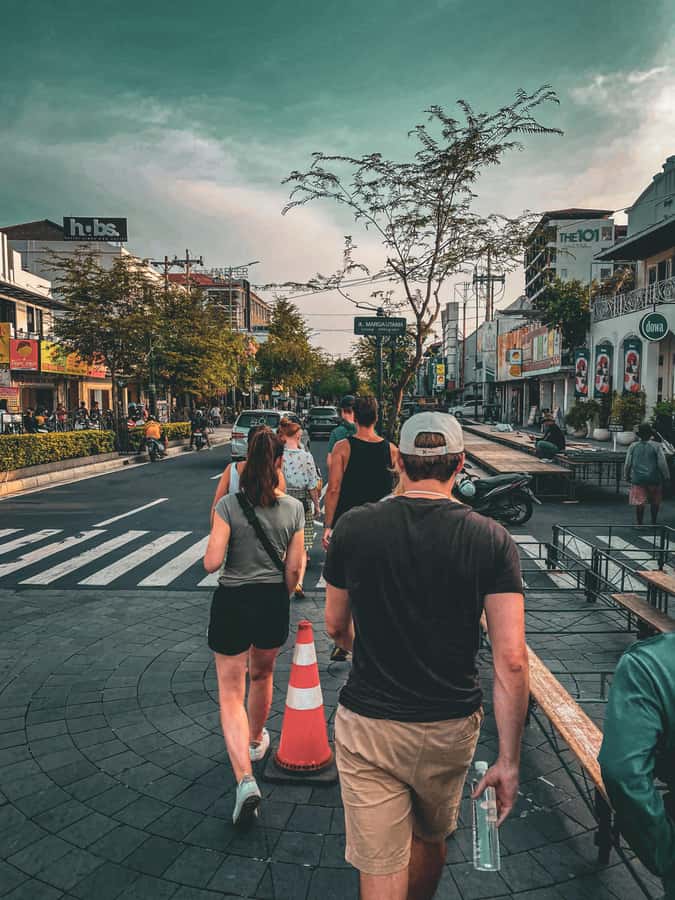
- Tugu Monument: the city’s resilience symbol, explained with Indonesian meaning tied to Yogyakarta’s founding
- Jalan Mangkubumi street-level storytelling: how power, press freedom, and colonial control show up in real addresses
- Hotel Toegoe + government buildings: a stark contrast between Dutch comfort and local hardship during occupation
- Chinese-Indonesian heritage at Kampung Ketandan: seen through the old gateway, not just a vague mention
- Benteng Vredeburg + Monumen Serangan 1 Maret: how architecture shifts from control to resistance
- Finish at Titik Nol (Kilometer Zero): you end with the same symbolic center local life orbits
From Tugu to Titik Nol: a fast, focused route you can actually remember
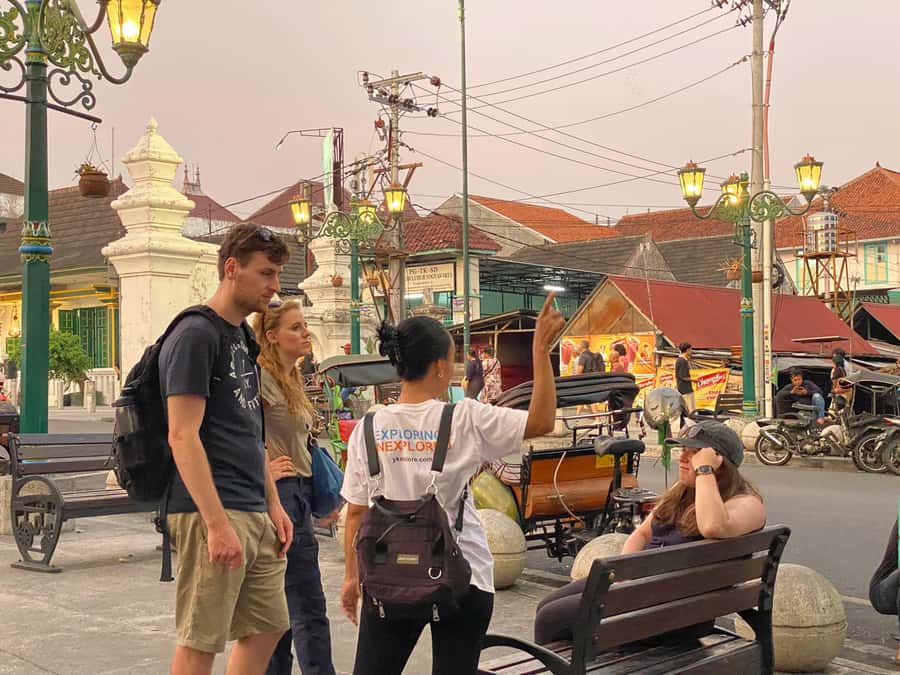
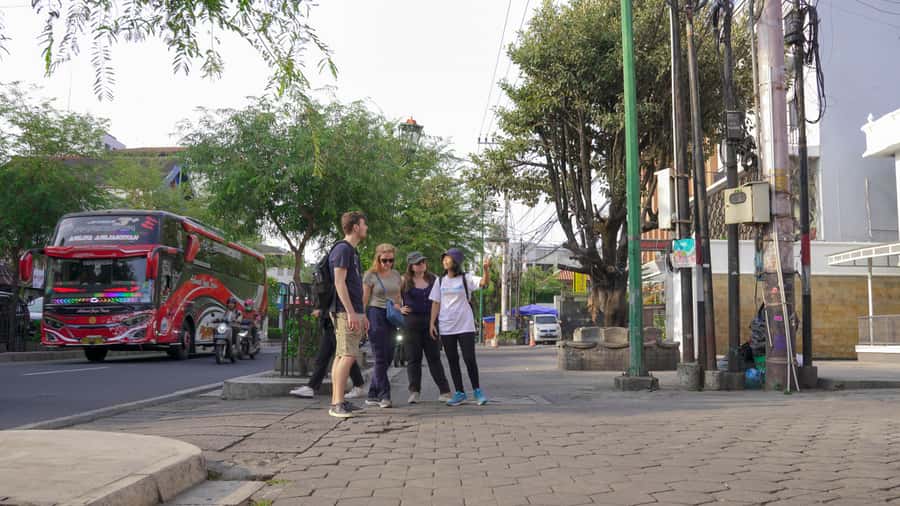
This is a two-hour walking tour that moves through Yogyakarta’s colonial-era landmarks in a logical line: start at the Tugu Monument area and finish at Titik Nol Yogyakarta (the city’s Kilometer Zero). That matters because it’s easy to get lost in Yogyakarta’s history when everything feels spread out. Here, you get a guided thread that ties together Dutch rule, local politics, social change, and independence-era struggle.
The value is that you’re not just “seeing old buildings.” You’re getting a guided reading of what those buildings were for, who used them, and what it meant for people living under the colonial system. And since you end at Kilometer Zero, you come out with a strong sense of orientation for the rest of your stay.
If your goal is deep museum time, this tour won’t replace that. But if your goal is to get bearings fast and understand why certain spots feel important even today, it’s a smart use of time.
You can also read our reviews of more walking tours in Yogyakarta

The story the guide tells: Dutch rule, local power, and the 1811–1949 timeline
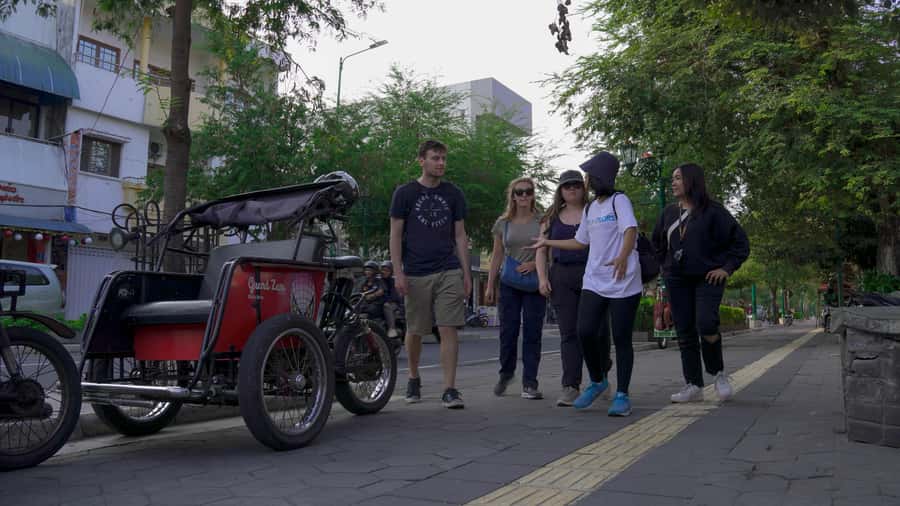
The tour is built around a full arc from 1811–1949, covering the Dutch presence and the lead-up to Indonesian sovereignty. One reason I like the setup is that it frames colonial history as a changing system, not a single snapshot. Government structures, economic power, and social life all shift over those decades, and the guide uses the city itself to show those changes.
You may hear different accounts depending on how the guide interprets events from an Indonesian perspective. That’s not a problem if you treat it as part of the experience. You’re learning how people in Yogyakarta understand the past—plus how those memories shape current identity.
You’ll also likely hear names tied to Dutch influence and later resistance. Some guides, like Hendra, have connected local stories to the Dutch VOC era and the early republic period. Even when the details differ from guide to guide, you should expect a narrative that ties 19th-century control to the independence turning points near the end.
Tugu and Jalan Mangkubumi: where the tour starts with identity, not trivia
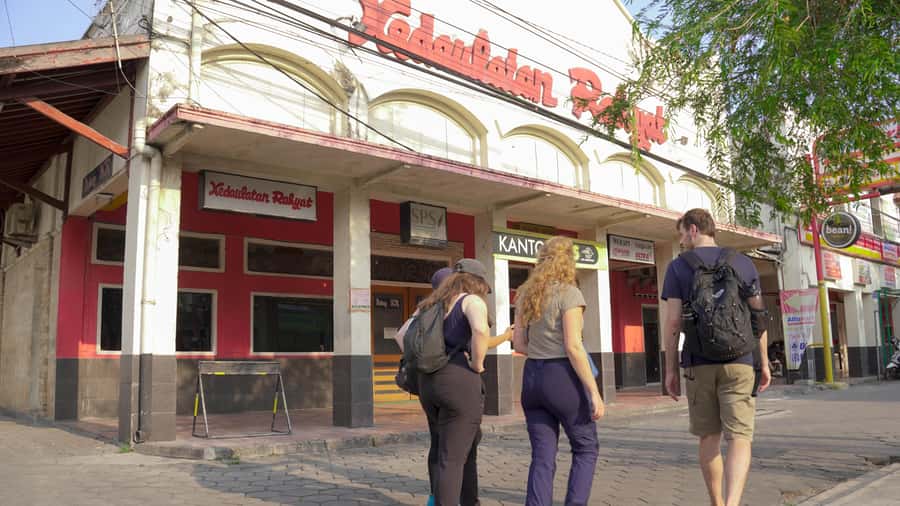
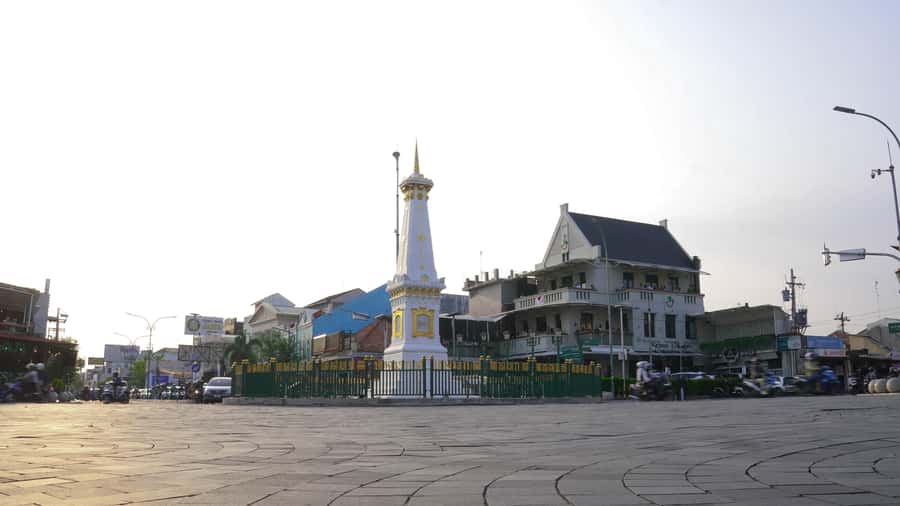
You begin at the Tugu Monument area, where the guide explains what Tugu means beyond being a landmark photo stop. From the Indonesian viewpoint shared on the tour, Tugu represents unity and resilience tied to the spirit of independence connected to Yogyakarta’s foundation.
Then the walk down Jalan Mangkubumi turns the street into a timeline. You pass the Kantor Kedaulatan Rakyat, a site connected to press freedom and the struggle for independence. This is the kind of stop that makes the history feel less distant. It’s easy to think independence movements were only battles in the field, but the press and public voice mattered too.
This section is also where a good guide adds extra clarity. Guides such as Dora have a reputation for taking time with explanations and fielding questions instead of rushing the group through.
Practical note: this is an active street-walking segment. You’ll be crossing busy areas, so follow the guide’s lead on timing and where to step.
Hotel Toegoe, Yogya Kembali, and the contrast between colonial comfort and local struggle
As you continue, the tour points out Hotel Toegoe, introduced as a window into the luxury Dutch officials enjoyed during colonial rule. The contrast is the point: while Dutch administrators occupied comfortable spaces, local people faced the pressures of occupation and control.
Nearby, the Tetengger Yogya Kembali monument is used to connect Yogyakarta to the larger anti-colonial story. You’re not just looking at a statue—you’re getting why Yogyakarta’s role mattered in the long push that led Indonesia toward eventual independence.
These stops are a good reminder of why walking tours in old cities can be more than postcard sightseeing. Architecture and monuments often encode who had power and who had to endure it.
Grand Inna Malioboro and the governance buildings: power systems made physical
Around the Grand Inna Malioboro area, the tour keeps moving through colonial-era administration. The guide explains how Dutch governance structures shaped Indonesia’s later political landscape, using government buildings you can still see.
You’ll also pass the Gedung DPRD, which helps the guide show how official control operated. Whether you’re a history buff or just curious, this portion is valuable because it explains the logic of rule: offices weren’t just offices; they were tools.
Even if you’ve read about colonial administration before, seeing it in the same street grid as daily Yogyakarta life helps your understanding click.
You can also read our reviews of more guided tours in Yogyakarta

Kampung Ketandan gate (de Poort van Kampoeng Ketandan): multicultural heritage tied to policy
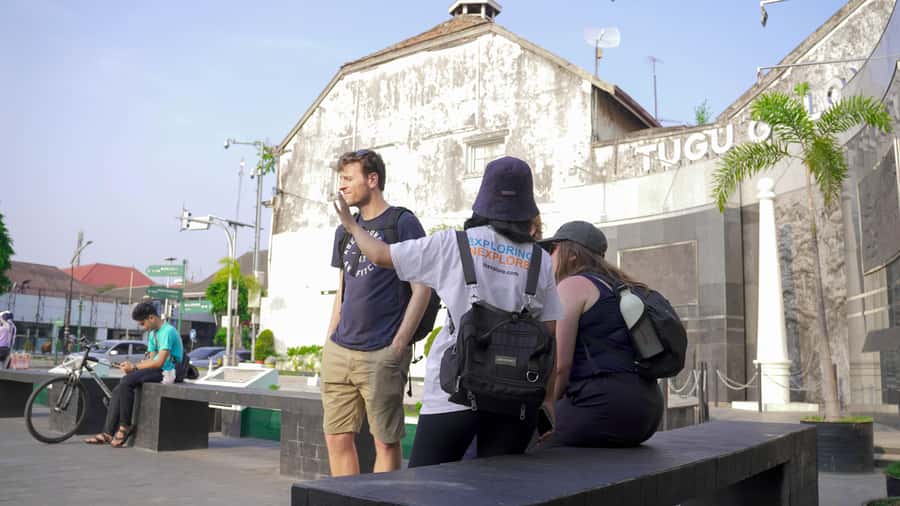
One of the more interesting cultural stops is Gerbang Kampung Ketandan (de Poort van Kampoeng Ketandan). Here, the tour turns to multicultural heritage, especially the Chinese-Indonesian community, and how Dutch colonial policies affected local lives.
This matters because it adds texture. Colonial history isn’t only Dutch versus Javanese. It also includes how colonial systems shaped communities, trade, residence patterns, and social standing. You get a clearer sense of Yogyakarta as a layered city rather than a single-character story.
If you care about how identities formed and were reshaped by external rule, this is a key segment.
Pasar Beringharjo and the economic logic of colonial rule
At Pasar Beringharjo, the guide uses the market to show how traditional local life existed alongside—or was reorganized by—colonial economic systems. Even if you’ve never taken a tour about colonial-era economics, markets are a real place to understand it.
The practical takeaway: you learn not only what colonial powers did at the top, but also how those decisions filtered down into daily trade and survival.
Bring your curiosity. The market is a place where you can keep looking after the tour ends, too. The guide can point out what to watch for, but you’ll need to do a bit of your own wandering if you want the full flavor.
Monumen Ngejaman (Wayah Titiyoni): symbols of time, memory, and mixed reception
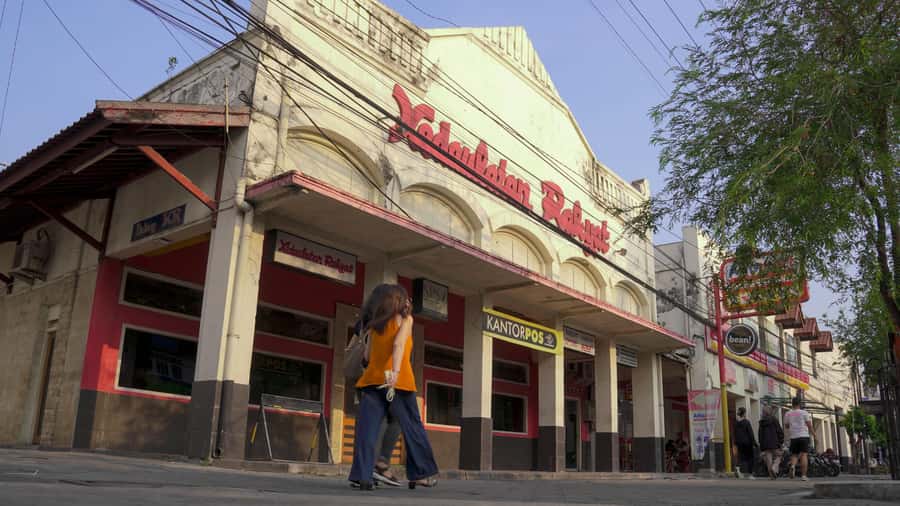
The tour includes Monumen Ngejaman, also known by the name Wayah Titiyoni. The guide explains symbolic ties to colonialism and notes that the monument’s reception wasn’t uniform in local society.
This is a good stop for thinking, not just viewing. Symbols can be read in different ways depending on who you ask and what you remember. It’s a reminder that history doesn’t always settle politely into one meaning.
If you like understanding how locals interpret monuments, you’ll enjoy this pause.
GPIB Marga Mulya: religion in administration and resistance
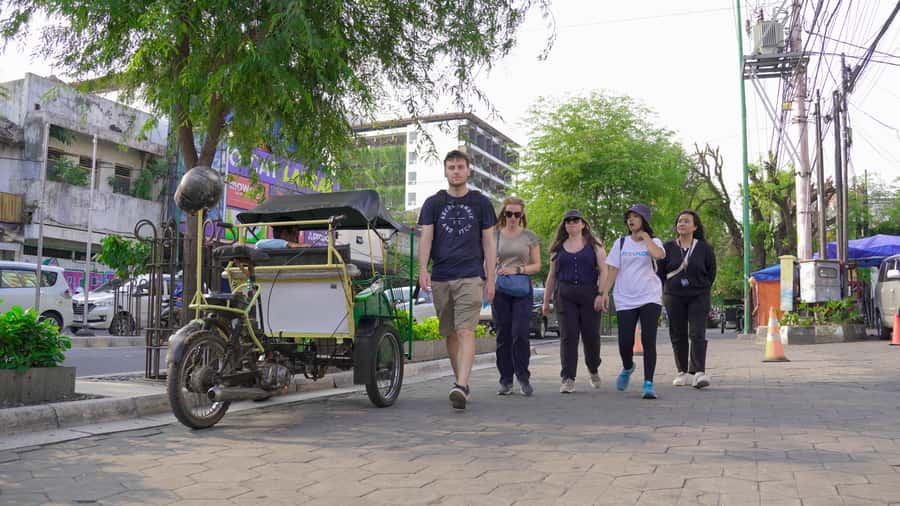
As you reach GPIB Marga Mulya, the tour talks about religion’s complex role under colonial governance and local resistance. This is one of those moments where you see how cultural institutions can serve different needs depending on the era.
Even if you’re not religious, this kind of stop is useful because churches and religious buildings often became more than places of worship. They could function as community anchors and, at times, as part of the colonial social framework.
The guide’s job here is to connect buildings to ideas: who benefited, who was controlled, and how local life adapted.
Benteng Vredeburg: from watching the Sultan’s court to symbolizing Dutch oppression
One of the most visually striking stops is Benteng Vredeburg. The tour explains that it was originally built to monitor the Sultan’s court. Later, it became a symbol of the oppressive grip of Dutch rule on Yogyakarta.
That arc is powerful because it shows how architecture changes meaning over time. A fortress built for surveillance becomes a message, and locals read it through lived experience.
If you want one “wow” stop in the tour, this is usually the one. Take a minute to look at how its presence dominates the area; the guide’s explanation will make the bulk of it easier to interpret.
Kantor Pos Besar Yogyakarta, Bank Indonesia, and BNI: colonial money and communications
The tour then moves into the business and infrastructure side of colonial power:
- Kantor Pos Besar Yogyakarta (the post office)
- Bank Indonesia and BNI Yogyakarta
Here, the guide focuses on economic systems that helped fuel colonial interests, often at the expense of local prosperity. For me, this is the part that makes colonialism feel concrete. Money and messaging sound boring until you see what they enabled: control, extraction, and decision-making from far away.
Even if you walk past these buildings quickly, the history framing helps you understand why they were important.
Monumen Serangan 1 Maret and the independence turning point
Near the end, the tour visits Monumen Serangan 1 Maret. The guide uses it to highlight Indonesian struggle to reclaim sovereignty during the Dutch reoccupation in 1949—presented as a major turning point toward freedom.
This stop gives emotional weight to everything earlier. The walk started with monuments and offices; now it lands on a moment of renewed resistance and political change.
It’s also a good place to ask questions, because guides can often connect the “what happened” with “why it matters” for the city’s identity today.
Ending at Gereja Santo Fransiskus Xaverius: a colonial legacy you can feel in the details
The tour concludes at Gereja Santo Fransiskus Xaverius. The guide presents it as a poignant reminder of Yogyakarta’s diverse colonial legacy—grand, conflicted, and multi-layered.
I like closing with a place that reflects community and identity rather than only control and punishment. It makes the whole tour feel less like a list of Dutch structures and more like a city learning to live with its past.
Then you finish back at Titik Nol so you can keep your bearings for the rest of the day.
Price and value: $18 for a guided narrative you can’t easily DIY
At $18 per person for a 2-hour walk, this tour is priced like a practical orientation session. You’re paying for:
- an English-speaking guide
- a guided narrative covering 1811–1949
- water to keep you going
Food isn’t included, so you’ll want to plan snacks separately. But you also shouldn’t expect the tour to be a meal. The value is in interpretation: a lot of colonial-era buildings are easy to pass without understanding what they represented.
Also, the tour is set up so you can skip ticket lines, which can save time where entries are required.
Is it “worth it”? If your time in Yogyakarta is short and you want a coherent story walking distance from Tugu to Kilometer Zero, yes. If you’re staying for weeks and you love museum-style independence and self-paced reading, you might prefer to spend longer elsewhere. But for many visitors, this fills a real gap.
Who should book this, and who might prefer another option
This is a strong fit if you:
- want an English explanation of Dutch colonial history tied to places you can see
- like walking city centers and learning from street-level context
- enjoy asking questions and getting answers on cultural and political details
- want a fast way to understand why monuments matter today
It may be a less good fit if you:
- don’t like walking for a full two hours
- need mobility support, because the tour is not suitable for people with mobility impairments
- want lots of sitting time or museum-style pacing
Quick practical tips before you go
- Wear shoes you can walk in for two hours. This is a sidewalk-heavy route.
- Bring a bit of flexibility for street crossings; follow your guide’s timing.
- If you want snacks, plan ahead. The tour itself doesn’t include food, but your guide can still point you toward what’s worth trying nearby.
- If booking asks for a WhatsApp number, add it. It helps the team communicate with you more easily.
Should you book the Yogyakarta Colonial Heritage Guide Walking Tour?
Book it if you want a guided, English-first way to understand how Dutch colonial power showed up across real Yogyakarta sites—from Tugu and press freedom to forts, banks, churches, and independence-era monuments—without spending your whole day stuck in museums.
Think twice if you hate long walks, need step-by-step accessibility support, or you only enjoy history when you can linger quietly. In that case, you might still see the same places on your own, but you’d miss the interpretation thread that makes the buildings feel connected.
For most first-time Yogyakarta visitors, I’d say this is a smart value move: you’ll leave with a clearer city and a story you can repeat the next day.
FAQ
How long is the tour?
The tour lasts 2 hours.
How much does it cost?
It costs $18 per person.
What’s included in the price?
An English-speaking guide and water are included.
Is food included?
No, food and drinks are not included.
Where does the tour start and where does it end?
It starts at the TOKIO DISTRICT area and finishes at Titik Nol Yogyakarta (Kilometer Zero).
What language is the tour conducted in?
The tour is conducted in English.
Is it suitable for people with mobility impairments?
No, it is not suitable for people with mobility impairments.
Can I cancel and get a full refund?
Yes. You can cancel up to 24 hours in advance for a full refund.