REVIEW · YOGYAKARTA
Yogyakarta: Borobudur & Prambanan Guided Tour w/ Entry Fees
Book on GetYourGuide →Operated by Jogja Borobudur Tour & Travel · Bookable on GetYourGuide
Two UNESCO sites, one ride. This guided day trip pairs Borobudur’s Buddhist stone mastery with Prambanan’s Hindu temple drama, while handling hotel pickup and temple entry fees for you.
I like two things most. First, the tour includes climb-up access to the top at Borobudur (except on Mondays), so you’re not just looking from below. Second, you get guided context inside the temples—stories that make the carvings and layouts feel less like random detail and more like a purpose-built “message in stone.”
The main consideration is simple: no food or drinks are included, and if your tour falls on a Monday you won’t be able to climb at the temples.
In This Review
- Key Highlights You’ll Feel Immediately
- Borobudur’s World-Class Layout (and What Your Guide Will Point Out)
- Climbing Up Borobudur: Top Views, Time Pressure, and Monday Rules
- Optional Mendut and Pawon: When You Want One More Stop Without Another Full Day
- Prambanan at Human Scale: Big Temples, Clear Themes
- How the Transport and Guides Work (So You Don’t Waste Time)
- Price and Value: Is $120 a Fair Deal?
- Practical Planning Tips for a Smoother Day
- Should You Book This Borobudur & Prambanan Guided Tour?
Key Highlights You’ll Feel Immediately
- Entry fees are taken care of, so you spend less time at ticket hassles and more time in the temples
- English-speaking guide time inside Borobudur and Prambanan gives you the why behind the what
- Borobudur climb-up access (except Mondays) turns the visit into a vertical viewpoint experience
- Prambanan’s Trimurti theme (Brahma, Vishnu, Shiva) helps you connect the temples to the beliefs behind them
- Optional Mendut and Pawon temples fit nicely if you want one extra layer beyond the headline sites
- Hotel pickup and drop-off with professional transport keeps the day moving without stress
Borobudur’s World-Class Layout (and What Your Guide Will Point Out)
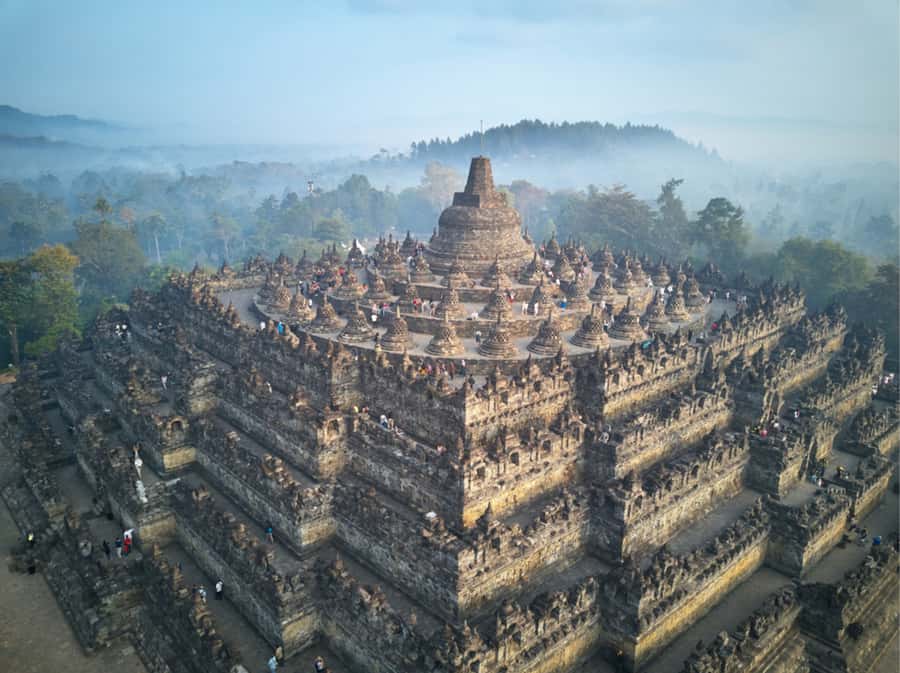
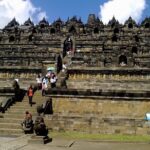
Borobudur is the kind of place that looks unreal until someone explains how it’s built. The temple is famous as the world’s largest Buddhist legacy, and the design makes you walk through layers of meaning. Your route takes you through the main structure and shows off the standout features—especially the 504 life-sized Buddha statues, carved so each one is a single stone piece.
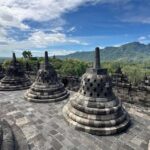
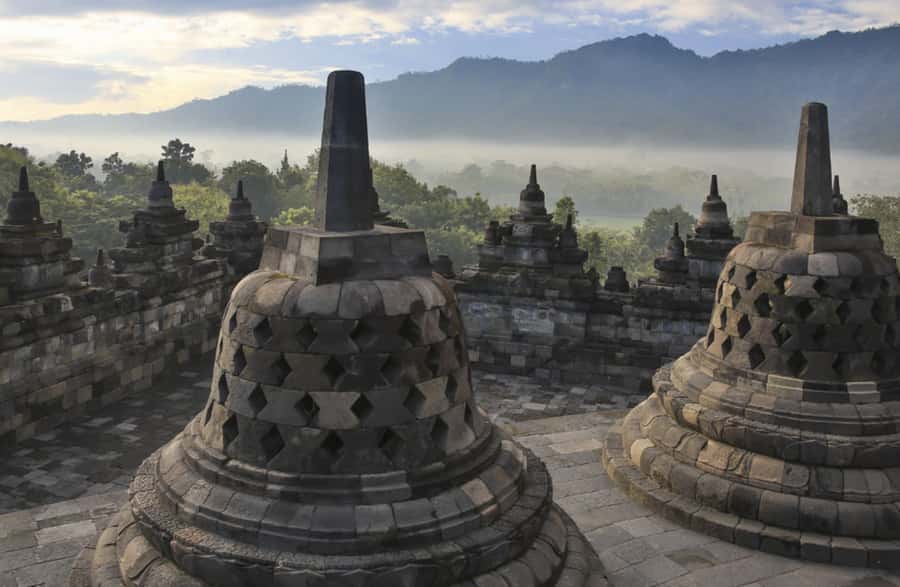
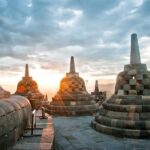
What I appreciate here is not just seeing statues, but getting a sense of how they’re meant to be read. Your guide helps you connect details like the seated Buddhas beneath the bell-shaped spires—small shapes that might seem repetitive until you understand the structure’s rhythm and intention.
Borobudur can also feel like a museum if you’re left alone with your phone. The guided version changes the vibe. You’re not guessing. You’re hearing stories about what you’re looking at and why it matters, which makes the walking feel purposeful instead of exhausting.
One more practical point: your temple time isn’t all solo wandering. The tour includes a guide inside Borobudur, and then you also benefit from the on-site temple guide system. That matters because Borobudur rewards attention. If you just pass through at speed, you miss the “aha” moments—like when a guide points out the logic behind what’s placed where.
You can also read our reviews of more guided tours in Yogyakarta



Climbing Up Borobudur: Top Views, Time Pressure, and Monday Rules
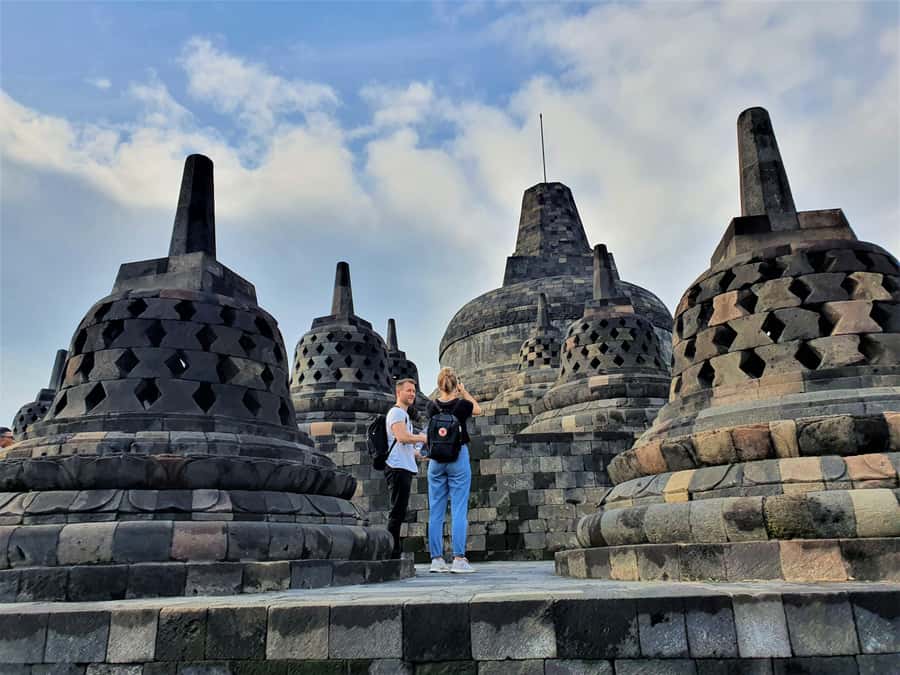
The headline upgrade on this tour is the climb-up access to the top of Borobudur. That changes everything. From higher levels, Borobudur stops being a flat photo subject and becomes a monumental space you can feel—scale, symmetry, and the layers of the complex start to click.
There’s also a timing reality. Climbing areas have rules, and the tour clearly anticipates that by building climb access into the experience. You’ll still be doing a lot of walking during the day, but having the climb included makes the effort feel worth it, not optional.
Now the critical snag: Mondays. The tour explicitly notes that climbing to the top of the temples is not allowed on Mondays. If your dates include a Monday, you should plan your expectations around a non-climb Borobudur visit. It’s still extraordinary, but you won’t get the vertical payoff.
One more logistics detail you’ll want to know before you go: your driver won’t be the person leading you inside the temple zones. The tour is arranged so you have the right guides at the monuments. Even when you’re with a driver for transport, you’re guided through the temple experience by the people licensed to guide there—especially helpful if you want the stories without having to research every panel yourself.
And yes, the day can include weather surprises. If rain hits around Borobudur, the experience still works, but you’ll feel it in your footing and photos. I’d treat it like a walking day with temple surfaces, not a short stroll.
Optional Mendut and Pawon: When You Want One More Stop Without Another Full Day
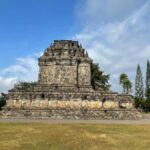
After Borobudur, this tour offers an optional add-on: Mendut and Pawon temples. The reason they’re paired with Borobudur is that they sit in a straight-line relationship with it—often discussed as part of a broader ritual process tied to the temples’ placement.
These two are smaller than the main act, but that can be a plus. If Borobudur feels like an entire world of carvings and layers, Mendut and Pawon can feel like the “supporting cast” that helps the main story make more sense. You get to see how the larger area functioned, instead of treating the site as one isolated monument.
This is also a good option if you want a little variety within the long day. If you’re visiting only two sites total, the day can still feel packed. Adding Mendut and Pawon gives you continuity without doubling the intensity.
That said, since Mendut and Pawon are optional, you should decide based on how your body handles walking. If you know you’re sensitive to long museum-style routes, the main Borobudur-plus-Prambanan plan may already be enough. If you’re feeling strong and want more context, the optional temples fit nicely.
Prambanan at Human Scale: Big Temples, Clear Themes
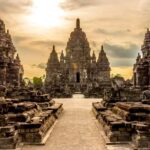
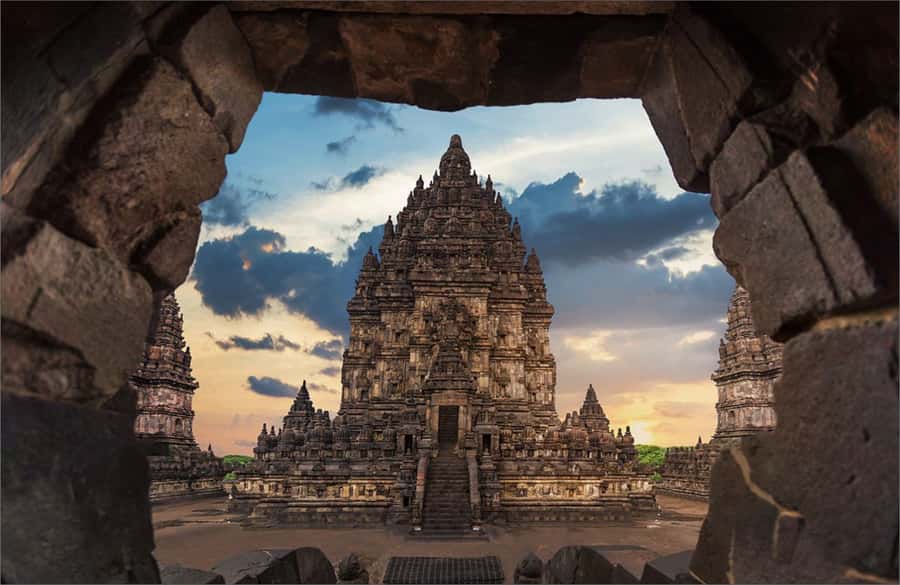
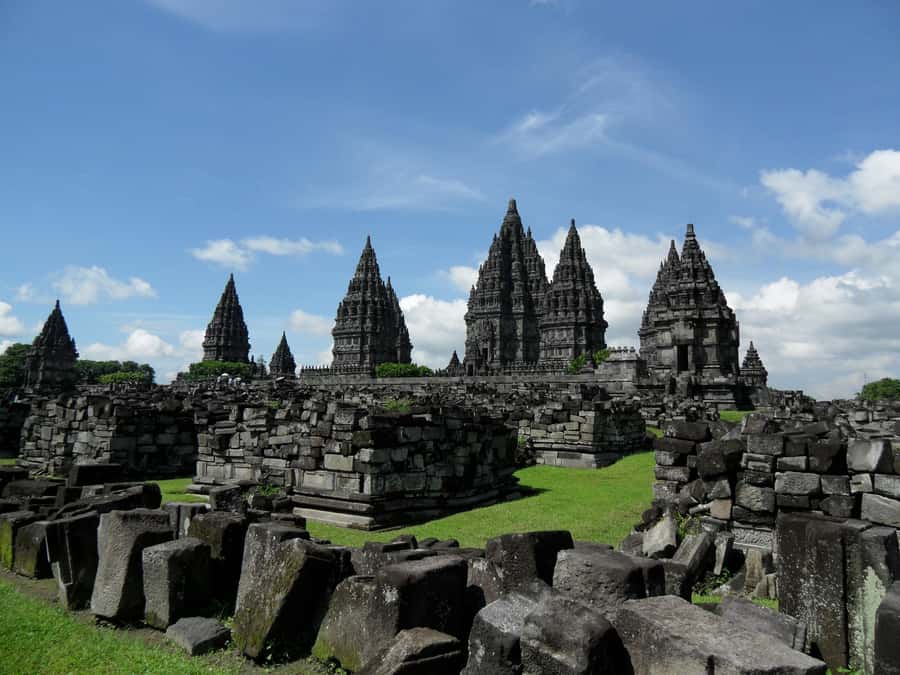
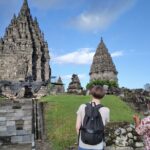
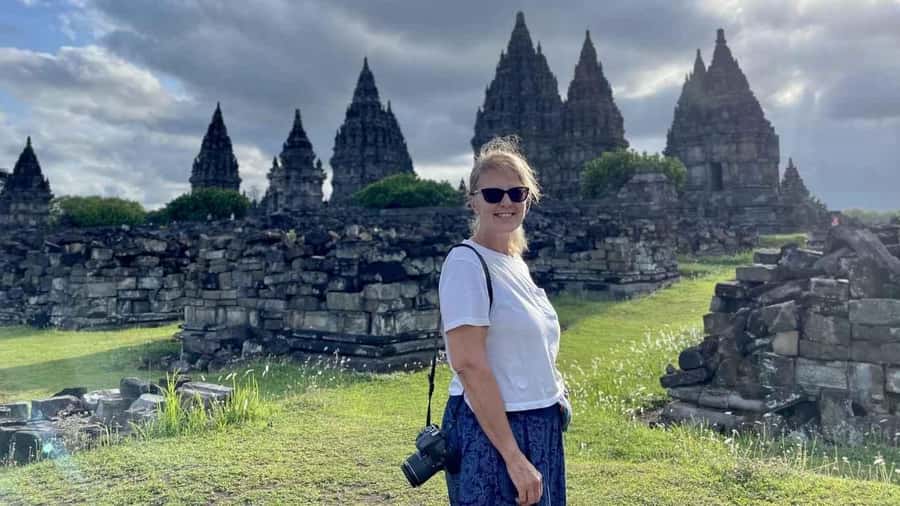
Then you pivot to Prambanan, and the mood changes fast. Prambanan is a UNESCO World Heritage site built between the 8th and 10th centuries, and it’s famous for its sheer temple scale. It’s not just one building—it’s a complex of temples where you can feel the sense of planning and hierarchy.
The key theme your guide will put into focus is the Trimurti: Brahma the creator, Vishnu the preserver, and Shiva the destroyer. Prambanan also has a reputation for expressing both Hindu and Buddhist influences, and the guide helps explain how that shows up in the complex’s identity.
If Borobudur can feel like a visual encyclopedia, Prambanan can feel more like a live theater set—big forms, strong geometry, and lots of visual drama from the open courtyards. When you understand the spiritual framework, the size starts to feel like a feature, not just something to photograph.
This is also where having a guide inside matters. Without context, you might recognize it as impressive but still not know what you’re looking at. With a guide, the carvings and layout connect back to beliefs and symbolism, including why this temple complex became such an important reference point in Indonesia.
And Prambanan’s position as the largest Hindu temple site in Indonesia—and among the largest in Southeast Asia—gets more meaningful when you’re shown why the complex is built the way it is.
How the Transport and Guides Work (So You Don’t Waste Time)
The “glue” of this tour is the ground logistics: pickup and drop-off from your accommodation in the Yogyakarta area, plus transportation between sites. You’re not driving yourself, and that’s a big deal when you have a full day packed into about 10 hours.
In practice, you’ll notice two different layers of guidance. First, there’s the overall tour guide, in English, who keeps the flow organized and explains what you’re about to see. Second, once you arrive at each temple, you work with the temple guide system inside the monuments. That division of labor matters because the driver can focus on transport and timing, while the temple guide focuses on interpretation.
This setup also makes timing easier. You’re not left negotiating tickets or figuring out where to go first. The tour includes entry fees, and the stated goal is that you can move efficiently between both major sites in one day.
Group size can vary. Some people end up with just their own car; others may share transport. Either way, the structure tends to be the same: hotel pickup, long drive/transfer time between temples, then guided temple visits, then the return to your hotel.
Also, be aware that the tour is not built around lunch being included. That means your day may include a scheduled break, but you’ll still need to pay for food yourself. If you’re the type who hates surprise meal costs, plan ahead so your budget doesn’t get squeezed at the worst possible moment.



Price and Value: Is $120 a Fair Deal?
At $120 per person for a 10-hour day, the value depends on what you’d otherwise do yourself. The tour includes all temple entry fees plus tour guide time and the Borobudur climb-up access (except Mondays). It also includes transportation and hotel pickup/drop-off.
If you were planning to DIY this, your biggest expense isn’t the ride alone—it’s the tickets, the guided interpretation you might want inside the temples, and the time it takes to coordinate everything. This package bundles those pieces, which is exactly what you’re paying for.
Now, there’s the trade-off that a few people flag: the tour isn’t a food-included day, and some feel the cost leans high if they compare it to transport only. Also, the driver doesn’t act as the temple guide inside the monuments—your temple experience is guided by temple guides at the sites, not by the person driving you.
So here’s my practical way to judge it: if you want a stress-free full-day plan with entry fees handled and you care about understanding what you’re seeing, this price usually makes sense. If you’re traveling on a tight budget and you’re comfortable arranging transport and tickets and skipping guided context, you might find a cheaper route.
Practical Planning Tips for a Smoother Day
Keep these points in mind so the day feels smooth, not chaotic:
- Monday changes the climb. If your dates are flexible, this one rule can decide how satisfying Borobudur feels for you.
- Bring your appetite budget. Food and drinks are not included, so plan for lunch on your own.
- Expect a lot of walking. Both Borobudur and Prambanan involve moving through temple areas. Even with guidance, you’ll cover distance.
- Plan for weather. Rain can happen around Borobudur, and it affects comfort and footing more than the sights themselves.
- Use the guide time. If your guide is friendly (many are), ask questions. The best moments are often when you understand what a detail symbolizes rather than just where it is.
- Don’t be shocked by side stops. Your driver or guide may add a short cultural stop if timing allows, such as coffee tasting or fruit stops, but that depends on your day and schedule.
Should You Book This Borobudur & Prambanan Guided Tour?
Book it if you want a full-day, well-structured introduction to Java’s two heavyweight UNESCO temple sites, and you’d rather pay for convenience than spend your energy coordinating tickets and guides. The Borobudur climb-up access (on non-Mondays), the inclusion of entry fees, and the guided explanation inside both temples are the main reasons this tour feels worth it.
Skip or reconsider if you’re strictly budget-focused, you’re okay reading on your own, or you’re traveling on a Monday and the climb matters most to you. You can still enjoy Borobudur and Prambanan without climbing, but that’s the difference between a great visit and a truly memorable one for some people.
If your goal is to leave Yogyakarta with the temples understood—not just photographed—this tour is a strong, sensible choice.