REVIEW · YOGYAKARTA
Yogyakarta: Mount Merapi Guided Jeep Safari with Pickup
Book on GetYourGuide →Operated by Jogja Borobudur Tour & Travel · Bookable on GetYourGuide
Mount Merapi is one of Java’s loudest classrooms. This guided Jeep safari from Yogyakarta puts you right on the terrain of an active volcano, with stops that explain what happened in 2010 and why the mountain still matters. I like the setup because it’s small-group and includes pickup, so you spend less time figuring out transport and more time on the road.
I also really love the mix of real-world driving and human-scale context. You get Jeep time on rough paths, plus a guided visit to the Mini Museum, where the 2010 eruption story is told in a way that makes the scale feel real. One thing to keep in mind: visibility is weather-dependent, so cloud cover can limit what you see from the viewpoints.
For timing, consider that you’re on the go for about 3 hours total, not a half-day. That can feel perfect if you want a hit of adrenaline and learning, but if you’re hoping to get extremely close to the crater area, you may find the experience a bit tight.
In This Review
- Key highlights worth your attention
- Why Mount Merapi by Jeep feels different from a typical day trip
- Getting from Yogyakarta to the Jeep: pickup, timing, and sanity-saving logistics
- Jeep driving on Merapi: what the terrain and the Bunker viewpoint really deliver
- The Mini Museum: turning 2010 eruption photos into understanding
- Choosing your timing: sunrise options, weather reality, and photo strategy
- What’s included (and how it affects your comfort)
- Price and value: why $35 can work well here
- Service quality: the human touch that shows up on the day
- Who should book this Merapi Jeep safari, and who should think twice
- Should you book? My take on the decision
- FAQ
- FAQ
- How long is the Mount Merapi Jeep Safari from Yogyakarta?
- Is this tour private?
- Does the tour include pickup from my hotel in Yogyakarta?
- What if I’m staying outside Yogyakarta, like Borobudur, Magelang, or near the airport?
- Is the guide available in English?
- What’s included in the price?
- Will I still go if it rains?
- Where is the big learning stop during the tour?
Key highlights worth your attention
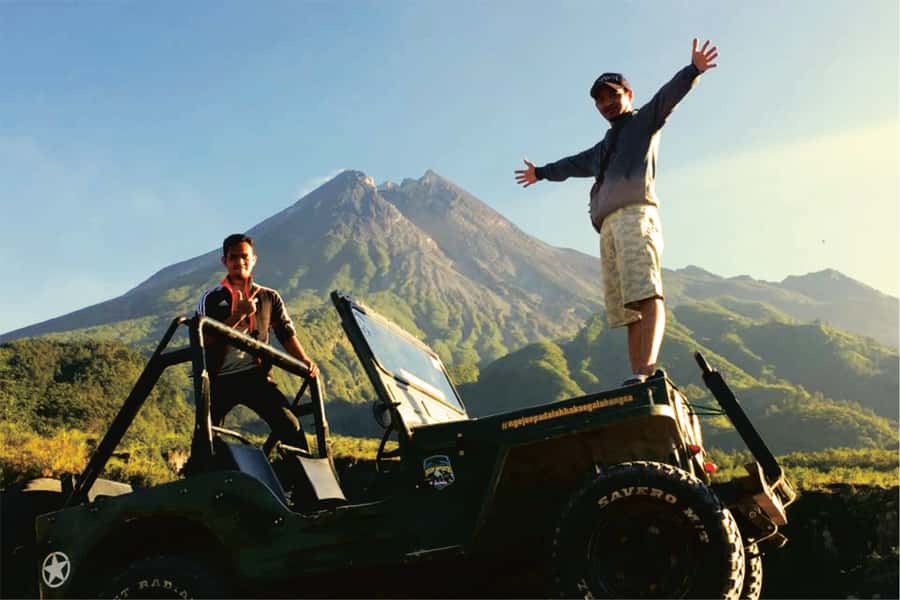
- 4WD Jeep driving that matches Merapi’s rough ground, not a smooth scenic drive
- Bunker viewpoint stop for dramatic photos when the weather cooperates
- Mini Museum tied specifically to the 2010 eruption, including why it was so severe
- English-speaking guide who can explain both science and local impact
- Small group (up to 4) for a more personal ride
- Helmet included so you can focus on the ride, not gear shopping
Why Mount Merapi by Jeep feels different from a typical day trip
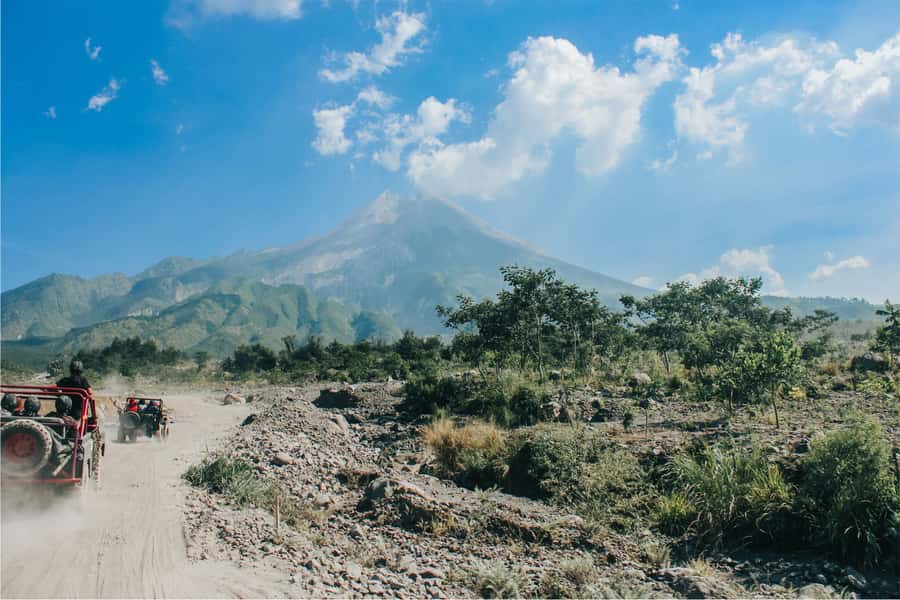
Mount Merapi is an active volcano with history reaching back around 10,000 years. What makes this safari feel different is that you’re not just viewing from a distance. You’re bouncing and rolling through the landscape shaped by eruptions, which changes how you understand the mountain.
From the Jeep, Merapi becomes less of an icon and more of a presence. The guide’s narration helps connect the dots: where lava and ash changed the terrain, why certain areas were impacted, and how the community learned to live with an erupting neighbor. It’s the kind of context that makes later photos mean something beyond a postcard.
The best part is the pacing. You get viewpoints for visuals, then driving for sensation, then the Mini Museum for meaning. It’s not random. It’s three ways of understanding the same story.
You can also read our reviews of more guided tours in Yogyakarta
Getting from Yogyakarta to the Jeep: pickup, timing, and sanity-saving logistics
Pickup is included from your accommodation in Yogyakarta, which matters more than you’d think. Central Java can be busy, and Merapi-area roads don’t exactly run on a tourist schedule. Having someone pick you up and handle the handoff helps you start the day relaxed.
In practice, you might spend roughly 40 to 45 minutes in the transfer car depending on where you’re staying and traffic levels. This is also where the guide often starts setting the stage. Names like Brian show up in guide/driver stories for being on time and communicating early, which is helpful if you want to avoid day-of confusion.
Small group size (up to 4 participants) also makes a difference during pickup. You’re not juggling crowds, so it’s easier for your guide to match the ride to the group mood—photo stops, slower stretches, or more conversation on the way.
A drawback: pickup outside Yogyakarta (for example around Borobudur, Magelang, or the airport) is possible, but it costs extra (IDR 300,000). If you’re not staying inside Yogyakarta, double-check your location so you’re not surprised by that add-on.
Jeep driving on Merapi: what the terrain and the Bunker viewpoint really deliver
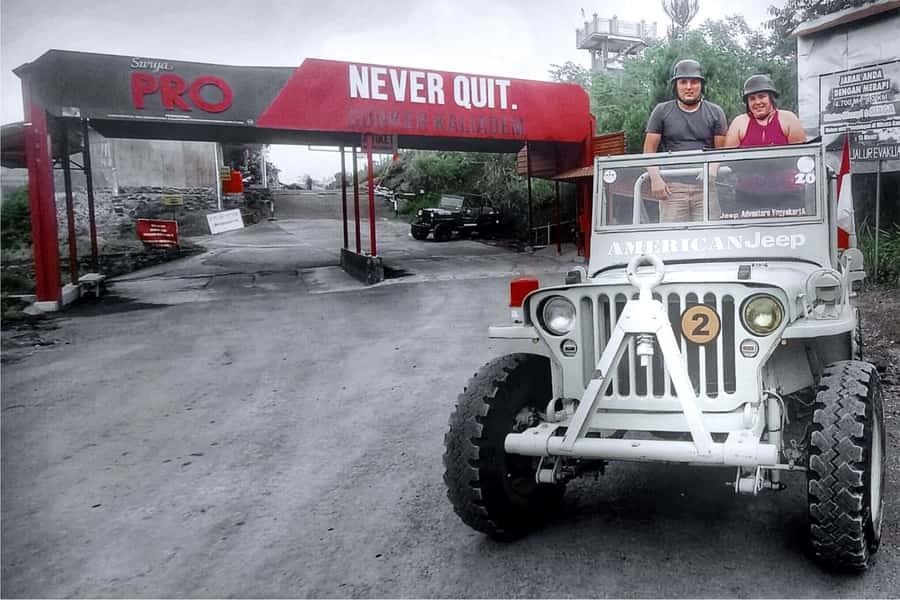
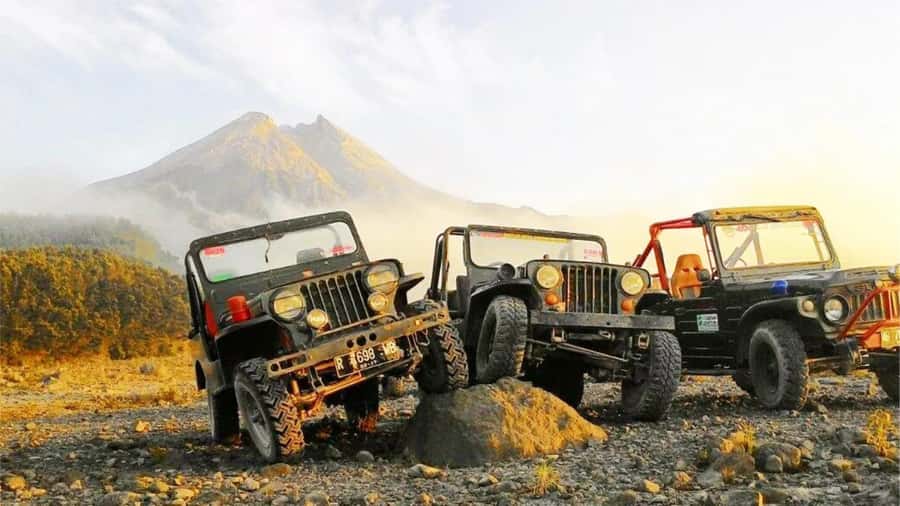
This is a lava-tour style Jeep safari. That means you’ll drive over rough terrain and feel the adrenaline that comes with 4WD vehicles tackling uneven ground. It’s not “thrills for thrills.” The point is to experience how the route and the surface conditions tie back to the mountain’s activity.
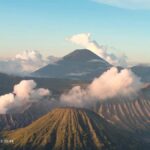
You’ll also stop at several viewpoints, including the Bunker. That stop is popular because it gives a strong angle on Merapi’s mass—and when visibility is decent, it’s photo gold. The catch is simple: the views depend on unpredictable weather. If clouds roll in, your “wow” shot may turn into a “wow, but gray” moment.
Still, the Jeep ride itself often becomes the highlight even when the mountain is hiding. A cloudy morning doesn’t cancel the experience. You still get the movement, the terrain, and the guide’s on-the-ground explanations. In several guide stories, the drive stayed fun even when the volcano wasn’t clear, because the route and the stops gave people plenty to do besides stare at clouds.
One practical tip you’ll thank yourself for: if your Jeep offers a water-course option, ask. People specifically recommend including the water part, because it adds a memorable splashy moment to an already rugged ride.
The Mini Museum: turning 2010 eruption photos into understanding
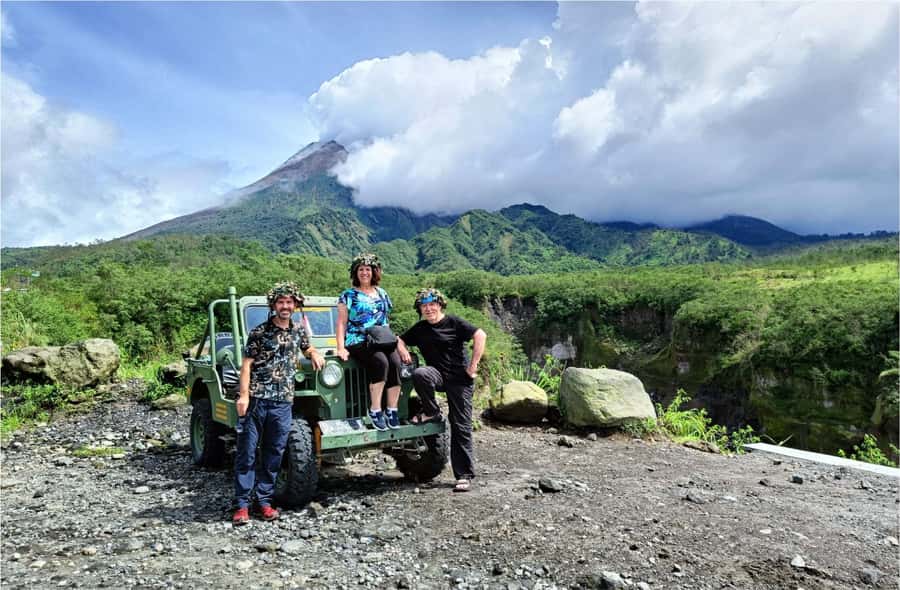
The Mini Museum stop is where the safari becomes more than scenery. Mount Merapi’s 2010 eruption is the main focus, and the guide explains what happened and why it was so impactful.
You’ll learn that the eruption took the lives of 353 people and affected roughly 350,000 people who had to be evacuated. That’s a staggering number, but the museum visit helps you process it without drowning in facts. Seeing artifacts and images tied to real places turns the “headline event” into a human story.
It also covers the scale. The eruption was described as the largest since the 1870s. That context matters because it helps you understand why the mountain’s activity changed not only the landscape, but also how people think about risk and readiness.
Guides on this tour often bring personal-style perspective. For example, local guides such as Iwan and Aulion are described as being from near Merapi, able to connect the dramatic parts of the story to damage from earlier events too (like references to 2006 as well as 2010). Even if you already know the basics, that local framing can make the museum stop feel more grounded.
Choosing your timing: sunrise options, weather reality, and photo strategy
This safari is around 3 hours, with starting times that vary by availability. Some departures run very early, and you might see options like a sunrise departure when you check dates.
Early starts can be great for light and mood, but they don’t guarantee clear skies. Merapi weather can switch fast. If clouds move in, the volcano can disappear quickly from viewpoint areas.
So here’s the strategy I’d use if you want the best odds:
- Bring a rain jacket or poncho anyway. The tour runs rain or shine.
- Plan for “clouds are possible” rather than “this will be perfect.” That mindset keeps expectations realistic.
- Take photos at the viewpoints, but don’t treat it like a single shot. Views can improve briefly, then vanish again.
If you do land a clear window, the scenery is dramatic. When you land a photo with the mountain visible, it hits hard because you also know the reasons behind the devastation you’re seeing. It’s a photo you’ll actually remember, not just a camera moment.
You can also read our reviews of more tours and experiences in Yogyakarta
What’s included (and how it affects your comfort)
This tour includes hotel pickup and drop-off, a tour guide, the Jeep tour, Mini Museum entry, Mount Merapi entry, and a helmet.
That helmet detail is small, but it’s one of those practical inclusions that improves the whole experience. You’re not thinking about safety gear. You’re thinking about the ride.
Comfort-wise, a 3-hour Jeep experience is active. You’ll likely sit in a vehicle that’s more “off-road work” than “luxury tour.” Wear clothes that handle getting dusty, and expect some bumping. If you’re sensitive to rough rides, keep that in mind before you book.
Language is another comfort factor: the live guide is English. A couple of guide stories highlight that some guides use conversation to improve their English (which actually makes the experience feel friendly rather than stiff). Either way, you can expect explanations and Q&A in English.
Price and value: why $35 can work well here
At around $35 per person for a Jeep-based Merapi experience with pickup, guide, museum entry, helmet, and Merapi entry fee included, the value is mostly about what you don’t have to arrange yourself.
If you tried to do this independently, you’d quickly spend time (and probably money) on:
- getting to the right Jeep transfer area,
- finding licensed guiding for the museum and viewpoints,
- paying separate entry fees, and
- coordinating a small-group Jeep that matches what you want to do.
Instead, this option bundles the essentials into a tight 3-hour format. The “private Jeep ride” framing also matters, because the small-group limit (up to 4) keeps the experience from turning into a crowded scramble for photos.
The main value trade-off is time. Because the safari is about 3 hours, it isn’t a slow, linger-at-everything kind of outing. It’s built for impact: drive hard, learn fast, see the key stops.
Service quality: the human touch that shows up on the day
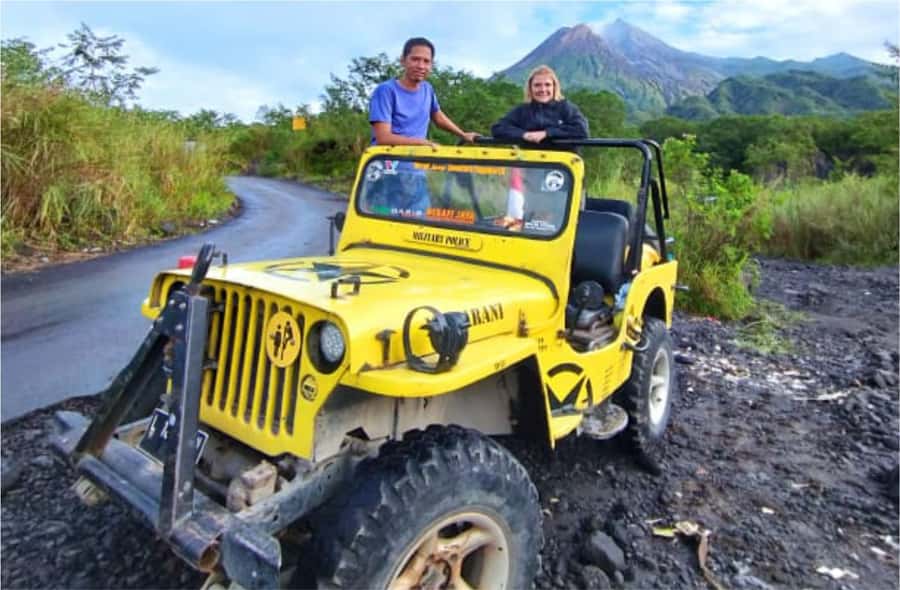
Even with the same route, the experience depends heavily on the people running it. The most praised aspect across guide/driver stories is how friendly and communicative the staff can be.
You’ll see names like Fajar, Iwan, Eko, and Haidar mentioned for being accommodating, explaining the sites well, and helping with photos. Some people even describe guides going a bit beyond the core stops—like an extra adventurous river segment or extra route options to reduce heavy traffic.
That said, you should still have one expectation check: a couple of stories mention that the tour felt a touch quick or that it didn’t go as close to the volcano as hoped. That’s not shocking for a short, weather-affected safari, but it’s worth being aware if your dream day is maximum crater proximity.
Who should book this Merapi Jeep safari, and who should think twice
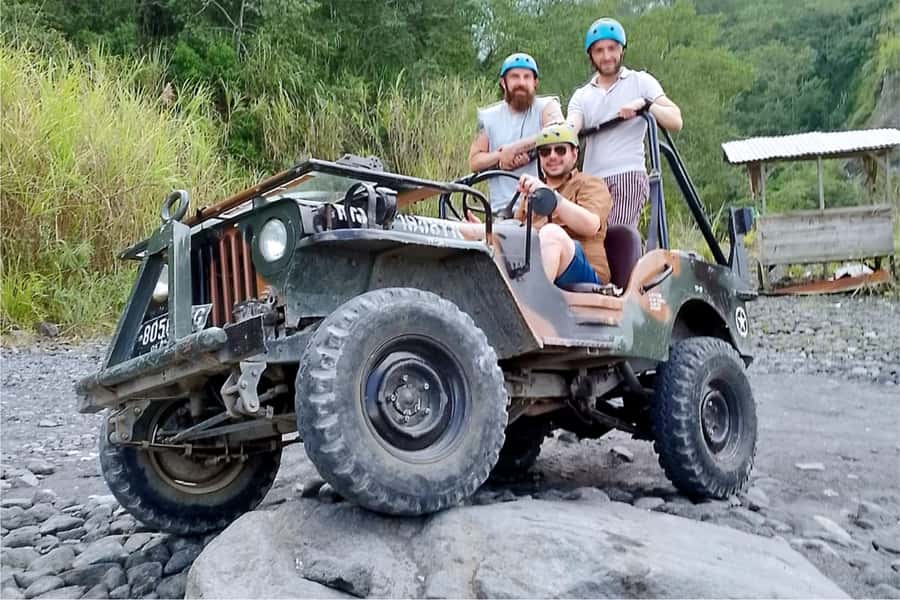
I’d book this if you want:
- Adrenaline Jeep time paired with real interpretation
- a small-group outing (up to 4)
- English guidance without needing to coordinate everything on your own
- a museum stop that focuses on the 2010 eruption and evacuation impact
It may not be the best choice if:
- you’re only happy with crater-level views and nothing less
- you hate rough riding or dust (you can manage it with smart clothing, but it’s still off-road)
- you’re chasing a long, leisurely itinerary—this is a focused 3-hour hit
Should you book? My take on the decision
If you’re in Yogyakarta and you want one memorable Mount Merapi experience that mixes action, learning, and convenience, this tour is a strong pick. The included pickup, English guide, Jeep ride, and Mini Museum entry make it feel like a complete package rather than a collection of extra fees and transfers.
Book it if you can handle weather uncertainty and you like the idea of learning through both driving and museum context. If you go in thinking clouds might reduce the volcano views, you’ll still come away with a story: the terrain, the key stops like the Bunker, and the meaning behind the 2010 eruption.
FAQ
FAQ
How long is the Mount Merapi Jeep Safari from Yogyakarta?
The tour duration is about 3 hours. Starting times vary, so you’ll want to check availability for your date.
Is this tour private?
It’s described as a private Jeep safari, and it runs as a small group limited to 4 participants.
Does the tour include pickup from my hotel in Yogyakarta?
Yes. Hotel pickup and drop-off are included for accommodations in Yogyakarta.
What if I’m staying outside Yogyakarta, like Borobudur, Magelang, or near the airport?
Pickup is possible with an extra cost of IDR 300,000. If you want this option, confirm it during booking.
Is the guide available in English?
Yes, you’ll have a live tour guide in English.
What’s included in the price?
Included are hotel pickup/drop-off, tour guide, Jeep tour, Mini Museum entry fee, Mount Merapi entry fee, and a helmet.
Will I still go if it rains?
Yes. The tour takes place rain or shine, and viewpoint conditions depend on unpredictable weather.
Where is the big learning stop during the tour?
The Mini Museum is the main learning stop, with explanations focused on the 2010 eruption and its impact.