REVIEW · YOGYAKARTA
Yogyakarta: Night Culinary and Heritage Private Walking Tour
Book on Viator →Operated by Journeast Indonesia Tour and Travel · Bookable on Viator
Night in Jogja tastes better with a local guide. This private evening walking tour blends street food with heritage stops, so you get real flavors and local stories over about 3 hours. It’s built for an easy night stroll, starting downtown and ending near Kraton.
I really like how the route hits two very different vibes: Jalan Malioboro at night and Alun-Alun Kidul with hands-on traditional games. I also appreciate that you’re not left hunting for snacks—there’s dinner, snacks, and bottled water included, plus an English-speaking guide who keeps things moving.
One thing to keep in mind: this experience requires good weather, and it’s a night walk, so wear shoes that can handle uneven streets.
In This Review
- Key highlights worth planning for
- Jalan Malioboro after dark: the downtown start that sets the mood
- Alun-Alun Kidul: games, legends, and why this square matters
- Street food you actually eat: Nasi Gudeg and the snacks in between
- The guides make the night: Dora, Krisma, Yuni, and what that means for you
- Getting there and getting back: Tugu Yogyakarta to Plengkung Gading
- Price and value: what $30 buys you in a 3-hour night outing
- Who should book this night culinary and heritage walk?
- Should you book the Yogyakarta Night Culinary and Heritage Private Walking Tour?
- FAQ
- FAQ
- How long is the tour?
- Where does the tour start and end?
- Is dinner and snacks included?
- What transportation is included during the tour?
- Do we need to pay entrance fees at the stops?
- Can the guide accommodate vegetarian diets?
- Is it a private tour?
- What happens if the weather is bad?
Key highlights worth planning for
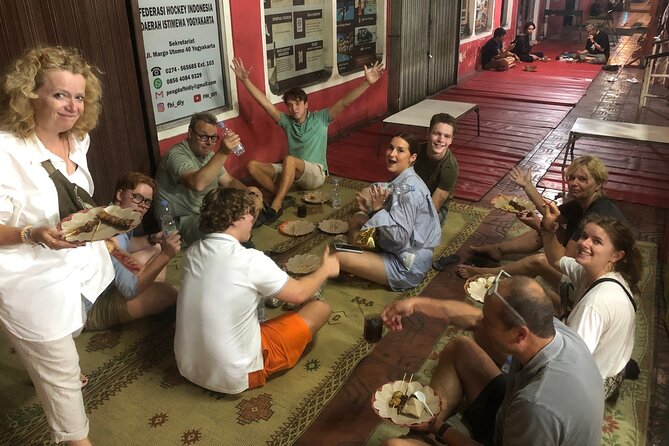
- Two big night scenes, one smooth evening: Jalan Malioboro downtown lights up after sunset, then you switch gears to Alun-Alun Kidul and its cultural “game zone.”
- Food is part of the itinerary, not an add-on: dinner, snacks, and bottled water are included, with local standouts like Nasi Gudeg and other Indonesian street fare.
- Guides bring the personality: Dora, Krisma, and Yuni are repeatedly praised for being fun, flexible, and genuinely informative.
- Traditional games and storytelling at Alun-Alun Kidul: you’re not just looking—you’re trying the games while hearing the square’s significance.
- Local transport makes it feel like Jogja: the tour includes options like becak/pedicab/tuk-tuk, plus use of a bicycle.
- Solo-friendly comfort factor: at night, having a guide as a companion helps you feel less exposed while still getting out and exploring.
Jalan Malioboro after dark: the downtown start that sets the mood

Jalan Malioboro is the kind of main drag where you feel Jogja moving. At night, it shifts from daytime shopping to evening street life—music, street performances, and the steady flow of people just wandering. This tour uses that energy as your opening act, so you’re not starting “from a museum mindset.” You start as a walker in the crowd.
You’ll spend about 1.5 hours here, and the timing matters. Evening is when street food stalls feel most alive, and when local performers tend to be out in force. If you’ve only done day sightseeing in Java, this part can be the missing piece that makes the city feel real.
Practical tip: this is a walking tour, so keep your phone secure and ready. You’ll likely be stopping to taste food and watch small performance moments, and it’s easier when you’re not constantly checking your map.
You can also read our reviews of more walking tours in Yogyakarta

Alun-Alun Kidul: games, legends, and why this square matters
Then the tour shifts to a place that’s famous for more than just being central. Alun-Alun Kidul is Yogyakarta’s main square, and it’s tied to Javanese cultural and mystical storytelling. The best part is that you don’t just listen from the sidelines—you try traditional games as the guide shares the background.
This stop also takes about 1.5 hours, so you get enough time to feel the atmosphere rather than rushing through it. You’ll hear stories that help you understand why locals treat the square like a cultural landmark, not just a big lawn. And since street performers show up here too, it often feels like you’re stepping into a living stage.
What makes this stop work for visitors is the pacing. A square like this can either feel like a quick photo stop or like a real experience. With a guide, it becomes a guided cultural “activity,” which is exactly what you want from a heritage tour at night.
If you’re the type who likes context—how locals explain place and meaning—this will land well. If you just want pure food, you might still enjoy it, because the games keep you engaged while the guide narrates.
Street food you actually eat: Nasi Gudeg and the snacks in between
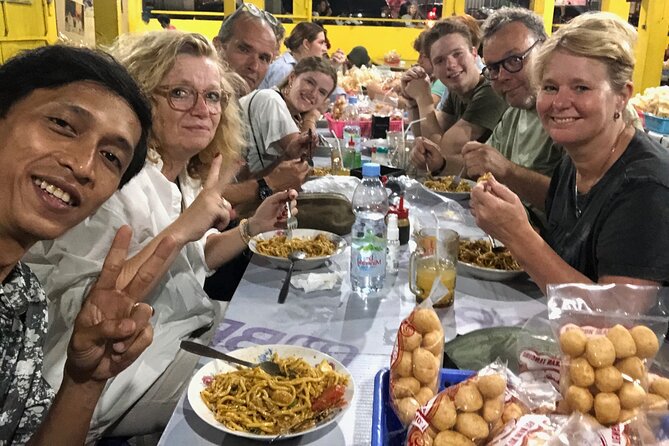
This tour is built around the idea that dinner should be part of the fun, not a chore after you’re tired. You get dinner, snacks, and bottled water as part of the experience, and that changes how you enjoy street food. You can slow down, taste multiple items, and not worry that your next stop will be an empty stomach trap.
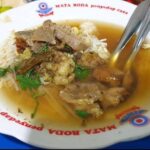
One specific local dish highlighted is Nasi Gudeg—rice served with jackfruit stew and other traditional components. You’re also guided through additional traditional snacks and Indonesian cuisine. In other words, it’s not just one “signature bite.” It’s a night of sampling.
Vegetarian question: you might think this would be hard on a street-food heavy route, but one review notes the guide handled a vegetarian request without fuss. That’s a strong sign that if you mention your needs clearly, the guide will try to work with what’s available.
My advice: come hungry but don’t assume everything will be identical to what you’ve seen on food blogs. Street food is flexible by nature. The guide’s job is to steer you toward choices you can eat comfortably—and the consistent praise for guide flexibility suggests they do this well.
Also, because you’re eating on the move, go easy on the “one last bite” mindset. Try what’s offered, enjoy it, and save room for the next tasting. That’s how you get the full range of what Jogja tastes like at night.
The guides make the night: Dora, Krisma, Yuni, and what that means for you
You don’t just book a route here—you book a person who connects the dots. Multiple reviews call out guides by name, and that matters because it’s consistent praise, not generic compliments.
- Dora is praised for being fun, flexible, and super informative, with delicious food and a sense that you learn while you eat.
- Krisma shows up in a review focused on solo confidence, with the guide acting like the right kind of companion for a first-time solo trip in Indonesia.
- Yuni is repeatedly described as friendly, generous, and knowledgeable, and one review highlights how the guide helped someone dress in traditional betir attire.
You can translate that into what you’ll experience: a guide who keeps the night light, explains what you’re seeing and tasting, and adjusts to your comfort level. If you’re worried about getting overwhelmed by a night market scene, you’re not expected to “figure it out.” The guide does the navigating, and you get to focus on enjoying.
For your trip planning, this also helps you decide when to go. If you want someone to talk you through the culture and food logic (why that dish is common, what the square means), pick an evening when you’re not rushing to another appointment after. This tour feels best when you can take it at the same relaxed pace it’s offered.
Getting there and getting back: Tugu Yogyakarta to Plengkung Gading
Logistics matter more than people admit, especially at night. This tour starts at Tugu Yogyakarta Monument (Jl. Jend. Sudirman, Gowongan, Kec. Jetis, Kota Yogyakarta). You’ll finish at Plengkung Gading (Jl. Patehan Kidul No.4, Patehan, Kecamatan Kraton, Kota Yogyakarta).
Two useful takeaways:
1) You get a clear end point (Plengkung Gading), not a vague “see you later.”
2) The guide helps you return, including the option to order a taxi or use other public transport.
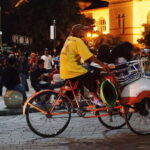
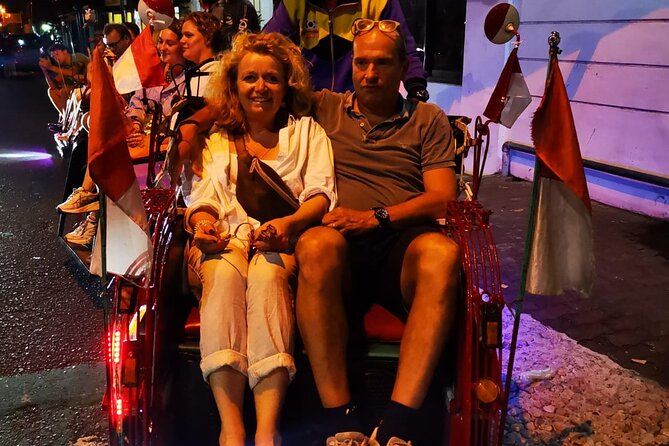
The tour also includes local movement via becak/pedicab/tuk-tuk and use of bicycle. That’s not just extra fluff. It helps you cover distance without turning the night into a marathon, and it also makes the experience feel more like Jogja rather than a straight line from one “stop” to the next.
Practical tip: when you’re leaving, keep your hotel address handy in case you need to show it to a driver. The guide can help you with transport choices, but having the info ready makes your end-of-tour smooth.
You can also read our reviews of more private tours in Yogyakarta




Price and value: what $30 buys you in a 3-hour night outing
At $30 per person, this is priced like a solid value evening, mainly because the big ticket items are included. You’re paying for:
- dinner and snacks (so you don’t have to budget extra meals on top)
- bottled water
- an English-speaking guide
- local transport support (becak/pedicab/tuk-tuk, plus bicycle use)
Add in that it’s private (only your group participates), and the price feels more reasonable. Private doesn’t always mean “expensive,” and this one is structured so the cost supports guide-led walking, eating, and cultural explanation rather than just sending you into a crowd with a vague meeting point.
There’s also mention of a mobile ticket and group discounts, which can matter if you’re traveling with friends or family. If you can combine costs in a group, you usually get more consistent value per person.
What you should weigh: if you’re expecting a long list of major landmarks like you’d see on a day tour, this isn’t that format. It’s focused: a downtown night vibe, then the central square and its games, with food as the center of gravity.
So the real question becomes: do you want an evening that feels like street life with guided context? If yes, the price fits the experience.
Who should book this night culinary and heritage walk?
This tour is a strong match if you want:
- street food as the main event, with enough structure that you don’t waste time searching
- a guide who can explain why places matter, not only what you’re eating
- a fun night that includes culture you can participate in, especially at Alun-Alun Kidul
It’s also a good pick for solo travelers, not because the city is off-limits, but because night exploring can feel mentally tiring when you’re doing it alone. One review specifically highlights the comfort of having Krisma as a companion on the route.
Who might pass or adjust expectations:
- If you hate walking at night, this might feel like too much movement.
- If your schedule is very tight, the 3-hour duration could limit how many other stops you can add afterward.
- If weather is questionable, remember the experience requires good conditions.
Bottom line: if you want to see Yogyakarta from the street level—food first, culture in the middle—you’ll probably love it.
Should you book the Yogyakarta Night Culinary and Heritage Private Walking Tour?
I’d book this if you want an easy, food-forward evening in Yogyakarta that still gives you real context. The standout reason is the combination of included meals plus a guide who’s repeatedly praised for being fun, flexible, and genuinely informative. Guides like Dora, Krisma, and Yuni show up in reviews for a reason: they seem to make the night flow.
Also, Alun-Alun Kidul is the kind of place that’s either a quick pass or a memorable activity, depending on whether you try the games and hear the stories. Here, it’s built for the second option.
Just go in with the right expectations: this is a night walking experience focused on downtown atmosphere and the central square. If you want that, this tour looks like a strong value for $30.
FAQ
FAQ
How long is the tour?
The tour runs for about 3 hours.
Where does the tour start and end?
It starts at Tugu Yogyakarta Monument (Jl. Jend. Sudirman, Gowongan) and ends at Plengkung Gading (Jl. Patehan Kidul No.4, Patehan).
Is dinner and snacks included?
Yes. Dinner, snacks, and bottled water are included.
What transportation is included during the tour?
The tour includes Becak/Pedicab/Tuk tuk, and there is also use of a bicycle as part of the experience.
Do we need to pay entrance fees at the stops?
The itinerary notes free admission tickets for Jalan Malioboro and Alun-Alun Kidul.
Can the guide accommodate vegetarian diets?
One review says the guide managed a vegetarian request without fuss, so it seems possible if you communicate it ahead of time.
Is it a private tour?
Yes. It is a private tour/activity, and only your group will participate.
What happens if the weather is bad?
The experience requires good weather. If it’s canceled due to poor weather, you’ll be offered a different date or a full refund.