REVIEW · YOGYAKARTA
from Yogyakarta: Dieng, Dawn’s Embrace & Cultural Treasures
Book on GetYourGuide →Operated by Suti holiday · Bookable on GetYourGuide
Sunrise in Dieng can reset your whole day. This early, 11-hour ride from Yogyakarta takes you up to the Sikunir Hill viewpoint for serious volcanic views, then down through Dieng’s strange-color world at Telaga Warna. I love the way sunrise light turns the scenery into something you can’t fully photograph, and I like how your English guide keeps the story clear from place to place. One consideration: mornings are cold, and the crater area can smell strongly.
A big part of the appeal is the human touch. This is a small group capped at 5, and the guide is live in English; you may get an instructor like Himawan, Bayo, Eko, Don Juan, Dedhy, or Uje, depending on the day. Transport is also a strong point, with 85% of reviewers giving it a perfect score, which matters when you’re starting at night and spending hours on the road.
In This Review
- Dieng From Yogyakarta: the night ride that sets up the morning
- Sikunir Hill sunrise: the short climb with eight-volcano views
- Telaga Warna Lake: sulfur colors that change with sunlight
- Sikidang Crater and Ratapan Angin Stone: mists, mud, and wind
- Arjuna Temple Complex: century-old Hindu sanctuaries in the mountains
- Small-group comfort and English guidance that keeps the day moving
- What the $67 covers: the real value is planning, timing, and tickets
- Cold hands, sulfur smells, and fog: when to adjust expectations
- Should you book this Dieng sunrise tour?
- FAQ
- How long is the Dieng from Yogyakarta tour?
- What’s the group size and language of the guide?
- What’s included in the ticketing for the sites?
- Do I get pickup and drop-off from my accommodation?
- What should I bring for the sunrise portion?
- Is there flexibility if my plans change?
Dieng From Yogyakarta: the night ride that sets up the morning
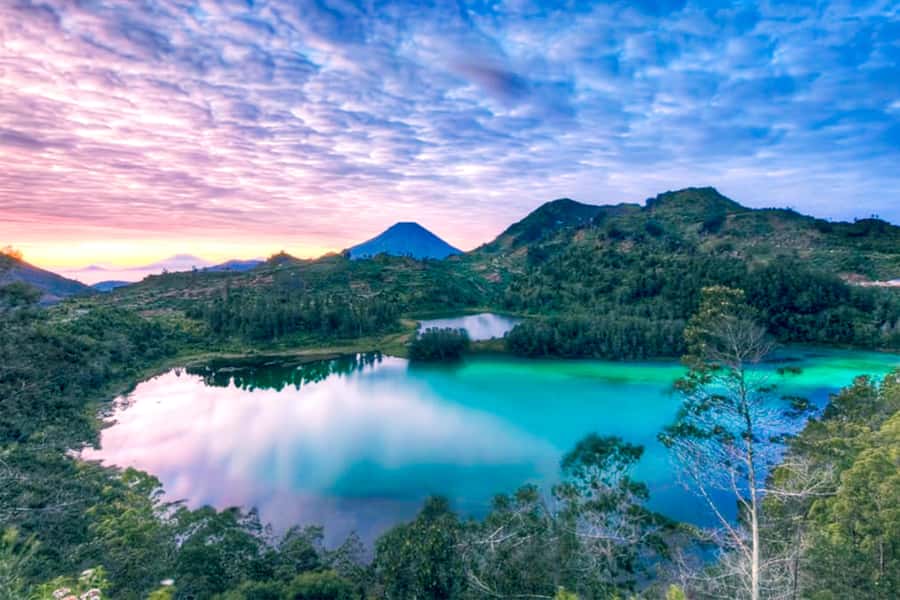
You start with pickup from your accommodation in the Special Region of Yogyakarta. Then the van heads out at night, so you can sleep a bit on the way. I like this approach because it turns the hard part (the early wake-up) into a travel problem you handle once, not twice.
As you approach the Dieng Plateau area, the air tends to feel sharper. That’s why warm layers aren’t a suggestion. The guides on this route also encourage practical readiness, and the clothing advice is consistent: pack warm clothing and warm shoes so you’re not shivering through the most important 20–40 minutes of the day.
Even when the timing works perfectly, weather can change what you see. On foggy mornings you still get an emotional sunrise moment, but the far volcano views may be reduced. The tour still feels worthwhile because you’re not only chasing a single photo.
Sikunir Hill sunrise: the short climb with eight-volcano views
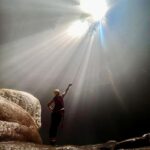
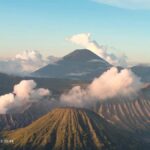
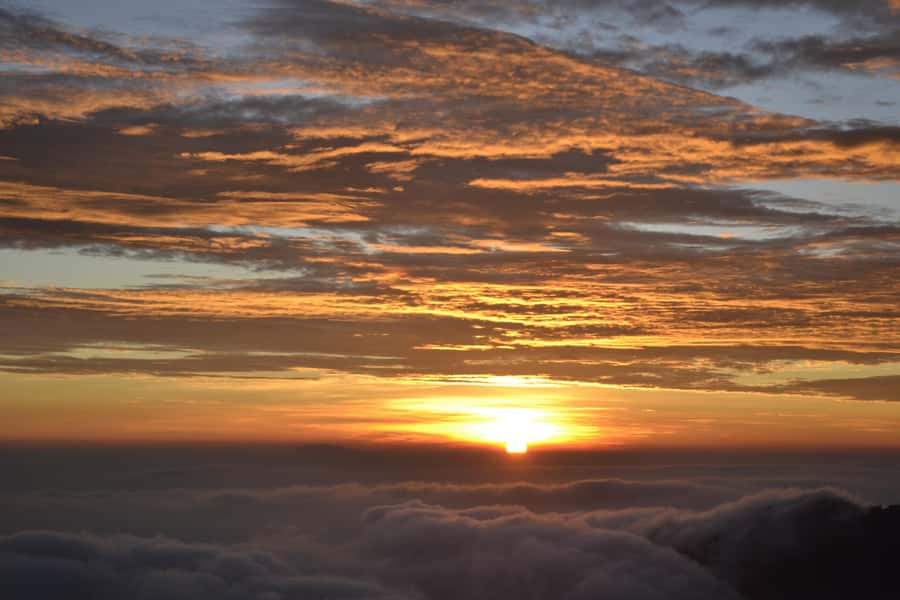
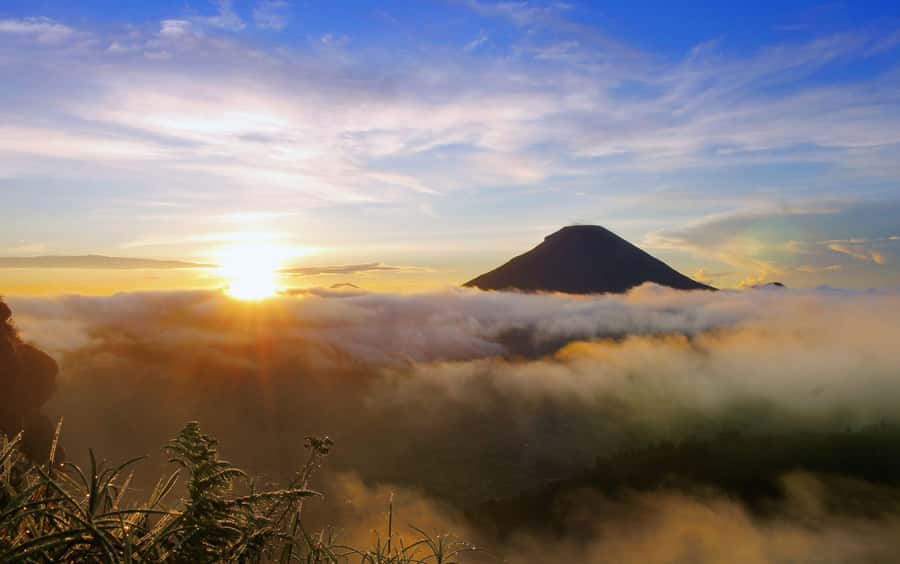
Sikunir Hill is the headline stop, and it lives up to the hype. You’ll make a brief climb for sunrise, and on clear mornings the horizon can show up to eight volcanoes. That is the kind of wide-open sightline that makes the whole early start feel justified.
Here’s the practical part: dress for wind. Even if Java isn’t freezing, the Plateau mornings can feel cold enough to make layers necessary. If you tend to run cold, plan to wear more than you think you need, and keep your shoes secure for uneven ground.
One more detail I’m glad you’ll have: you’re not doing this alone. With a live English guide, you get more than “stand here at 5:12.” Guides help you understand why the timing matters, what to look for as light changes, and how to move calmly when everyone is trying to take photos at once.
You can also read our reviews of more tours and experiences in Yogyakarta.

Telaga Warna Lake: sulfur colors that change with sunlight
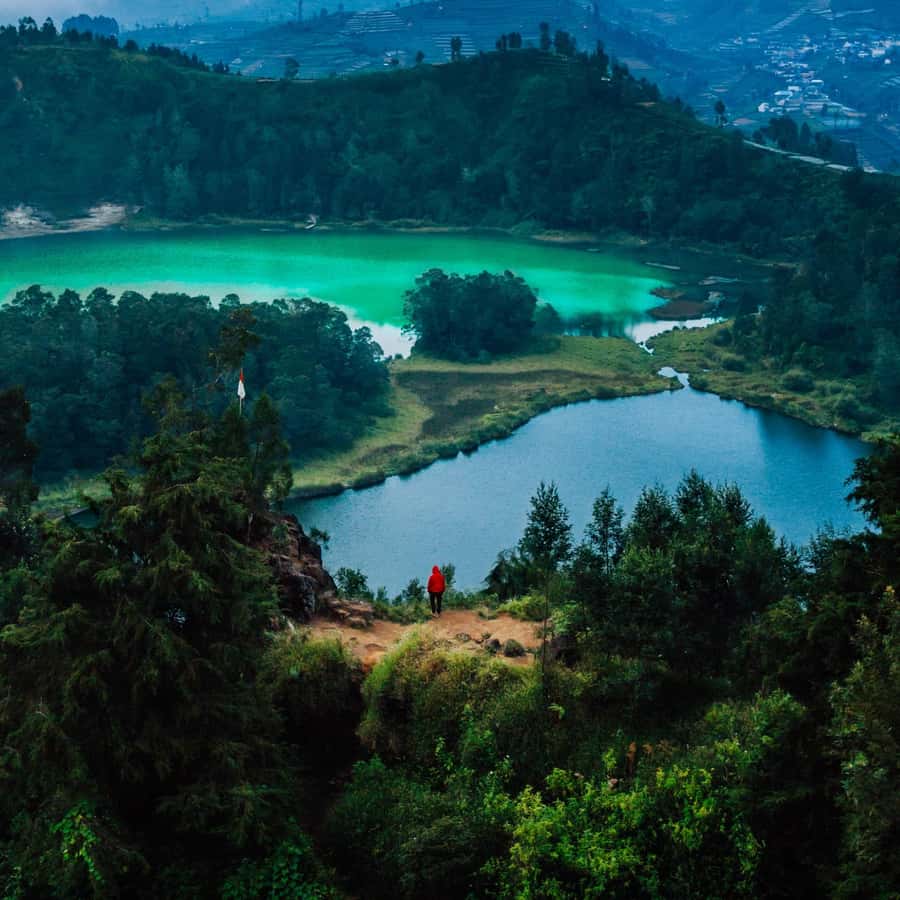
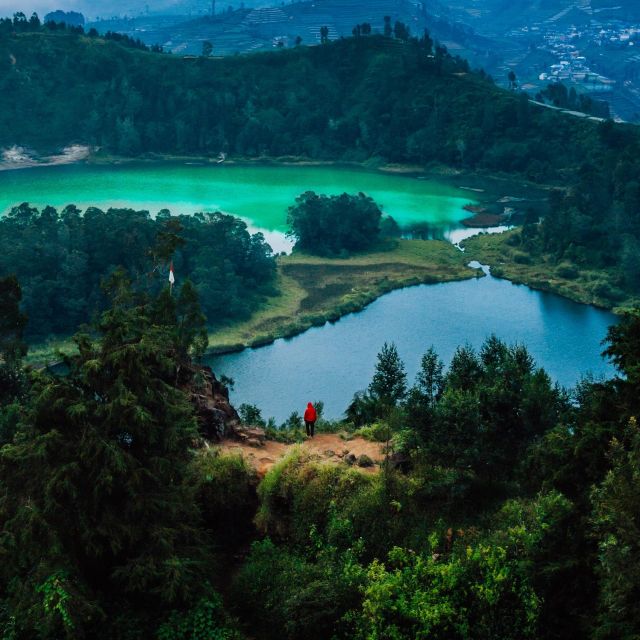
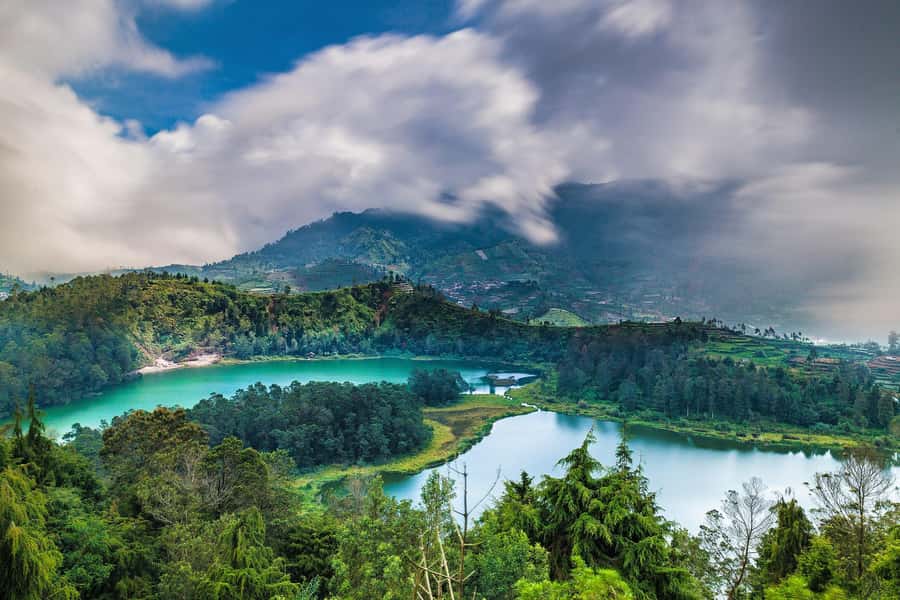
After sunrise, the tour heads to Telaga Warna Lake, known for its shifting color. The idea is simple and oddly mesmerizing: sunlight interacts with mineral-rich and sulfur-related conditions beneath the water, so the lake can look different as the light changes.
This is one of those stops where you’ll feel the difference between seeing it in a picture and seeing it in person. In real life, the color doesn’t just sit there. It moves with the sky and the angle of the sun, so your brain keeps wanting to check the view again.
There’s also a smell factor in this part of Dieng. One of the most repeated practical notes from the day is that the sulfur-related area can be very noticeable. You won’t necessarily be overwhelmed the entire time, but it’s smart to mentally prepare for strong odors near the geothermal features.
If you’re sensitive to smells, consider bringing a small face covering. It won’t solve everything, but it can make the experience more comfortable without turning the day into a medical mission.
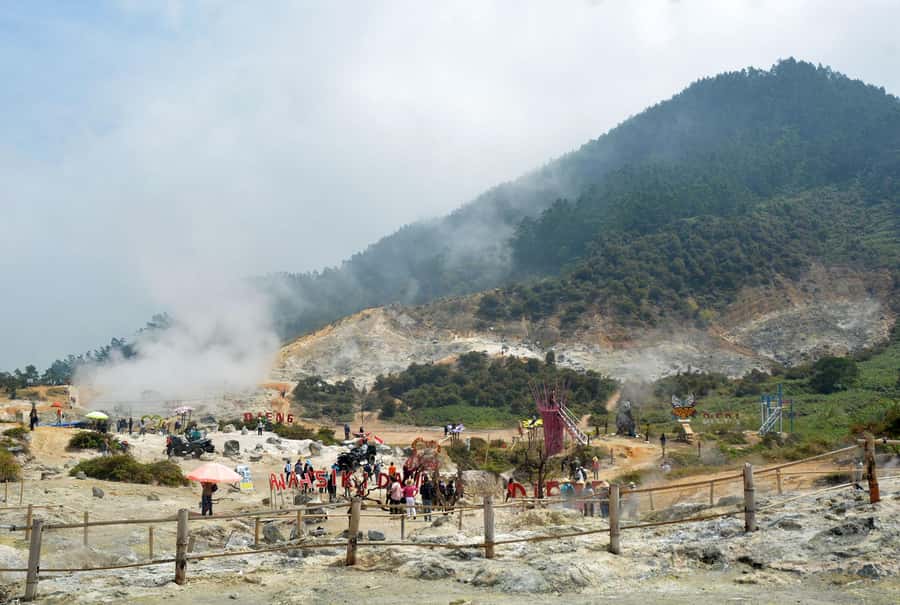
Sikidang Crater and Ratapan Angin Stone: mists, mud, and wind
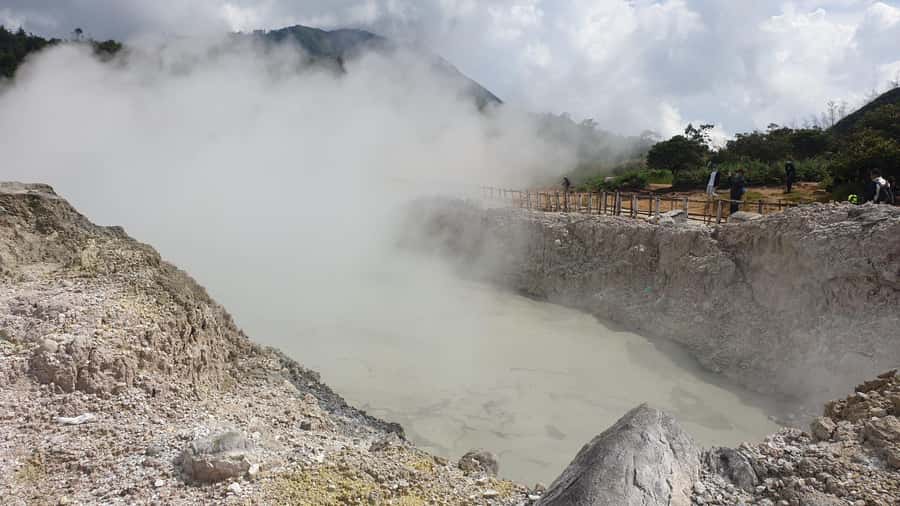
Next comes Sikidang Crater, where the terrain turns dramatic. You’ll see bubbling mud and rising mists, which gives you that primal, elemental feeling you only get at active geothermal sites. It’s not “pretty in a postcard way.” It’s more like the earth is doing something you’re lucky to witness.
Wear shoes with grip and move slowly. The ground around geothermal areas can be uneven, and mists can reduce visibility. You don’t need to be fearless, but you do want steady footing.
Right after or alongside the crater experience, the tour includes a stop at Ratapan Angin Stone. The name tells you the vibe: this is a specific named point on the plateau where you can take in the wind and the broader sense of altitude. The exact feel depends on weather, but you’ll likely get another chance to pause, catch your breath, and reset before temples.
Between Sikidang and the next stop, you’ll also get a feel for why this region has a strong cultural and natural identity. Dieng isn’t just a set of sights. It’s a place where natural forces shape daily life and local traditions.
Arjuna Temple Complex: century-old Hindu sanctuaries in the mountains
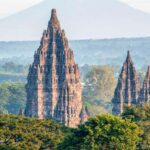
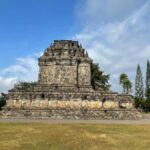
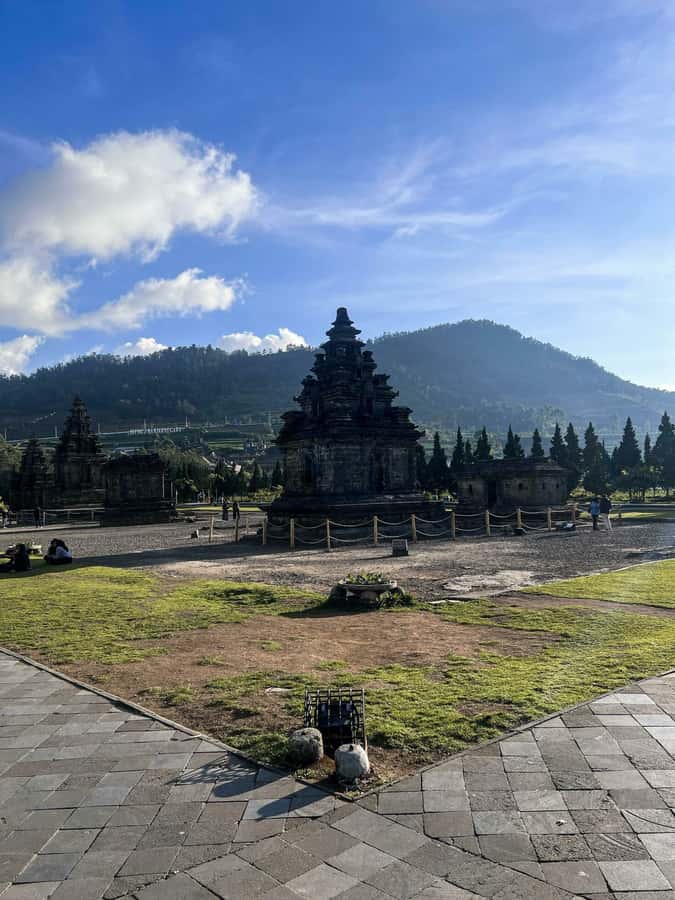
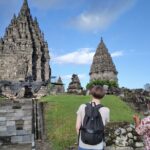
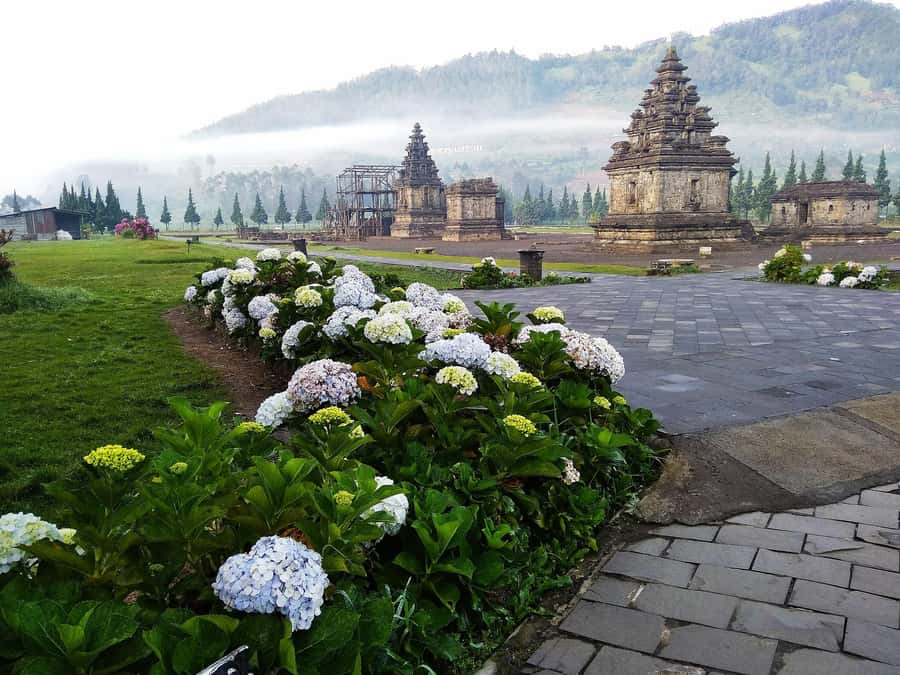
Then it’s time for something calmer: temples. The Arjuna Temple Complex is included, and it’s known for century-old sanctuaries that reflect Indonesia’s Hindu heritage.
I like this contrast after geothermal chaos. One part of the day is steam, mud, and wind. The next part is stone sanctuaries sitting in the mountain air, which makes you slow down without trying. You can actually look at details here—shapes, layout, and the overall atmosphere of the site.
Also, because you have an English live guide, the temples aren’t treated like random stops. You’re guided through what you’re looking at, and you get the historical and cultural context in a way that’s easy to follow.
If you’re the kind of person who enjoys seeing how different layers of meaning show up in one place, Arjuna is a key reason this tour works. It turns Dieng from a nature day into a full-sense experience.
Small-group comfort and English guidance that keeps the day moving
This tour is limited to a small group of 5 participants, which changes how the day feels. It’s easier to move at a reasonable pace. You’re not stuck watching people disappear into a crowd, and your guide can actually answer questions.
The guide experience has been a highlight across many outings. People have praised guides like Himawan and Bayo for strong English and a clear way of explaining the region. Others have had great days with Eko, Don Juan, Dedhy, and Uje, including jokes and entertaining conversation that make long drives feel shorter.
Your transport is also part of the value: pickup and drop-off happen at your accommodation, and the trip is rated highly for transport quality. That matters in Indonesia where road conditions can vary, especially early in the morning.
One more useful benefit: you skip the ticket line. That’s not glamorous, but it saves energy when everyone else is trying to get in at the same time.


What the $67 covers: the real value is planning, timing, and tickets
At $67 per person, this is not a “cheap and basic” outing. What you’re paying for is a managed schedule and included access to the sites that matter on the Dieng Plateau.
The price covers tickets for the day across the key stops: Dieng, Arjuna Temple, Ratapan Angin Stone, Sikidang Crater, and Sikunir Hill. It also includes all parking charges and donations, plus bottled water and soft drinks. And yes, pickup and drop-off from your accommodation are included, which saves time and uncertainty.
Could you cobble together a DIY version? Maybe, but you’ll lose the clean coordination that makes sunrise actually happen. With an 11-hour day built around early timing, the logistics do a lot of the heavy lifting for you.
In plain terms: if you want your Dieng day to feel smooth, this price is easier to swallow than it looks.
Cold hands, sulfur smells, and fog: when to adjust expectations
This tour is built around early morning. That means cold and wind are real. Warm clothing and warm shoes aren’t optional if you want to enjoy the sunrise rather than survive it.
Second, understand the geothermal nature of the day. Telaga Warna gets its color from mineral and sulfur-related conditions, and Sikidang’s crater environment is active enough to create mists and strong odors. If you’re very sensitive to smell, you might want to plan for it.
Third, fog can happen. When visibility is reduced, you may not get the full “up to eight volcanoes” view. Still, you’ll get sunrise atmosphere and the rest of the sites, and the day remains full.
If you know you’ll hate cold mornings or walking in uneven terrain, you might consider an alternative timing that focuses on later daylight. But for most people, the trade-off is worth it because the day includes far more than one viewpoint.
Should you book this Dieng sunrise tour?
Book it if you want one well-run day that covers the best-known Dieng moments in sequence: Sikunir sunrise, Telaga Warna, Sikidang Crater, and Arjuna temples. The small group size, English live guide, included tickets, and skip-the-line benefit make it feel low-stress for an early departure.
Skip it or rethink it if you’re extremely smell-sensitive, hate cold mornings, or want a slow, flexible pace. This is a structured day with an 11-hour schedule, built around timing.
If you’re on the fence, here’s the simple test: can you handle a cold start for a big payoff? If yes, you’ll likely come away with the kind of Dieng morning that stays in your head long after Java traffic fades back into normal life.
FAQ
How long is the Dieng from Yogyakarta tour?
It runs for about 11 hours from pickup to return to Yogyakarta.
What’s the group size and language of the guide?
The tour is a small group limited to 5 participants, and the live tour guide speaks English.
What’s included in the ticketing for the sites?
Tickets are included for Dieng, Arjuna Temple, Ratapan Angin Stone, Sikidang Crater, and Sikunir Hill.
Do I get pickup and drop-off from my accommodation?
Yes. Pickup and drop-off are included at your accommodation within the Special Region of Yogyakarta.
What should I bring for the sunrise portion?
Bring warm clothing and warm shoes, because the early morning conditions can be cold.
Is there flexibility if my plans change?
There is free cancellation up to 24 hours in advance for a full refund, and you can reserve now and pay later based on the availability shown.