REVIEW · YOGYAKARTA
Borobudur Climb To The Top, Prambanan Temple And Ramayana Ballet
Book on Viator →Operated by Asmaradhana Borobudur Tours · Bookable on Viator
Stairs, stories, and a night show in one day. I love the priority climb at Borobudur, where you tackle levels that were restored in the 1970s, and the carved Buddha faces really land once you’re close. Then the day keeps moving: Prambanan temples in the green countryside, followed by the Ramayana Ballet in an evening setting.
I also like that entrance fees are included, so your focus stays on the sights instead of ticket logistics. This is a private setup with an English-speaking driver/guide and hotel pickup, which makes the whole route feel smoother than doing it piece by piece.
The main consideration is pacing and day-to-day variables: it’s a long day, and on Mondays (and sometimes with weather) access or the ballet setting can change.
In This Review
- Quick hits before you go
- Borobudur Priority Climb: the restored Buddha faces and how the guide paces you
- Prambanan Temple Compound: Shiva’s scale, three main shrines, and countryside breaks
- Ramayana Ballet at Prambanan: an evening story of Rahwana and Shinta
- The 12-hour day plan: where time goes and how to avoid fatigue
- What you pay for and what you’ll still need (lunch, tips, and snacks)
- Private-car comfort and real guide help (from Bima to Widi)
- Best-fit situations: who this Borobudur–Prambanan–Ballet day works for
- Should you book this Borobudur–Prambanan–Ballet tour?
- FAQ
- What’s included in the tour price?
- Is lunch or dinner included?
- How long is the tour?
- Is this a private tour?
- Can I climb to the top of Borobudur?
- What happens on Mondays at Prambanan?
- Is the Ramayana Ballet performed with Prambanan in the background every day?
- What if the weather is bad?
Quick hits before you go
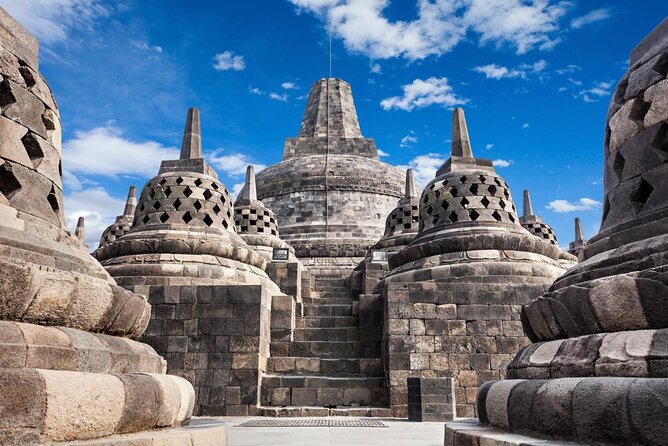
- Priority climb at Borobudur: you’re guided up with official assistance and staged stops as you work toward the top views
- Entrance fees handled for you: temple entry is included, and you’ll use a mobile ticket on site
- Prambanan’s Shiva compound scale: the big three-temple complex is the centerpiece, not just a quick photo stop
- Ramayana Ballet is an evening highlight: the story of Rahwana, Shinta, and Alengka plays out with live dance and music
- Monday timing can shift the day: Prambanan may be limited to ground areas, and the ballet background can change on specific days
Borobudur Priority Climb: the restored Buddha faces and how the guide paces you
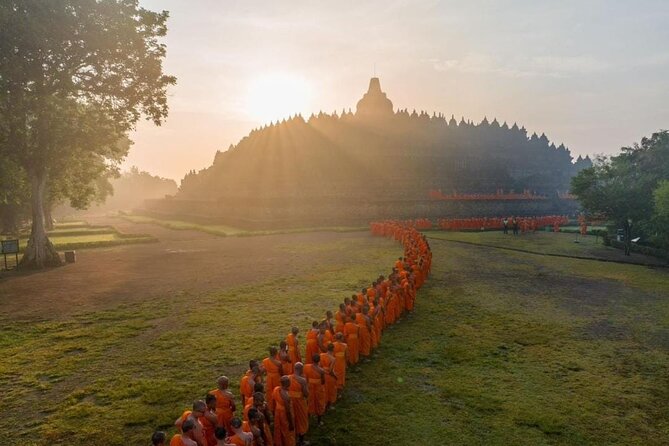
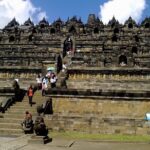
Borobudur is the kind of place where you don’t really notice the steps until you start climbing them. That’s why I like the priority climb approach here. It doesn’t make Borobudur “easy,” but it helps you avoid the most frustrating bottlenecks and get into a steady rhythm.
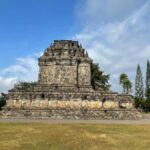
At the top, the focus is those carved Buddha faces and the huge sense of geometry. Borobudur dates to the 8th–9th centuries, and the carvings you see today were restored in the 1970s. Standing close to the details, you start to understand why the temple design feels like a diagram for a spiritual journey—level after level, with symbolism built into the stone.
The practical win is how the climb is handled. You’re not left to just scramble up for your best angles. The flow includes a guide who helps you understand what you’re looking at and where you are in the complex. In one highlight that shows up repeatedly, guides like Bima make sure you’re set up with the basics—water and clear info on what to do next—so your energy lasts through the climb.
Two things to keep expectations honest:
- You still need to be comfortable with a lot of steps and moving at temple pace.
- Access can occasionally be limited by special circumstances, like official visits. One person reported that part of Borobudur was closed and the top visit didn’t work as expected. It’s not something you can fully control, so build some flexibility into your day.
You can also read our reviews of more tours and experiences in Yogyakarta.


Prambanan Temple Compound: Shiva’s scale, three main shrines, and countryside breaks
Prambanan is a totally different mood from Borobudur. Instead of layered Buddhist stonework and quiet stone surfaces, Prambanan gives you Hindu temple drama at full scale—especially the main Shiva temple compound.
This is the largest compound dedicated to Shiva in Indonesia, and it’s built around three main temples. Even if you’re not a temple-architecture nerd, you can feel the “this was meant to be seen” planning: tall structures, clear lines of sight, and decorative work that rewards slow walking. I love when a site lets you choose your pace: some people want broad views first, then close detail. Prambanan lets you do both.
The countryside in between helps too. Your transfer runs through lush green areas, so you’re not staring at traffic fatigue all day. It’s one of those quiet travel benefits that doesn’t show up in the temple photos.
Now for the reality check: Mondays can change things. The tour info specifically warns that on Mondays, Prambanan may sometimes be limited to the ground area only. That’s the sort of limitation you want to know ahead of time, because it affects how much you can explore at full height and how long you’ll spend inside key sections.
If you’re visiting on a Monday, I’d treat it like this: plan to enjoy Prambanan’s main grounds and the best views you can get, but don’t assume every upper area will be open. If you can message before you book, do it—ask what’s realistic for that day.
Ramayana Ballet at Prambanan: an evening story of Rahwana and Shinta
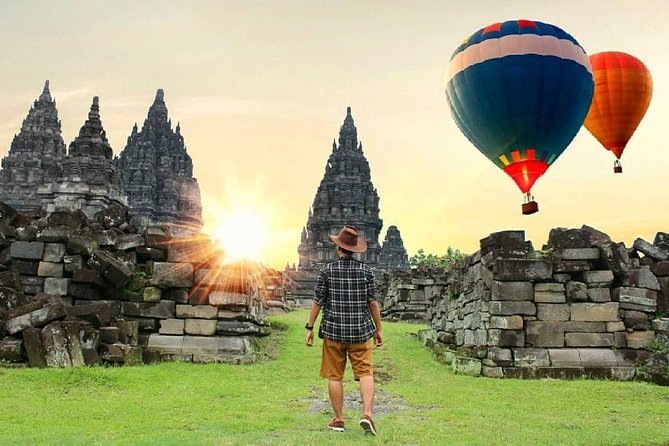
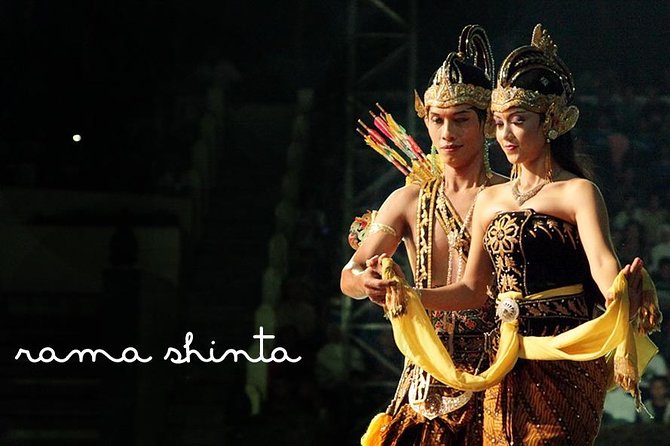
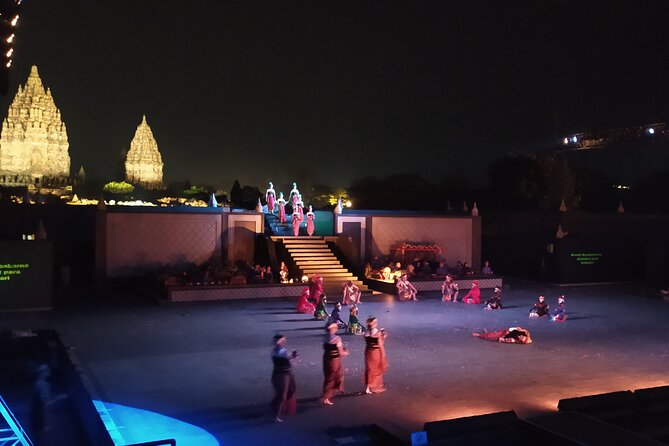
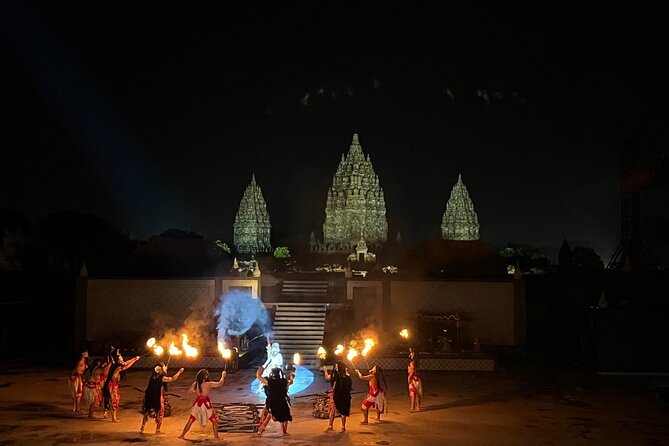
After all that stone and symbolism in daylight, the Ramayana Ballet feels like the story finally turning into action. The show is set up as traditional Indonesian dance and music, and it connects directly to the carved relief storytelling you saw earlier at Prambanan.
The central plot is classic: Rahwana (the giant) kidnaps Shinta in the Dandaka Forest and takes her to Alengka. Then the drama builds around the mission to get Shinta back. It’s not subtle, and that’s part of the fun. You can follow the arc even if you don’t know the tale already.
What I appreciate about this specific stop is timing awareness. The show segment is about 2 hours, but the overall evening can feel like a long sit depending on the exact start time and crowd flow. One older-sympathetic recommendation I saw was to split the day if you get tired easily—because temples take real energy, and then you need enough left to enjoy the performance instead of just enduring it.
There’s also a seating factor. One person suggested putting effort into getting good seats. It’s a live show with stage sightlines, so arriving with a clear idea of where you want to sit can make a big difference to what you actually see.
Finally, the show setting can vary by day. The tour info notes that every Monday, Wednesday, and Sunday, the Ramayana Ballet may run at Ramayana Ballet Purawisata without the Prambanan temple background. If you’re booking specifically for the combo look—temple in the background plus performance—this matters. Check your calendar carefully, because those days can shift the vibe.
Rain can also disrupt plans. One report said the ballet couldn’t be enjoyed as planned due to rain, and the team tried to secure indoor options, but capacity was limited. You can’t control weather, but you can control your attitude: bring patience, accept that the program can adjust, and keep your expectations flexible.
The 12-hour day plan: where time goes and how to avoid fatigue
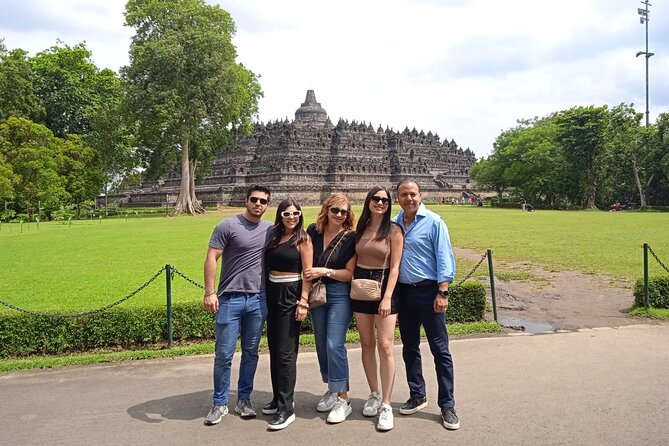
This is a 12-hour day, give or take. That’s not “bad,” but it’s not a casual stroll either. The biggest time sink is simple: travel between Borobudur, Prambanan, and the evening show location plus queue time plus the climb.
Hotel pickup helps, because you’re not assembling your own route at the start of the day. You get an air-conditioned vehicle and an English-speaking driver/guide, which matters in Central Java where traffic can turn into a full-time job. You also get parking on the program, so you’re not hunting lots while your patience drains.
Here’s how to keep the day fun instead of exhausting:
- Wear shoes that handle stairs. Borobudur is not the place for trendy slip-ons.
- Plan your energy like it’s two activities back-to-back: climb first, temples second, dance third.
- If you’re sensitive to long days, consider asking about splitting into two parts (one day for Borobudur, another for Prambanan and the ballet). A recommendation like this shows up for good reason: temples can be physically demanding, and the ballet is best enjoyed when you’re alert, not cooked.
You’ll also notice something about the pacing: many guides manage small “life logistics” during the day—restroom timing, water breaks, and helping with the handoff to official site staff. In practice, that’s what makes a “private tour” feel like more than a car rental.
What you pay for and what you’ll still need (lunch, tips, and snacks)
At $135.83 per person, this tour isn’t cheap in the way street-food tours can be. But it’s also not the kind of price that’s mostly “transport and hope.” You’re paying for a full package that covers the big friction points:
- Hotel pickup and an air-conditioned vehicle
- English-speaking driver/guide
- Entrance fees on the program
- Parking on the program
- Priority access to the Borobudur climb experience
That’s why the value holds up. Entrance fees and guided site help can easily eat into the budget if you plan it alone. Here, you’re effectively buying a structured day with fewer tickets, fewer transfers, and less waiting.
What you’ll still need:
- Lunch and dinner are not included.
- Tips are optional.
- Personal expenses are on you.
My advice: budget for at least one solid meal outside the tour package. Also consider snacks or water you can grab fast between stops. Even when guides help with water, you’ll feel better if you have your own backup.
Price tip: this is better if you have a group small enough that a private vehicle makes sense. Solo can still be worth it for the priority climb and the coordinated official site handoffs, but if you’re comparing to cheaper join-in tours, the key difference is control of timing and the guide attention.



Private-car comfort and real guide help (from Bima to Widi)
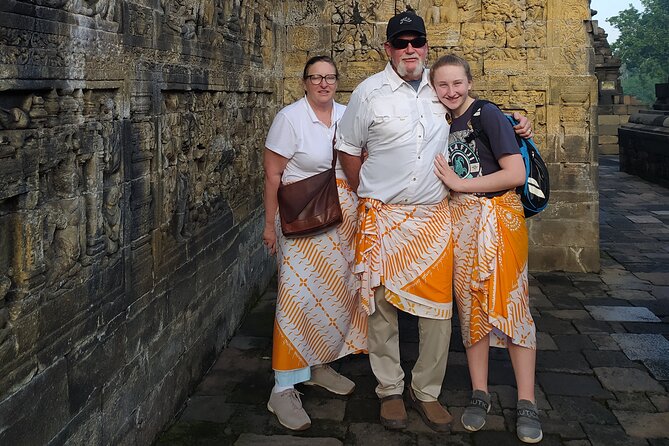
A private tour is only as good as the people running it. The strongest patterns in the experience come from the guidance style and how practical the day feels.
Names you might see assigned include Bima, Pak Dani, Adit, Deny, Hijba, Hibza, Widi, Arma, Atok, and Muhammad. The common thread is clear: they explain what you’re seeing during the drive so you arrive at Borobudur and Prambanan already oriented.
That matters more than it sounds. If you just walk into Borobudur without a sense of the symbolism, you may admire it but miss the “why.” When the guide sets context—what the carvings represent, how the temple layers work, how Prambanan’s Hindu themes connect to the Ramayana performance—the site turns from scenery into a story you can follow.
I also like the “handoff” moments. One person described a smooth transfer where the team managed entry flow and official guidance at each site. Others noted that guides helped them find restrooms and kept things moving at a pace that didn’t feel rushed but also didn’t drag.
One caution: you’re dealing with two major temple complexes plus a performance. Even with excellent guiding, the day can still feel full. So if you’re the type who hates long schedules, this may not be your style. If you like structured days with built-in explanations, it’s a great fit.
Best-fit situations: who this Borobudur–Prambanan–Ballet day works for
This tour is a strong match if you want the “big three” in one organized arc:
- Borobudur climb with priority access and interpretation
- Prambanan with the major Shiva-temple compound experience
- Ramayana Ballet as a cultural performance tied to the story tradition
It also suits you if you prefer not to bargain or coordinate multiple tickets and transfers. The hotel pickup and English-speaking guidance reduce the decision fatigue.
I’d pay special attention to fit if any of these describe you:
- You’re comfortable with a lot of walking and stairs.
- You enjoy explanation as much as photos.
- You can handle a full-day schedule.
If you’re visiting with older adults or you get tired fast, consider splitting the temples and ballet into separate days. The advice to split comes up for a reason: even with a friendly driver and good pacing, temples are physically demanding.
And for Monday visits, plan slightly differently. With possible Prambanan ground-area limitations and a different ballet background setup on certain days, you’ll get the culture either way, but you may not get the exact “temple-as-backdrop” look you imagined.
Should you book this Borobudur–Prambanan–Ballet tour?
If you want one day that hits maximum cultural payoff—temples plus performance—this is a smart booking. The biggest strengths are simple: entrance fees are included, you get hotel pickup and an organized route, and the Borobudur climb is handled in a way that supports understanding, not just scrambling.
Book it if you’re ready for a 12-hour day and you’d rather have a guide manage the flow. Consider holding back or splitting the plan if you know you’ll struggle with long temple walking or late-evening stamina.
FAQ
What’s included in the tour price?
Entrance fees for the temple program are included, plus hotel pickup, an air-conditioned vehicle, parking on the program, and an English-speaking driver/guide.
Is lunch or dinner included?
No. Lunch and dinner are not included in the tour price.
How long is the tour?
The duration is listed as about 12 hours.
Is this a private tour?
Yes. This is a private tour/activity, and only your group participates.
Can I climb to the top of Borobudur?
The experience includes a priority climb to the top of Borobudur.
What happens on Mondays at Prambanan?
On Mondays, Prambanan temple access may be limited to the ground area only. It’s recommended to contact before ordering to confirm what’s possible on your day.
Is the Ramayana Ballet performed with Prambanan in the background every day?
No. Every Monday, Wednesday, and Sunday, the Ramayana Ballet may be performed at Ramayana Ballet Purawisata without the Prambanan temple background.
What if the weather is bad?
The experience requires good weather. If it’s canceled due to poor weather, you’ll be offered a different date or a full refund.