REVIEW · YOGYAKARTA
Yogyakarta Bromo Ijen Bali Tour (5d4n)
Book on Viator →Operated by Java Adventure Trail · Bookable on Viator
Waking up at three mountains is no joke. This 5-day Java-to-Bali route strings together Borobudur, Bromo, and Ijen with a private guide for the hard-to-plan parts, plus train and ferry transfers that keep your brain switched off.
I really like the clear structure: you get sunrise timing, local guiding, and built-in stops like Prambanan and Yogyakarta palace without hunting for tickets or transport. I also like that gas mask and the Blue Fire component at Ijen are handled as part of the plan, so you don’t end up scrambling for gear at the last minute.
One thing to consider: the schedule is early and movement-heavy, and some costs are not included—especially entrance fees for Bromo and Ijen. If you hate 3:30 am alarms, this may feel like a boot camp.
In This Review
- Key things that make this tour worth a close look
- Private 5-Day Java-to-Bali Route: What You’re Paying For
- Day 1 in Yogyakarta: The Easiest Start You’ll Get on Java
- Borobudur at Dawn and Setumbu Hill: Seeing the Temple Without the Top Access
- Prambanan + Yogyakarta Palace Stops: History With Real Local Flavor
- Train Day to Surabaya: Why Rail Beats Another Long Drive
- Bromo Sunrise at 3:30 am: The Jeep Ride You’ll Remember
- Ijen Crater at 5:00 am: Blue Fire Plans, Real Conditions
- Ferry to Bali and Hotel Drop-Off Times: Where You End Up Matters
- Price and What’s Included (and Not): The Real Value Check
- Included in the tour
- Not included
- Timing Rules You Need to Know Before You Pick Your Dates
- Who This Tour Fits Best
- Should You Book This Java and Bali 5-Day Route?
- FAQ
- Where does the tour start and end?
- How long is the tour?
- What transport is included between Java and Bali?
- What’s included for Bromo sunrise?
- Are meals included during the trip?
- Do I need to pay entrance fees for Bromo and Ijen?
- Is the Blue Fire at Ijen guaranteed?
- What does the tour include for Ijen Crater?
- Which days are Borobudur, Prambanan, and the Sultan Palace closed?
- Is there free cancellation?
Key things that make this tour worth a close look
- Private guide time for Bromo and Ijen plus local guiding at key temple sites
- Borobudur dawn is still possible, with sunrise viewing shifted to Setumbu Hill due to top access limits
- Bromo sunrise by jeep from the early start, then a long drive onward for your Ijen-area stay
- Ijen Blue Fire experience includes gas mask and the Blue Fire tour cost, but visibility can vary
- Train + ferry transfers do most of the heavy lifting for you, ending with a Bali hotel drop-off based on your area
Private 5-Day Java-to-Bali Route: What You’re Paying For
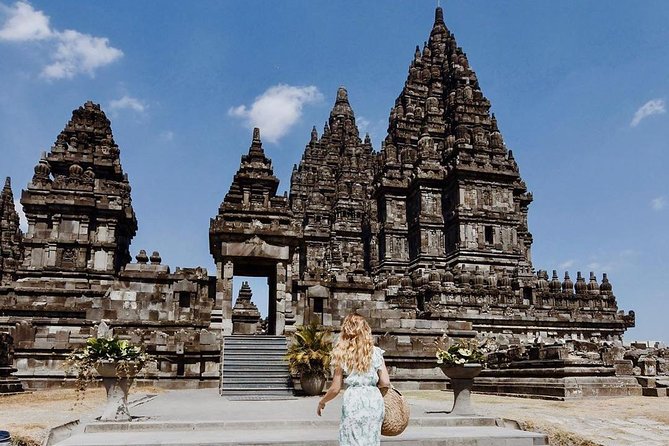
This tour is priced at $745.39 per person for about 5 days, which sounds steep until you break down what you’re actually buying. You’re not just buying tickets. You’re buying someone else handling transport between Yogyakarta, Surabaya, the Bromo area, Banyuwangi, and then ferrying to Bali.
The strongest value is that you get a package-style flow: private transportation, several hotel nights with breakfast, and guiding for the moments that usually require the most coordination. Add in the sunrise components (Borobudur viewing, Bromo jeep sunrise, and Ijen crater access with Blue Fire gear), and the cost starts to make more sense.
Also, the planning lead time is long—this itinerary is commonly booked about 173 days in advance. That’s a good sign for availability and it’s a hint that timing matters for sunrise days and transport.
You can also read our reviews of more tours and experiences in Yogyakarta
Day 1 in Yogyakarta: The Easiest Start You’ll Get on Java
Day 1 keeps things simple. You’re met at the airport or train station in Yogyakarta, then driven to the Borobudur temple area (about 1.5 hours). After that, you overnight in the Borobudur-area hotel with breakfast included.
What I like here is the tone. It’s not a “race to the first photo” day. It’s a get-settled day that sets you up for the next day’s sunrise effort.
You’ll also notice the tour’s meet-and-transfer approach is built-in. That’s important in Java, where arriving late or finding your own driver can turn into a small headache fast—especially when sunrise is the next morning.
Borobudur at Dawn and Setumbu Hill: Seeing the Temple Without the Top Access
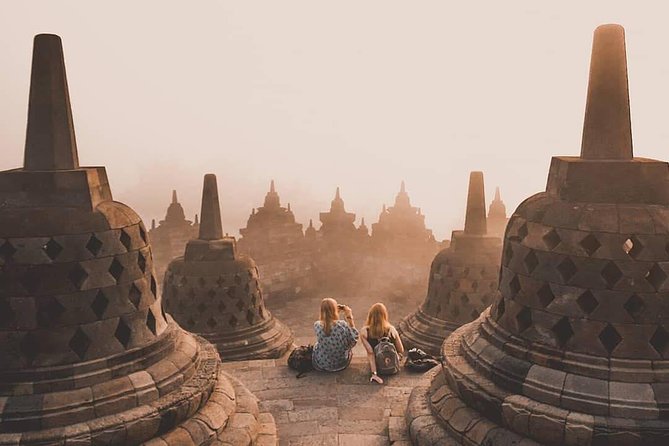
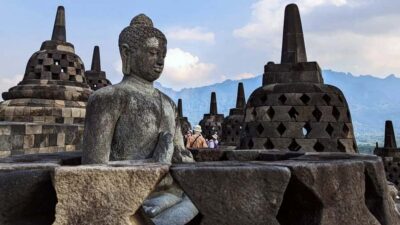
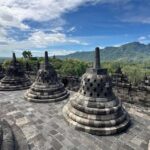
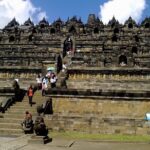
Borobudur is best at dawn. The plan is built around that idea, with early viewing when the air feels cooler and the atmosphere is calm. You’re not just seeing stones—you’re seeing how the morning light changes the reliefs and the surrounding fields.
Here’s the key rule shift you should know: you can’t do sunrise on top of Borobudur anymore, and access to the top level isn’t allowed. In this itinerary, sunrise is done from Setumbu Hill. From there, you’ll view the temple, with Borobudur accessible at the bottom area.
That’s a smart workaround. It protects the experience while respecting the current rules. If you’re planning your photos and expectations, go in knowing the “top access” version isn’t happening on this tour—Setumbu Hill is the plan.
Another note: there’s mention of a trial to climb up to the top floor with special shoes and extra cost, but it’s not guaranteed. For most people, Setumbu Hill is the safer bet.
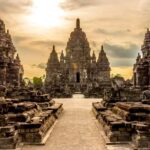
Prambanan + Yogyakarta Palace Stops: History With Real Local Flavor
After sunrise time, Day 2 pivots toward culture.
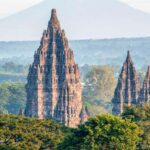
First up is Prambanan. You’re typically picked up around 9:00 am from your Yogyakarta hotel, then Prambanan is the first temple stop. After that there’s a lunch break at a local restaurant (meals aren’t listed as included in the tour price, so budget for food on your own here).
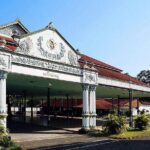
Then you head into the Yogyakarta Palace area. The plan includes stops such as:
- Sultan Palace
- Water Castle
- A silver accessories workshop stop
- A batik stop
I like that this isn’t just “temple, temple, goodbye.” You get hands-on context for how Yogyakarta creates and sells craft items. Even if you don’t buy anything, it helps you understand the city beyond the monuments.
Also, it’s a good day for pacing. You end back at your hotel in Yogyakarta with free leisure, which matters because the next two days ramp up again with the train and the mountain starts.
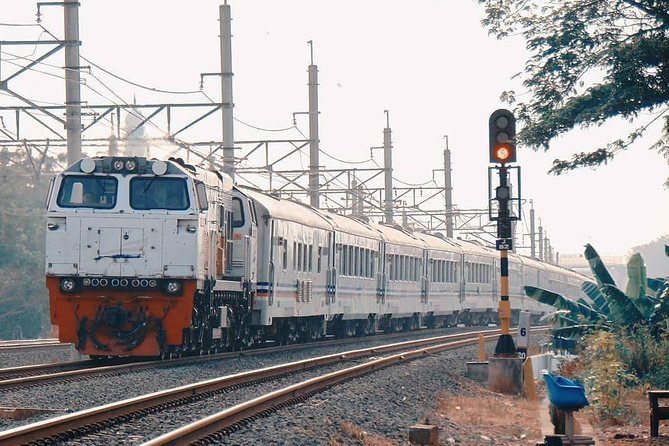
Train Day to Surabaya: Why Rail Beats Another Long Drive
Day 3 is one of the best-feeling parts of this itinerary because it swaps driving stress for a scheduled train ride.
Breakfast happens before you go to the station, with timing that can be around 6:00 am or 10:30 am. Then you’re taken to Tugu Train Station because the train departs around 6:45 am or 11:30 am and arrives at Surabaya Gubeng.
This matters for two reasons:
- It reduces uncertainty about traffic, which is a big deal before Bromo.
- It gives you a predictable “handoff” point for the next leg.
Once you arrive in Surabaya Gubeng, your staff meet you there, then you continue to the Mt. Bromo area. Lunch is included as a stop, but entrance fees and meals aren’t fully spelled out as included—so plan to pay for your own meals where needed.
You finish the day with an overnight in the Mt. Bromo area hotel with breakfast.

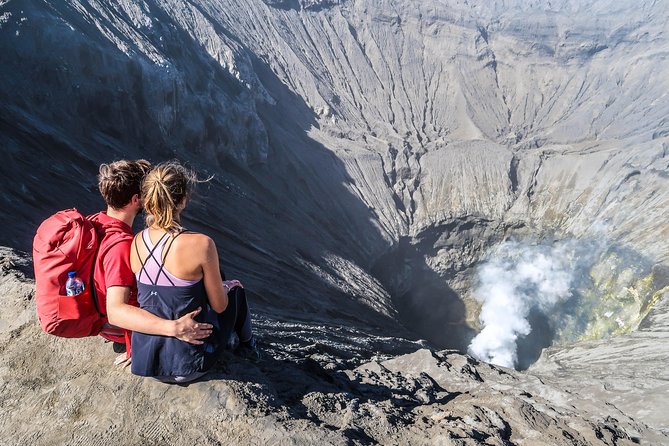
Bromo Sunrise at 3:30 am: The Jeep Ride You’ll Remember
Day 4 is where the tour earns its dramatic reputation—but with real-world planning built in.
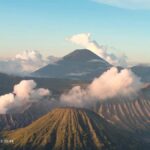
The Bromo sunrise portion starts around 3:30 am (and earlier on weekends). You take a jeep to the most famous viewpoint in the Bromo area. This early timing is not optional if you want the classic sunrise experience.
What I like most about the jeep setup is that it’s practical. Bromo sunrise is all about positioning and light. The jeep ride is the way most people get to the right viewing point without burning time trying to figure out local access.
Then, after the sunrise portion, you travel onward toward Banyuwangi, aiming to reach your hotel area in about 5–6 hours. The route is described as passing rice fields, plantations, smaller cities, and even some beach areas. You’re basically shifting from mountain morning to coastal town evening.
You end the day staying in the Banyuwangi area with breakfast.
Ijen Crater at 5:00 am: Blue Fire Plans, Real Conditions
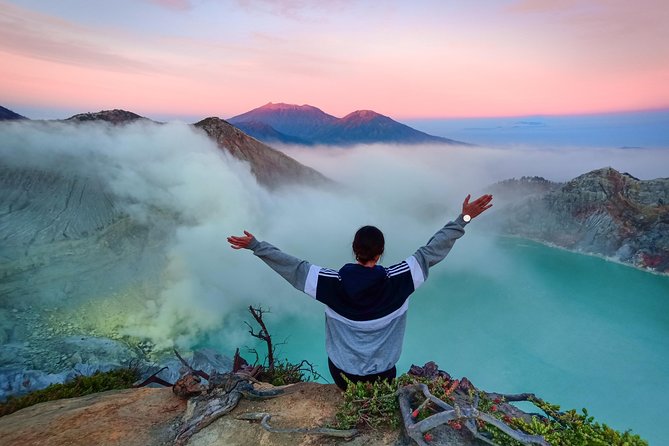
Day 5 is the second mountain-alarm day. Your Ijen crater tour begins around 5:00 am.
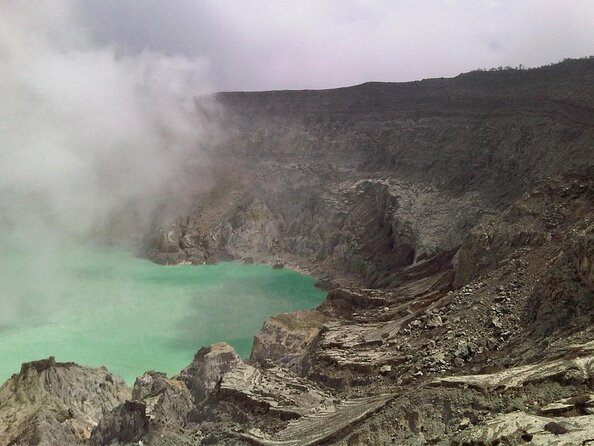
You’re driven first to the village of Licin, then you continue toward the Ijen slopes. Along the way you pass plantations and rainforest areas as you approach the crater.
The headline here is the Blue Fire experience. The good news: the plan includes the Blue Fire tour cost and gas mask. You’re not going out blind or unprepared.
The important reality: blue fire is temporarily not visible due to natural conditions. That’s not the provider being casual—it’s nature being nature. When visibility is weak, the focus may shift more toward the crater itself and your safety routine.
Safety is also emphasized with instructions to always follow on-site guidelines. Since this is an included gear component (gas mask), it’s one less variable you have to solve yourself at the crater.
After your Ijen experience, you have breakfast at the hotel, then it’s time to move to the next country: Bali.
Ferry to Bali and Hotel Drop-Off Times: Where You End Up Matters
Once you’re finished with Ijen, you transfer to the ferry harbour. The ferry ride to Bali is about one hour.
When you arrive on Bali, a Balinese driver handles your transfer to your hotel area. The driving time depends on where you’re staying, and the tour provides these practical ranges:
- From Gilimanuk Ferry Port to Ubud, Kuta, Sanur, Jimbaran, Denpasar: about 5 hours
- To Lovina: about 2 hours
- To Pemuteran: about 30 minutes
This is worth taking seriously while you plan your Bali base. Those final hours can feel long after two early starts. If you want an easier end to the trip, choosing a Bali area closer to where you’ll be dropped off helps.
Price and What’s Included (and Not): The Real Value Check
Here’s the part I’d want you to check before paying.
Included in the tour
You get private transportation throughout the route and multiple hotels:
- 1 night in the Borobudur area (breakfast included)
- 1 night in Yogyakarta area (breakfast included)
- 1 night in Mt. Bromo area (breakfast included)
- 1 night in Banyuwangi area (breakfast included)
You also get:
- Jeep for Bromo sunrise
- Private English-speaking guide for Mount Bromo and Ijen Crater
- Mineral water during the trip
- Costs for Borobudur sunrise tours and Yogyakarta city tour
- Costs for Blue Fire tour in Ijen Crater and gas mask
- Costs for local guides for Prambanan and Borobudur
- Ferry from Java to Bali and Bali transfer to your hotel area
- Train tickets from Yogyakarta to Surabaya Gubeng
Not included
You should budget separately for:
- Entrance fees at Mount Bromo and Ijen
- Meal costs during the trip and personal expenses
- Travel insurance
- GST (Goods and Services Tax)
- Airport/departure tax
If you compare this to DIY planning, this package is strongest when you value time and want predictable handoffs. If you already speak Indonesian well and love arranging trains and drivers on your own, you might replicate parts of it. But for most people, paying for the structured transfers is the point.
Timing Rules You Need to Know Before You Pick Your Dates
A few schedule rules can affect your experience:
- Every first Friday of the month, Mount Ijen is closed for one day. Check your booking date carefully.
- Borobudur Temple, Prambanan Temple, and the Sultan Palace in Yogyakarta are closed every Monday. If your itinerary lands on Monday, the tour timing may shift—or you may need to adjust your travel dates.
- During the holiday season, bookings are not accepted from 24 December to 7 January.
These are not tiny details. They can change what you actually see, especially with sunrise-focused tours.
Who This Tour Fits Best
This itinerary is a strong match if you want:
- Big-ticket highlights without planning the transport yourself
- Sunrise experiences at Borobudur, Bromo, and Ijen
- A guide for the mountain days where timing and access matter
- A structured route with hotels and transfers lined up
It might be less ideal if:
- You hate very early mornings
- You’re sensitive to long driving days (Day 4 and the Bali transfer timing can feel like it)
- You want every single fee included in one price (Bromo and Ijen entrance fees aren’t included)
If you want the best value, book early and pick Bali lodging that reduces late-day transfer time. Your body will thank you.
Should You Book This Java and Bali 5-Day Route?
If you want the headline experiences of Java and Bali in one trip, this is an efficient way to do it. You’re paying for guides, transport between islands, and the sunrise-heavy work that usually creates the most stress.
I’d book it if you’re comfortable with early starts and you’re okay budgeting a few extras like entrance fees and meals. I’d think twice if you’re hoping for a relaxed pace or if your dates land on the temple or Ijen closure patterns.
Overall: this is a practical, highlight-focused route with the hardest parts handled for you. For many people, that’s the whole win.
FAQ
Where does the tour start and end?
It starts in Yogyakarta, Yogyakarta City and ends in Bali.
How long is the tour?
The tour is 5 days (approx.).
What transport is included between Java and Bali?
You get the train tickets from Yogyakarta to Surabaya Gubeng and you also take a ferry from Java to Bali, with transfer to your Bali hotel area included.
What’s included for Bromo sunrise?
The tour includes a jeep for the Mount Bromo sunrise tour, and it starts around 3:30 am.
Are meals included during the trip?
No. Meal during the trip and personal expenses are listed as not included. Mineral water is included.
Do I need to pay entrance fees for Bromo and Ijen?
Yes. Entrance fee in Mount Bromo and Ijen is listed as not included.
Is the Blue Fire at Ijen guaranteed?
Not necessarily. The tour notes that Blue Fire is temporarily not visible due to natural conditions, even though the experience is considered safe.
What does the tour include for Ijen Crater?
The tour includes the Blue Fire tour cost and gas mask, and the Ijen crater tour starts around 5:00 am.
Which days are Borobudur, Prambanan, and the Sultan Palace closed?
They are closed every Monday.
Is there free cancellation?
Yes. You can cancel for a full refund up to 24 hours before the experience start time.