Six temples, fewer crowds, plenty of quiet. This Yogyakarta temple day takes you to quieter, off-the-beaten-path ruins—including underground sites—while an English-speaking driver keeps the stories clear and easy to follow.
I like two things right away: you get an English-speaking driver who can also guide, and admission tickets are included at every stop. That combo saves time (and thinking) when you just want to focus on what you’re looking at.
One consideration: the full plan depends on good weather, and it’s still a long 10-hour morning-to-afternoon. If you’re not into hills, you’ll want to pace yourself, especially at the hilltop sites.
In This Review
- Key highlights to expect
- A temple route built for quieter moments
- Price and what $45 buys you in real value
- Private transport, English support, and a morning start at 8:00
- Stop 1: Sambisari Temple and the 9th-century underground surprise
- Stop 2: Candi Banyunibo and the 1940 rediscovery story
- Stop 3: Ijo Temple, hilltop views, and the highest temple angle
- Stop 4: Barong Temple and Medang-era clues from the Mataram period
- Stop 5: Sojiwan Temple and those Buddhist relief lessons
- Stop 6: Plaosan’s Hindu–Buddhist setting and the idea of harmonization
- What makes this day run smoothly (and what to watch)
- Who this tour suits best
- Should you book this Yogyakarta temple tour?
- FAQ
- What time does the tour start?
- How long is the Hidden Gems temples-style tour?
- Is pickup available in Yogyakarta?
- Are temple admission tickets included?
- Is this a private tour?
- Will I get an English-speaking guide?
- Do I need to print tickets?
- What happens if the weather is bad?
- Is free cancellation available?
Key highlights to expect
- Underground temple time at Sambisari and Candi Banyunibo
- Ijo Temple hill views from the highest temple in Yogyakarta
- Hindu-and-Buddhist mix across the route, including Plaosan
- Admission included so you can skip ticket stress
- Private group only so you’re not squeezed into other schedules
- Pickup and drop-off can be customized if you message ahead
A temple route built for quieter moments
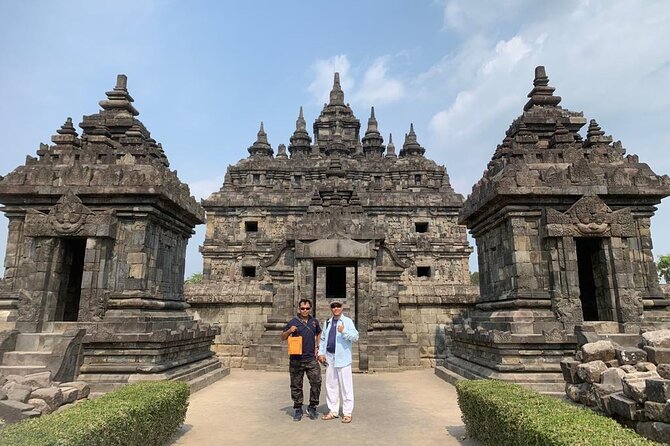
This tour works because it’s designed around variety, not checkboxes. You start the day with an underground Hindu site, then move through rediscovered Buddhist ruins, hilltop viewpoints, and a mix of Hindu and Buddhist temples.
The best part for your brain is the pacing. Each stop is long enough to look, read the reliefs, and take in the mood—rather than racing to the next “photo spot.” If you care about architecture and how religions evolved over time, this format feels made for you.
You can also read our reviews of more tours and experiences in Yogyakarta.
Price and what $45 buys you in real value
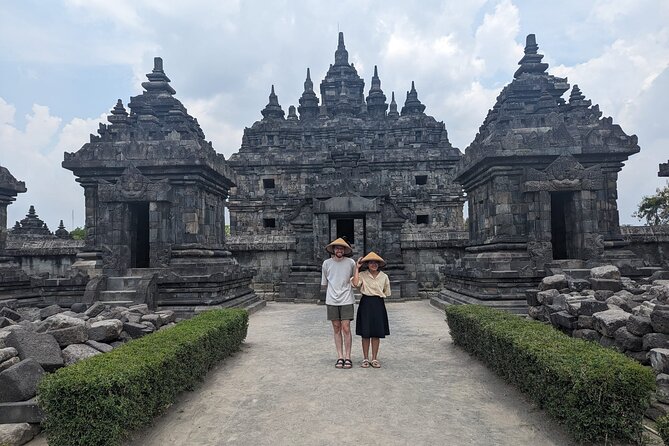
At $45 per person for roughly 10 hours, the price can look “small” until you add what’s included. Here, admission tickets are covered for the temples on the route, and you’re also getting pickup support plus transport through multiple sites.
You’re basically paying for four things: time, driving, entry fees, and a human who helps you make sense of what you’re seeing. For many temple days in Yogyakarta, you end up juggling entry costs and timing. This tour removes a lot of that friction.
Private transport, English support, and a morning start at 8:00
The day begins at 8:00 am, which is ideal if you want cooler temperatures and calmer temple moments. It’s also a practical start for fitting six sites into one day without turning it into a late-night scramble.
This is a private tour, meaning only your group participates. That matters more than people expect when you’re hopping between temples, because it gives you freedom in small ways—like asking questions without waiting for a bigger group to catch up.
You’ll ride with an English-speaking driver who can act as your guide. That’s especially useful on temple sites, because many details are easier to understand when someone can explain the “why,” not just point at a structure.
Stop 1: Sambisari Temple and the 9th-century underground surprise
Sambisari Temple is a standout because it’s literally under the ground. It’s described as a Hindu temple built in the 9th century by Rakai Grung king, and the “buried” setup makes the site feel like an archaeological find rather than a standard monument visit.
Expect a different kind of atmosphere here. Underground or partially covered structures tend to make carvings and spatial layout feel more intimate, since you’re not dealing with wide-open surroundings the way you might at a hilltop.
The time you get is about 1 hour 30 minutes, which is perfect for taking your time with the structure and learning how it was connected to the period that built it. If you like temples that feel discovered (not just displayed), this first stop sets the tone.
Stop 2: Candi Banyunibo and the 1940 rediscovery story
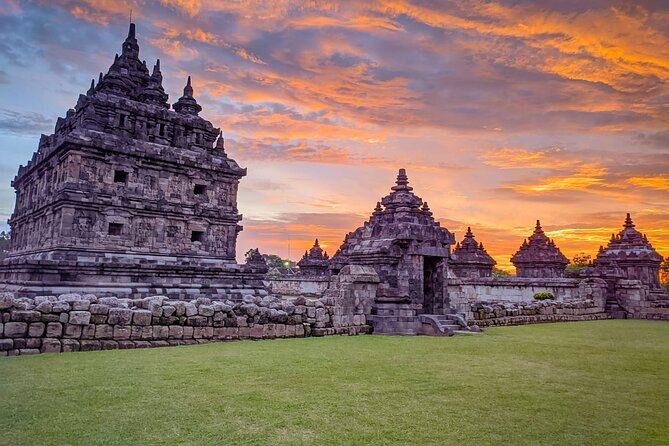
From Sambisari’s underground presence, you shift to Candi Banyunibo, a Buddhist temple tied to the ancient Mataram kingdom era. It’s also from the 9th century, and the detail that it was rediscovered in 1940 adds a layer of meaning.
The information you’re given frames it well: the temple was found in a collapsed condition and covered by the ground. That matters because it helps you look at the site with the right mindset. You’re not only seeing a religious structure—you’re seeing evidence of time, damage, and recovery.
You’ll get another 1 hour 30 minutes here, including admission. That length is important because collapsed-and-found sites can be confusing if you only have a quick walk-through.


Stop 3: Ijo Temple, hilltop views, and the highest temple angle
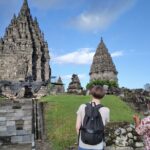
Next is Ijo Temple, a Hindu temple built in the 9th century and located on a hill. The tour notes it as the highest temple in Yogyakarta, and that positioning changes how you experience the place.
At a hilltop temple, you’re not just looking at stone. You’re looking outward—at the city and the way the region sits around these old religious centers. If you want your temple day to include a proper view break, this is where it happens.
The stop is about 1 hour 30 minutes, which should give you time to enjoy the scenery without feeling rushed. One consideration: hilltop sites usually mean more climbing and uneven ground than flat temples, so plan your pace accordingly.
Stop 4: Barong Temple and Medang-era clues from the Mataram period
Barong Temple adds another historical thread. It’s described as built around the 9th and 10th centuries AD, linked to the Medang Kingdom from the Mataram period, and rediscovered at the beginning of the 20th century.
That rediscovery detail is a useful lens. It helps you connect the temple to the broader pattern of how these sites have been found, exposed, and studied over time—not just “left as they were.”
You’ll spend about 1 hour 30 minutes here with admission included. In a full-day route, this kind of stop is valuable because it’s less about spectacle and more about reading what’s left: layout, fragments, and what the structure implies about its past role.
Stop 5: Sojiwan Temple and those Buddhist relief lessons
Sojiwan Temple is where the tour gets especially thoughtful. It’s Buddhist, built between 842–850 M, and one of its key features is that there are around 20 reliefs at the foot of the temple.
Those reliefs tell stories tied to Buddhist moral teaching values that are described as still relevant to present life. That’s more than trivia. When you know a site has reliefs with moral themes, you’re more likely to slow down and actually read and interpret what you see.
You get about 1 hour 30 minutes here as well, with admission included. If you enjoy the human side of temple art—teaching, behavior, values—this stop will feel like a break from pure architecture and into “meaning.”
Stop 6: Plaosan’s Hindu–Buddhist setting and the idea of harmonization
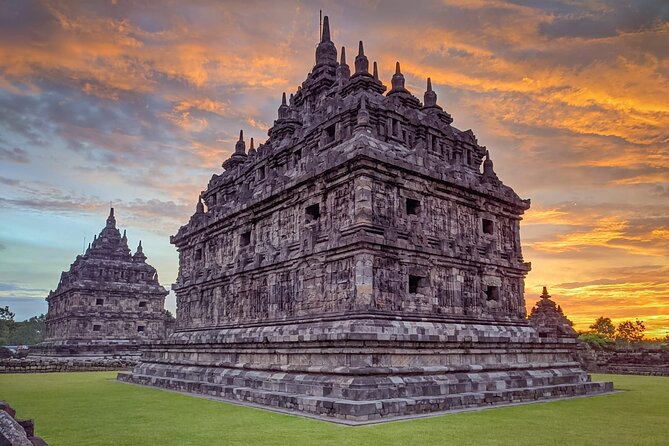
The final stop is Plaosan Temple, described as a combination of Hindu and Buddhist temple space. That alone makes it memorable, because most temple trips push you toward one religious tradition per day.
The tour frames Plaosan as a symbol of harmonization and good tolerance, connected to the broader idea of relationships between different temple traditions in the region. It’s also said to have a connection between Prambanan and Buddhist Temple.
Another helpful point: you’re not just visiting “two things in one place.” The way the tour presents it invites you to compare how each religious influence shows up in form, layout, and symbolic meaning.
Again, you’ll have about 1 hour 30 minutes at this stop with admission included. By the end of the day, this mixed layout is a strong payoff because it matches the tour’s overall theme: the region’s spiritual life was never one-note.
What makes this day run smoothly (and what to watch)
This tour is structured for a full temple circuit: six stops, each with a substantial time block, and an English-speaking driver who can guide you through what’s in front of you.
Because the itinerary is spread out, you’ll want to treat it like a long sightseeing day, not a quick hop. Bring water, wear comfortable shoes, and expect some walking on temple grounds.
Also note the weather requirement: the experience requires good weather. If rain moves in, it can affect how comfortable the day is and whether the tour is rescheduled. If you’re traveling around the rainy season, I’d plan some flexibility.
Who this tour suits best
This is a great fit if you:
- Like architecture and archaeology more than just “standing at the famous temple”
- Want quieter temple time, with fewer people at each stop
- Prefer learning through explanation from an English-speaking driver/guide
- Enjoy a mix of Hindu and Buddhist sites in one logical route
If you want a super short day, this may feel like too much. And if you strongly dislike hills or uneven ground, you’ll want to take extra care at hilltop sites like Ijo.
Should you book this Yogyakarta temple tour?
I’d book it if you’re the type who enjoys structure, symbolism, and backstories—and you want a temple day that isn’t only about the most famous names. The value is strong because admissions are included across the route, and the private setup helps keep the experience paced.
I wouldn’t book it if you’re mainly hunting for easy, flat, low-effort walks or if your schedule can’t handle a weather-dependent plan. For a balanced temple day with learning built in, this one is hard to beat.
FAQ
What time does the tour start?
The tour starts at 8:00 am.
How long is the Hidden Gems temples-style tour?
It runs for about 10 hours (approx.).
Is pickup available in Yogyakarta?
Yes. Pickup is offered, and pickup and drop-off can be customized if you inform the provider in advance.
Are temple admission tickets included?
Yes. Admission tickets are included for each of the temple stops.
Is this a private tour?
Yes. It’s private, and only your group will participate.
Will I get an English-speaking guide?
You’ll travel with an English-speaking driver who can also act as your guide, so communication is easier.
Do I need to print tickets?
No. The tour lists mobile ticket availability.
What happens if the weather is bad?
The experience requires good weather. If it’s canceled due to poor weather, you’ll be offered a different date or a full refund.
Is free cancellation available?
Yes. You can cancel for a full refund up to 24 hours before the experience starts. If you cancel less than 24 hours before, the amount paid isn’t refunded.