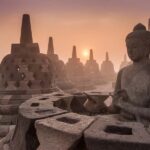
REVIEW · BOROBUDUR
Yogyakarta: Borobudur Temple Entry Ticket
Book on GetYourGuide →Operated by Globaltix Indonesia · Bookable on GetYourGuide
Borobudur is all stone stories. A pre-booked entry ticket puts you inside the world’s biggest Buddhist monument, with the Menoreh Mountains looming behind and carvings that keep rewarding your attention. You’re walking through 2,500 square meters of temple design, built centuries ago and restored after long neglect.
What I like most is how clear the experience feels once you’re inside: you get to explore the terraces at your own pace, starting with Green Park and moving toward the main monument. I also love the scale and craftsmanship: 2,672 relief panels and the original setting of 504 Buddha statues turn “temple visit” into a slow, satisfying visual read.
The main consideration is pacing and timing. Even if you pre-book smoothly, you can still end up feeling rushed, and you may have trouble catching every explanation if you’re relying on fast, casual interpretation. So plan your time, and don’t count on deep study in a single quick pass.
In This Review
- Key highlights you’ll feel fast
- Borobudur entry ticket: what you’re really buying in Yogyakarta
- Timing and ticket redemption: start with the right hours
- Green Park to the main monument: the first walk matters
- The Sailendra-era monument: scale, design, and why it feels different
- Relief panels and Buddha carvings: how to look without missing the point
- Menoreh Mountains views: the outside part of the temple experience
- Climb to the top or stay on the terraces?
- Pacing, language, and how to avoid feeling rushed
- Price and value: why $3.08 can still be a good deal
- Who this Borobudur entry ticket suits best
- The one “watch out” issue: ticket eligibility confusion
- Should you book this Borobudur Temple entry ticket?
- FAQ
- Where can I redeem the digital Borobudur entry ticket?
- What are Borobudur Temple opening hours?
- Is the ticket valid for more than one day?
- Do I need an extra ticket to climb to the top?
- What ID do I need to bring?
- What should I wear or bring for the visit?
- Is Borobudur accessible for wheelchair users?
- What are the age ticket rules?
- Are there refund options if plans change?
Key highlights you’ll feel fast
- Pre-booked access to Borobudur’s terraces without last-minute stress at the entrance
- Menoreh Mountains views framing the temple from the hilltop setting
- Relief panels and Buddha carvings: 2,672 scenes across the monument’s surfaces
- Sailendra dynasty + Gupta architecture influence in one recognizably Indonesian package
- Restoration story: UNESCO and the Indonesian Government working together in the 1970s
Borobudur entry ticket: what you’re really buying in Yogyakarta
This Borobudur Temple entry ticket is simple in concept: you’re paying for admission to the temple site so you can walk the monument and its main terraces. The listed price is $3.08 per person, which is very low for a site of this fame and cultural weight.
Just keep your expectations aligned with what’s included. This ticket covers entry, but it does not include the additional ticket needed to climb to the top of the temple. That matters because the “best photos” and the most elevated views often tempt people toward the top area. If you want that, you’ll need to budget for it separately.
Also, the experience is designed for a full day in practice. The ticket is valid for 1 day, and you’ll want that flexibility because Borobudur works best when you can pause. It’s not a quick, line-and-go stop if you care about the carvings.
You can also read our reviews of more tours and experiences in Borobudur
Timing and ticket redemption: start with the right hours
Borobudur’s operating hours are 06.30 to 16.30 WIB. Gate closing is earlier: the gates close 30 minutes before the official operating end. So don’t treat the listed end time as your last-minute safety net.
Once you arrive, the digital entry ticket is redeemed at a kiosk near Borobudur’s entrance. This is the part that can make or break your morning. If you’re traveling with spotty mobile data, don’t gamble. Have your ticket ready offline, and get to the kiosk as early as you can.
What to bring is basic but important for comfort. Bring your passport or ID card, wear comfortable shoes, and dress for warm weather. You’re also advised to bring a face mask or protective covering.
Green Park to the main monument: the first walk matters
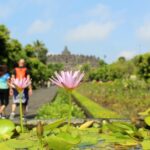
After you enter, you can choose to walk through Green Park from the entrance. This isn’t just a route. It helps you transition from the outside bustle into the temple’s slower rhythm.
You’ll also see vendors along the way. The site has regulations meant to prevent them from disturbing visitors, but it’s still a real-world walking environment. If you want calm, keep your pace steady, don’t stop abruptly in the middle of paths, and be ready for small detours around groups.
The value of Green Park is mental. It gives you a buffer before you hit the stone terraces. You get a moment to re-center on what you’re actually there for: the architecture, the relief storytelling, and the view toward the hills and fields beyond the monument.
The Sailendra-era monument: scale, design, and why it feels different
Borobudur was built between AD 780 and 840 during the reign of the Sailendra dynasty. That’s the opening fact that explains why the temple feels both familiar and distinct. The design draws on Gupta architecture, which reflects Indian influence in the region.
But Borobudur isn’t a copy. It includes enough local, indigenous elements to feel uniquely Indonesian. That mix is part of what makes the monument so compelling. You see classical forms and Indian-style design logic, but the scenes and overall temple character don’t read as imported set dressing.
Scale is the other reason Borobudur hits hard. The temple covers about 2,500 square meters and originally featured 504 Buddha statues. Even if some elements changed over time, the original concept was clearly built for repetition and meaning: multiple layers, multiple viewpoints, and a long sequence of visual messages.
Relief panels and Buddha carvings: how to look without missing the point
The temple’s stonework is famous for its reliefs, and Borobudur is decorated with 2,672 relief panels. That number is so big it’s easy to think you’ll “see it all” in a rush. You won’t. What you can do is use a smarter approach: look for how the stories and philosophical ideas repeat as you move.
Start broad, then narrow. At first, scan for patterns: clusters of scenes, repeated figures, and the way the carvings are arranged around the temple’s structure. Then pick a few relief sections that catch your eye and spend a little longer there. You’ll understand more by focusing than by sprinting.
The relief panels include legends and stories tied to philosophical significance. This is why the visit isn’t just visual sightseeing. It’s also an encounter with ideas built into the design. If you’re the kind of traveler who likes “what am I looking at?” more than “where’s the photo spot?”, you’re going to enjoy this more than you might at first assume.


Menoreh Mountains views: the outside part of the temple experience
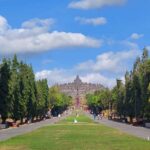
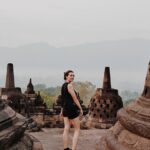
Borobudur sits majestically on a hilltop, with lush green fields and distant hills in view. A big highlight is the spectacular backdrop of the Menoreh Mountains.
This matters because it changes how you experience the temple. Up close, you’re reading stone detail. From farther points, the monument becomes part of a larger panorama. Even if you’re not obsessed with scenery, those views give you breathing room when your eyes start to glaze over from carvings.
Plan a few short pause moments at view angles rather than treating the scenery as a quick stop. The temple will still be there when you return your attention to the reliefs.
Climb to the top or stay on the terraces?
This ticket does not include the additional ticket required to climb to the top of the temple. That’s a key decision point.
Why it matters: the top areas change the experience from “walking through a story” to “standing in the story’s most symbolic viewpoint.” If you want that payoff, you’ll need to add the climb ticket.
You might also be able to update at the entrance if climb access is available then, but availability and process can vary. The safest way to handle this is to decide early in your visit whether top access is worth the time and extra cost for you.
If you’re traveling with limited time or you’re not confident you’ll enjoy higher stairs and tight timelines, staying on the main terraces is still a satisfying day. The bulk of the relief work and stone storytelling is already fully rewarding below the summit climb.
Pacing, language, and how to avoid feeling rushed
One of the most common issues with famous sites is speed. With Borobudur, you can easily end up moving too fast to really take in the carvings. Even when help is available, explanations may come quickly, and not every detail is easy to catch if you’re concentrating on stairs, crowds, and figuring out where to go next.
So here’s the practical move: set a pace you control. Give yourself more time than you think you need. If you want to read a few relief sections properly, build in slower stops and don’t schedule back-to-back sights.
If you rely on an English or Indonesian host or greeter for context, treat that help as an extra layer, not your only source of meaning. You’ll enjoy the temple more if you come in ready to look, not only ready to listen.
Price and value: why $3.08 can still be a good deal
On paper, $3.08 is a bargain for entry into Borobudur. But value isn’t only about low price. It’s about what you get for that money.
What you get:
- Admission to a major UNESCO-class monument
- Access to extensive carved surfaces and storytelling reliefs
- A hilltop setting with Menoreh Mountains views
What you don’t get:
- The top climb ticket, which costs extra
- Any guarantee that you’ll have a slow, quiet experience
So the real value question is this: do you want the top climb enough to pay extra, and do you plan to give yourself time to actually see the carvings? If yes, you’ll likely feel that this ticket is a smart buy. If you only want one “stand in front and leave” moment, you might feel like the site still demands patience—because Borobudur rewards slower travel.
Who this Borobudur entry ticket suits best
This ticket is best for you if:
- You want a major monument without complicated add-ons
- You like architecture, carving, and story-based design
- You’re comfortable exploring at your own pace
- You want the option to add the top climb later if you feel like it
It’s also a good fit if you’re traveling with different interests in one group: some people may spend time on views and photo angles, while others focus on reliefs and stone details. The site layout supports that kind of split attention.
If you’re extremely time-constrained, you can still do Borobudur, but your experience will depend on how disciplined you are about pacing. The monument is too big to “half-look” and call it done.
The one “watch out” issue: ticket eligibility confusion
A concern worth taking seriously is that some digital ticket setups can be misunderstood at the entrance. There’s at least one situation reported where tickets weren’t valid due to eligibility being tied to specific categories. That’s not something you want to gamble on right when you arrive.
Your best protection is simple:
- Double-check the ticket validity and any category details before you leave your accommodation
- If something looks off at the entrance kiosk area, ask the staff there before you assume you’re stuck
- If you end up needing a different option on-site, be ready for the possibility it may cost more
It’s an uncomfortable thought, but it can save you hours.
Should you book this Borobudur Temple entry ticket?
If you’re heading to Yogyakarta and want an affordable way to visit the world’s biggest Buddhist monument, I think this ticket is worth it. The entry price is low, the redemption process is straightforward at the kiosk near the entrance, and the core experience—reliefs, Buddha carvings, and the Sailendra-era design—lands strongly for most visitors.
Book it if you’ll give yourself time to walk slowly, and especially if you’re interested in the architectural story: Gupta influence through an Indonesian lens, with the Menoreh Mountains as your backdrop. Skip it only if you know you want the climb top access but you don’t want any extra steps or cost at the site, since the top ticket isn’t included.
FAQ
Where can I redeem the digital Borobudur entry ticket?
You redeem your digital ticket at a kiosk near Borobudur’s entrance.
What are Borobudur Temple opening hours?
Borobudur is open from 06.30 to 16.30 WIB. Gates close 30 minutes earlier than the operating hours.
Is the ticket valid for more than one day?
No. The ticket is valid for 1 day.
Do I need an extra ticket to climb to the top?
Yes. An additional ticket is required to climb to the top of the temple, and it is not included with this entry ticket.
What ID do I need to bring?
Bring a passport or an ID card.
What should I wear or bring for the visit?
Wear comfortable shoes and comfortable clothes. It’s also advised to bring a face mask or protective covering.
Is Borobudur accessible for wheelchair users?
Yes, the activity is wheelchair accessible.
What are the age ticket rules?
Adults are 10 years and above. Children are 3–10 years old. Infants (1–2 years old) do not require a ticket.
Are there refund options if plans change?
This activity is non-refundable.