REVIEW · BOROBUDUR
Private Borobudur Village Trip By Volkswagen Safari
Book on Viator →Operated by borobudurlocaltour · Bookable on Viator
A classic VW Safari ride makes the villages feel like a time machine. You start with a vintage German car used for official sub-district rounds, complete with the open-hood look and colorful paint jobs, then head for real community spots instead of a quick photo stop. One of the best parts is the chance to get big views from the crown at Gereja Ayam, including Menoreh hills plus distant Mount Merapi and Merbabu on a clear day.
What I also like is the hands-on time at Nglipoh pottery village, where pottery making follows a practical sequence: shaping, drying in the sun, and firing—often done with local residents working together. Your main watch-out is cost creep: the church ticket and the pottery education component cost extra (even though the pottery visit itself is free), and the whole trip works best in good weather.
In This Review
- Key highlights you’ll care about
- Getting To Borobudur By Vintage VW Safari
- The VW Safari Experience: How It Works and What to Expect
- Stop 1: Gereja Ayam (Chicken Church) and the Big View From the Crown
- Costs to plan for
- A small consideration
- Stop 2: Nglipoh Pottery Village and the Real Steps of Making Clay
- Costs to plan for
- The Route, Timing, and Why This Short Tour Works
- What Your Private Driver Adds (Beyond Just Driving)
- Who This Tour Is Best For
- Budget Reality: Is $53.50 Per Group Good Value?
- Weather and Comfort: The Small Stuff That Affects the Day
- Should You Book This VW Safari Village Trip?
- FAQ
- How much does the Private Borobudur Village Trip by Volkswagen Safari cost?
- How long is the tour?
- What vehicle is used?
- What are the main stops?
- Are entrance tickets included?
- Is pottery education included?
- What does the tour price include?
- What time does the tour run?
- Where does the tour start and end?
- What happens if the weather is bad?
Key highlights you’ll care about
- Open-hood VW Safari ride that feels old-school and photo-friendly
- Gereja Ayam (Chicken Church): unusual building shape plus panoramic views
- Nglipoh pottery practice: you see the full process from form to sun-dry to firing
- Community-style firing: work is shared with residents, not a staged demo
- Private format for up to 2 with a driver who acts like a guide
Getting To Borobudur By Vintage VW Safari
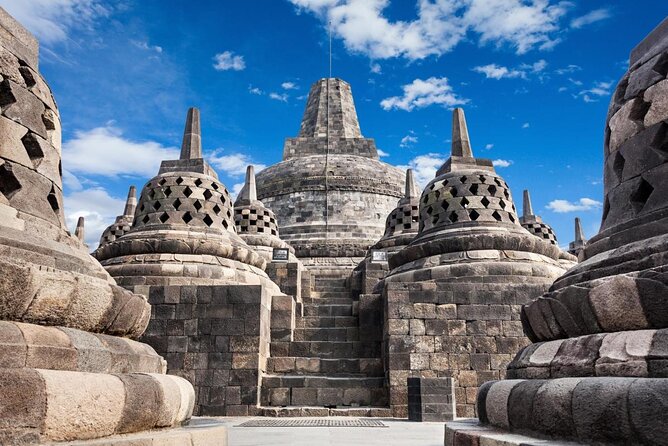
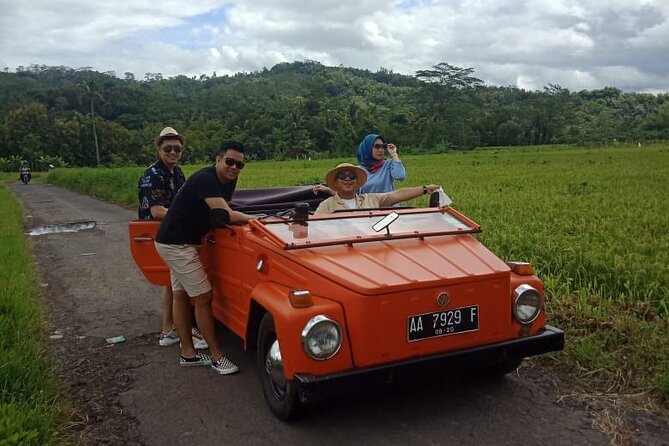
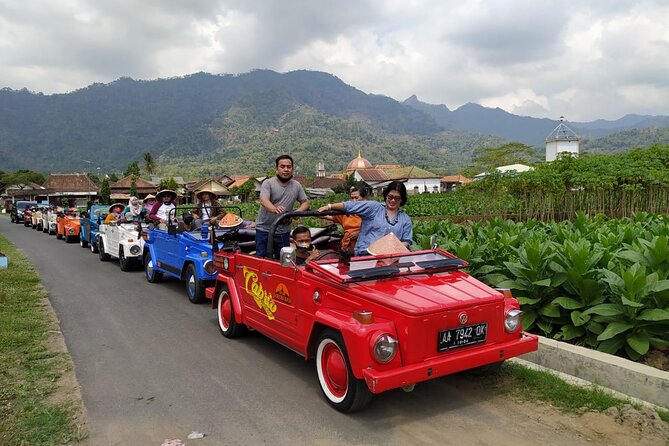
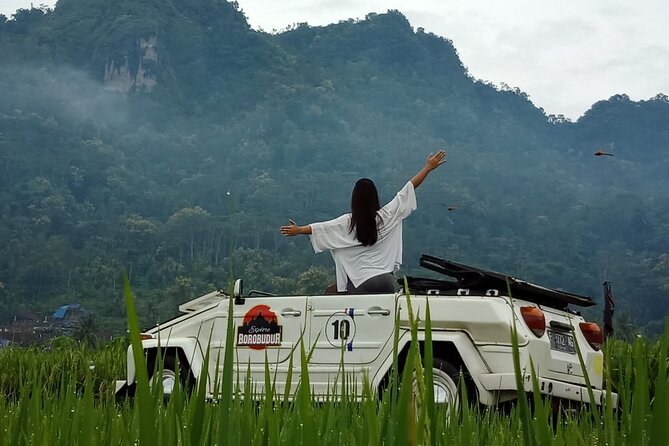
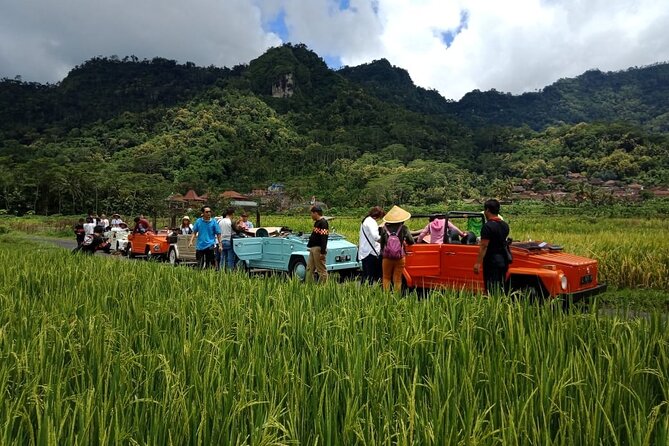
This is a short, private outing in Central Java focused on the villages around Borobudur. The vehicle is the star: an old VW Safari variant (called VW Camat in Indonesia), first seen in the area since the early 1970s era when it served as an official car for the Camat, a sub-district leader. The look is distinctive—open hood, classic shape, and paint choices that can include red, sky blue, or mint green.
That vintage setup changes the whole vibe. You won’t feel like you’re stuck behind glass. The car’s design also makes it easier to chat with your driver and capture natural-looking photos during slower stretches on country lanes.
Practical note: this trip is listed as 1 to 2 hours. That’s perfect if you want something active without eating a full day. It also means each stop is fairly focused—great for momentum, less ideal if you like long wandering.
You can also read our reviews of more private tours in Borobudur
The VW Safari Experience: How It Works and What to Expect
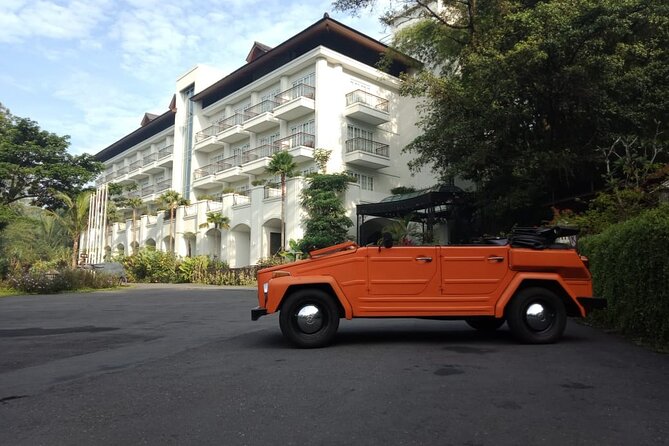
You’ll have a private tour, meaning only your group rides along. The price is set per group (up to two people), and what you’re paying for includes the VW car, driver as guide, parking, gasoline, and a mineral bottle.
Here’s what that means for value: you’re not just renting transport. Your driver guides the route between two village-style experiences, so you spend less time figuring things out and more time actually doing the fun parts—views, photos, and hands-on pottery.
And yes, a big part of the joy is the photography. In the experiences people shared afterward, one theme was how helpful and kind the driver was, plus how willing he was to help take pictures while you’re moving between spots.
If you’re coming with family, this is also a friendly format. It tends to work for most people because the plan is straightforward: ride, see one main viewpoint stop, then do one craft stop.
Stop 1: Gereja Ayam (Chicken Church) and the Big View From the Crown
The first stop is Gereja Ayam, a unique religious building with a shape people compare to a giant pigeon. It’s not just a quirky landmark to pass by—it’s described as a place that’s used as a prayer space for all religion.
What makes this stop more than a roadside stop is the viewpoint element. From the crown of the statue, you can see panoramic scenery. When the weather cooperates, you’re looking out toward the Menoreh hills and far mountain views, including Mount Merapi and Mount Merbabu.
Time on this stop is about 45 minutes. That’s enough for a calm walk, photos, and getting your bearings. If you want the best perspective, aim to spend a few extra minutes at the higher vantage points rather than only shooting from street level.
Costs to plan for
The ticket for Gereja Ayam is not included. It’s listed as IDR 50,000 per person. So if you’re budgeting the trip total, treat this as a fixed additional fee on top of the tour price.
A small consideration
This is one of those places where your experience depends on clarity in the air. If clouds roll in, mountain visibility may drop. The good news is you’re not stuck there for hours—your plan moves on.
Stop 2: Nglipoh Pottery Village and the Real Steps of Making Clay
Next you head to Nglipoh pottery village for an educational-style visit. This is where the trip shifts from views to hands-on craft, and it’s honestly the most satisfying part for many people because you can see the whole pottery path instead of just watching a finished product.
You’ll get to see—and in many cases practice—the pottery process. The sequence is simple and practical:
- Formation: shaping the pottery
- Sun drying: letting it dry naturally
- Burning/firing: heating it to finish the piece
One detail I really like here is the sense of shared work. The process of burning pottery in the hamlet is done jointly with residents, so it feels like a community activity rather than a one-off performance for visitors.
Time here is listed as about 1 hour. That’s enough to learn the steps, get your hands involved, and still have time to soak in the environment without rushing.
Costs to plan for
The pottery visit itself is free, but the pottery education practice is IDR 50,000 per person. In other words, you might pay just to visit and watch, or you might pay extra to actively join the practice.
If you want the most value, I’d lean toward joining the practice—this is the part where you walk away with skills and memories, not only photos.
The Route, Timing, and Why This Short Tour Works
This tour runs between 7:00 AM and 3:00 PM. That matters because you’ll want daylight for both:
- clearer views at the church stop
- better conditions for outdoor pottery steps and comfortable walking
The plan also returns you to the meeting point, so you don’t need to figure out transportation after the last activity.
Because the total duration is fairly short, the structure helps you avoid travel fatigue. You get a compact mix:
- one scenic viewpoint
- one practical craft experience
That combo is especially good if you’re visiting Borobudur area and want a cultural add-on that feels local, not like an over-scheduled day.
What Your Private Driver Adds (Beyond Just Driving)
A driver here is doing more than steering a car. The best value is the personal guidance between stops—helping you interpret what you’re seeing, when to move, and how to position yourself for photos.
In the feedback people shared, Mr Syaiful came up by name for being patient and experienced, plus helping take pictures. Even if you’re not chasing a photo-heavy day, that kind of attention makes the trip smoother.
Also, because the tour is private, you can set your own comfort pace. If someone in your group wants slower steps at a viewpoint, you’re not stuck waiting on a larger group schedule.
Who This Tour Is Best For
This Private Borobudur Village Trip By Volkswagen Safari is a strong fit if you want:
- a short, high-quality local outing (not a full-day production)
- a fun transportation twist with a vintage VW Safari
- a chance to see community life through a craft workshop-style stop
- a simple plan with minimal moving parts
It’s especially good for couples and small families because the group size cap (up to two people) keeps it personal. If you’re the type who likes photos that look real (not staged), the open-hood car and the viewpoint stop are a win.
It’s less ideal if you want many stops, long stays, or a deep multi-hour workshop. The whole point here is focused time, so you’ll be ready for the next part of your day.
Budget Reality: Is $53.50 Per Group Good Value?
The listed price is $53.50 per group (up to 2). For that, you get transport in a VW Safari plus the driver-guide role and basic inclusions like parking, gas, and a mineral bottle.
Then you add two potential extras:
- Gereja Ayam ticket: IDR 50,000 per person
- Pottery education practice: IDR 50,000 per person (pottery visit is free)
So the true total depends on whether you plan to pay for both activities fully. If you do, you’ll spend a bit more per person, but you’re also getting the two most memorable experiences—viewpoint time and hands-on practice.
In my view, this is good value when you want convenience and a tailored flow. Paying a set per-group amount for a private vintage-car ride is often cheaper (and more satisfying) than piecing together separate transport and entry fees on your own.
Weather and Comfort: The Small Stuff That Affects the Day
The tour notes that it requires good weather. That’s because both stops involve outdoor elements and open-air sightseeing. If it’s rainy or extremely cloudy, the experience may be rescheduled or you’ll be offered a refund.
For comfort, dress for warm conditions and keep your walking shoes handy. You’ll be moving between viewpoints and a village workshop space, and pottery activities can involve dust and clay residue.
If you’re sensitive to smoke or odors, remember firing/burning is part of the pottery process and is described as done jointly with residents. The exact intensity isn’t stated, but it’s something to keep in mind.
Should You Book This VW Safari Village Trip?
If you want a short private outing that blends a classic car ride with one strong viewpoint and one hands-on craft, I think you should book it. This is the kind of trip where you can feel local daily life through the route and the workshop-style pottery practice, not just sightseeing from a distance.
Book it if:
- you love photography and want help getting good shots
- you’re visiting Borobudur and want one extra village experience that’s practical
- you’d enjoy pottery making steps even if it’s only part of the process
Skip it if:
- you only want attractions with no extra fees at the site
- you’re hoping for a long, unhurried day at many stops
If you’re flexible with weather and you’re ready for a focused 1–2 hour plan, this VW Safari route is a fun, authentic add-on worth placing on your Central Java itinerary.
FAQ
How much does the Private Borobudur Village Trip by Volkswagen Safari cost?
It costs $53.50 per group (up to 2).
How long is the tour?
The duration is about 1 to 2 hours.
What vehicle is used?
The tour uses a VW Safari (a classic Volkswagen safari vehicle with an open hood).
What are the main stops?
The itinerary includes Gereja Ayam (Chicken Church) and Nglipoh pottery village.
Are entrance tickets included?
No. The Chicken Church ticket is not included (IDR 50,000 per person).
Is pottery education included?
Pottery education practice is IDR 50,000 per person and is not included. The pottery village entry is listed as free.
What does the tour price include?
Included items are VW car, driver as guide, parking fee, gasoline, and a mineral bottle.
What time does the tour run?
It operates Monday to Sunday from 7:00 AM to 3:00 PM.
Where does the tour start and end?
It starts at griyo jagalan, Jl. Balaputradewa, Dusun XVII, Borobudur and ends back at the same meeting point.
What happens if the weather is bad?
The experience requires good weather. If it’s canceled due to poor weather, you’ll be offered a different date or a full refund.